
What is Project Charter?
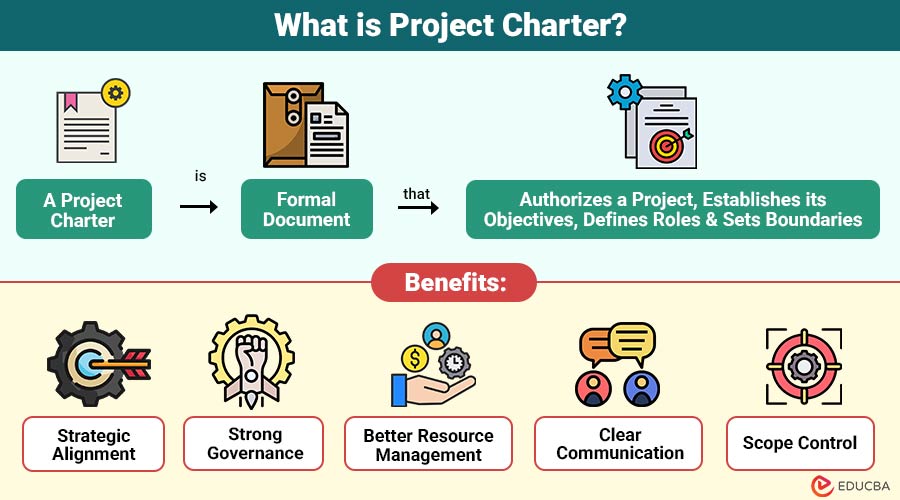
A project charter is formal document that authorizes a project, establishes its objectives, defines roles, and sets boundaries. It serves as a point of reference for the duration of the project.
Essentially, it answers questions like:
- What is the project about?
- Who is responsible for it?
- What are the expected outcomes?
- What are the boundaries and constraints?
The Project Charter is usually created during the project’s initiation phase. It is typically prepared by the project sponsor or project manager and approved by key stakeholders or senior management. Before work starts, it guarantees that all parties are aware of the project’s goals, parameters, and available resources.
Table of Contents:
- Meaning
- Importance
- Core Components
- Project Charter Template
- How to Create an Effective Project Charter?
- Benefits
- Example
Key Takeaways:
- A project charter formally authorizes projects, clarifies goals, and sets clear roles for efficient execution.
- It defines scope, deliverables, and boundaries, preventing misunderstandings and keeping projects aligned with objectives.
- Early stakeholder involvement and risk identification ensure better decision-making, more effective resource management, and smoother project progression.
- Serving as a reference throughout, the charter enhances communication, accountability, and strategic alignment, thereby driving overall project success.
Why is Project Charter Important?
A project charter holds significant value for both the project team and the organization. Some key reasons for its importance include:
1. Formal Authorization
It formally approves the project, allowing the team to access resources and begin work officially.
2. Clear Project Objectives
It clearly defines the project’s aims, ensuring alignment with organizational goals.
3. Scope Definition
The charter outlines the project boundaries, which prevents scope creep and uncontrolled changes.
4. Roles and Responsibilities
It identifies key stakeholders, project sponsors, and team members, clarifying responsibilities and authority.
5. Resource Planning
By detailing budgets, timelines, and required resources, the charter provides a foundation for efficient planning.
6. Decision-Making Framework
It acts as a roadmap for making crucial decisions and settling conflicts.
Core Components of a Project Charter
Below is a detailed breakdown of the major components included in a standard project charter.
1. Project Title
A clear, concise name that identifies the project, enabling stakeholders to recognize, reference, and differentiate it from others quickly.
2. Project Purpose or Business Case
Explains why the project is necessary, the problem it addresses, and how it adds value or solves business challenges effectively.
3. Project Objectives
Clearly establish the project’s objectives using specific, quantifiable, achievable, pertinent, and time-bound goals.
4. Project Scope
Defines included project activities and deliverables while explicitly stating what is excluded to prevent misunderstandings or scope creep.
5. Deliverables
To guarantee team alignment and satisfy stakeholder expectations, the project’s tangible outputs or results are outlined in detail.
6. Project Milestones
Key timeline checkpoints that mark progress, indicating when critical activities or phases are completed within the overall project schedule.
Project Charter Template (Ready to Use)
Below is a ready-to-use template with key sections and descriptions for guidance.
| Section | Description |
| Project Title | Name of the project |
| Purpose | Why is the project needed? |
| Objectives | SMART goals |
| Scope | Inclusions and exclusions |
| Deliverables | Expected outputs |
| Timeline | Major milestones |
| Budget | Estimated costs |
| Risks | Potential issues |
| Stakeholders | People involved |
| Approval | Authorization signatures |
How to Create an Effective Project Charter?
To ensure clarity and alignment, follow these best practices.
1. Start with the Business Case
Clearly explain why the project is necessary, highlighting the problem it solves and expected business benefits.
2. Define Clear, Measurable Objectives
Set specific, trackable goals that avoid ambiguity, ensuring progress can be measured and success evaluated effectively.
3. Keep it High-Level
Maintain a concise overview; a charter summarizes the project rather than providing detailed execution plans or schedules.
4. Involve Key Stakeholders Early
Engage sponsors, team members, and customers from the start to gather input and ensure alignment.
5. Identify Risks and Constraints
Highlight potential obstacles, limitations, or challenges upfront to prepare mitigation strategies and realistic project planning.
Benefits of a Project Charter
A strong project charter provides multiple organizational and operational benefits.
1. Strategic Alignment
Ensures the project aligns with organizational goals, supporting overall business strategy and delivering meaningful value.
2. Strong Governance
Clearly defines roles, responsibilities, and decision-making authority, enabling accountability and structured project oversight.
3. Better Resource Management
Helps identify necessary budget, manpower, and materials, ensuring efficient allocation and preventing resource shortages.
4. Clear Communication
Acts as a reference for stakeholders, improving understanding, expectations, and coordination throughout the project lifecycle.
5. Scope Control
Prevents unnecessary tasks, changes, or expansions, keeping the project focused and within predefined boundaries.
Example of a Project Charter
Here is an example of Project Charter to illustrate how each section can be filled in.
Project Title: Corporate Website Redesign
- Purpose: Modernize the website, improve user experience, and increase conversions.
- Objectives:
-
- Increase conversion rate to 5%
- Improve load time to under 2 seconds
- Enhance mobile usability
- Scope Includes: Homepage redesign, product pages, mobile responsiveness, and SEO improvements.
- Scope Excludes: Blog content rewrite, backend CMS changes
- Budget: $35,000
- Timeline: 12 weeks
- Risks: Approval delays, plugin compatibility issues
- Stakeholders: Marketing Team, IT Team, Project Sponsor
- Deliverables: New design mockups, developed website, SEO-optimized version
Final Thoughts
A project charter is a powerful, foundational document that sets the tone for project success. It provides clarity, alignment, authority, and direction before a single task begins. Effective creation guarantees that everyone is working toward the same goal, avoids disagreements, and saves time. Regardless of your position as a project manager, team lead, or business owner, mastering the creation of a project charter is crucial for effective project delivery and flawless execution.
Frequently Asked Questions (FAQs)
Q1. Who are considered key stakeholders in a project charter?
Answer: Key stakeholders typically include the project sponsor, project manager, core team members, customers, and department heads involved in the project.
Q2. Is a project charter mandatory?
Answer: While not legally required, it is essential for structured project management and widely recommended in professional frameworks.
Q3. How long should a project charter be?
Answer: Typically 1–3 pages, high-level and concise.
Q4. Can the project charter change?
Answer: Yes, but revisions must go through formal approval.
Recommended Articles
We hope that this EDUCBA information on “Project Charter” was beneficial to you. You can view EDUCBA’s recommended articles for more information.

