


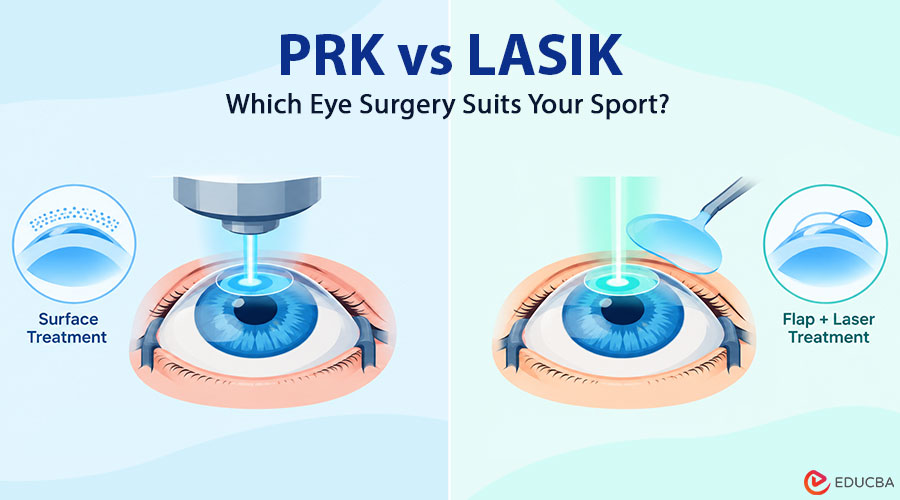
Athletes often compare PRK vs LASIK because each procedure offers different benefits in terms of eye safety and recovery time. PRK does not create a corneal flap, eliminating the risk of flap displacement after an eye injury, while LASIK generally offers faster visual recovery. The choice depends on the sport, the risk of eye impact, and how quickly an athlete needs to return to training. Dr. David Robinson, a Sydney-based ophthalmic surgeon who has practiced since 1997, discusses these factors when helping athletes evaluate their vision correction options.
Can a Blow to the Eye Move a LASIK Flap?
It can, and this is one reason athletes may be considered for PRK. LASIK creates a flap (a thin, hinged layer of the cornea lifted so the laser can reach the tissue beneath). The flap settles back into place, but it does not heal the same way as the surrounding corneal tissue, so that a strong impact can lift or shift it, sometimes years after surgery.
Elbows, fingers, balls, and sticks are examples of impacts that can occur in boxing, martial arts, rugby, and basketball. PRK has no flap, so an impact cannot displace a LASIK flap. Dr. David Robinson considers the athlete’s sport, especially when training or competition involves a risk of eye impact.
PRK vs LASIK: Which Procedure Better Preserves Corneal Strength
The effect on corneal strength is one factor to consider when comparing PRK vs LASIK. PRK reshapes the cornea after removing the surface epithelium, while LASIK involves creating a flap within the cornea. As a result, the two procedures affect corneal structure differently, with more residual corneal strength after PRK. The amount of tissue that remains, the cornea’s thickness and shape, and the prescription size all factor into the assessment.
PRK may be considered when preserving more of the deeper corneal tissue is an important part of the surgical planning. Dr. David Robinson noted that this matters more for athletes whose eyes are more likely to sustain physical impact. Corneal thickness is one factor in choosing a suitable procedure, but not the deciding factor on its own.
Does PRK Cause Less Dry Eye for Active People?
LASIK affects more corneal nerves, and changes in corneal nerve signaling can contribute to dryness after laser correction. Studies suggest that patients may experience fewer dry-eye symptoms later in recovery after PRK, although both procedures can cause discomfort during the first few weeks, and recovery varies from person to person.
This matters for athletes who train in wind, heat, dust, or air-conditioned gyms, where dry-eye symptoms may become more noticeable. Dr. David Robinson also considers the condition of the ocular surface before surgery, since pre-existing dryness and other ocular-surface problems can influence symptoms after either procedure.
Is the Longer Recovery Worth It for an Athlete?
PRK has a longer initial recovery than LASIK. During PRK, the surgeon removes the epithelium (the thin outer layer of the cornea), which then regrows, and places a bandage contact lens (a soft lens that protects the surface during healing) over the cornea for the first several days. Patients commonly experience soreness and light sensitivity for about two to three days, while blurred or fluctuating vision can continue for a week or two before clearing. These are typical recovery ranges, but healing varies between patients.
The treating surgeon should also clear return to training and contact sports, as timing depends on how the eye is healing. Light training may be possible within days, while contact sports usually need several weeks, depending on how the eye heals. Dr. David Robinson advised booking surgery for the off-season where possible, giving the eye time to recover before returning to full training and competition.
Which Sports Make PRK More Relevant?
Contact and combat sports are particularly relevant, as are sports involving fast-moving balls or unpredictable contact, such as football and rugby. In sports that expose athletes to accidental eye impacts, PRK’s lack of a corneal flap can be an important consideration. Outdoor sports can also bring other factors, such as grit, sun, and environmental exposure, depending on the activity.
Sunglasses are worth wearing during the recommended period after PRK, because ultraviolet light may contribute to haze (a milky cloudiness that can appear in the healing cornea). Protective eyewear may also be advised for contact and racquet sports.
Are Some Athletes Better Suited to LASIK?
Yes, in certain cases. For someone who plays golf or runs long distances, the risk of being hit in the eye is generally lower. In those cases, LASIK’s quicker recovery may be attractive, especially if they want to return to training sooner. Swimming is a little different. There is less concern about eye impact, but the swimmer still needs to wait until the eye has healed enough before returning to the pool.
Suitability also depends on corneal thickness, corneal shape on mapping, prescription strength, and how the eyes handle dryness. Dr. David Robinson makes the decision on an individual basis, taking into account the sport, training calendar, and eye characteristics. The choice between PRK vs LASIK therefore depends on more than the type of sport alone.
Recommended Articles
We hope this comprehensive guide to PRK vs LASIK helps you understand the key differences between these vision correction procedures and choose the right questions to discuss with your eye surgeon. Check out these recommended articles for more insights into eye health and recovery.

