


Why Privacy by Design Matters for Digital Services in Poland and the EU?
If you plan to offer digital services in Poland or other European Union countries, you need to know one thing: personal data protection is not an add-on to your project. It is integral to it. European regulations, known as RODO (GDPR), require companies to consider user privacy during the product or system planning stage. This approach is called ‘privacy by design’.
In practice, this means that reacting to problems after they occur is not enough. Design solutions to prevent data breaches and minimise risk from the outset.
Why does Data Protection Start at the Design Stage?
Every application, e-commerce platform, registration system, or SaaS tool processes personal data. This can include names, email addresses, payment details, medical information, or user behaviour data.
If the system is not designed properly, it may:
- Collect too much data,
- Store it for too long,
- Share it with too many employees,
- Fail to provide adequate technical security.
The GDPR requires data controllers to anticipate such risks and mitigate them before launching the product on the market. Data protection cannot be a ‘patch’ added after implementation.
What is the Principle of Privacy by Design?
Several key assumptions form the principle of Privacy by Design.
Firstly, system architects must build privacy into the system’s architecture. This means that technological and organisational decisions should take data security into account at every stage of the project.
Secondly, the principle of data minimisation applies. A company should collect only the information necessary to provide the service. If the data is not necessary, it should not be processed.
Thirdly, default settings should protect the user as much as possible. It should not be up to the user to enable privacy protection; the system should provide it automatically.
Fourthly, only those who actually need the data should access it. This applies to both employees and subcontractors.
How does this Work in Practice?
Privacy by design is not a theory. It involves specific design and organisational decisions.
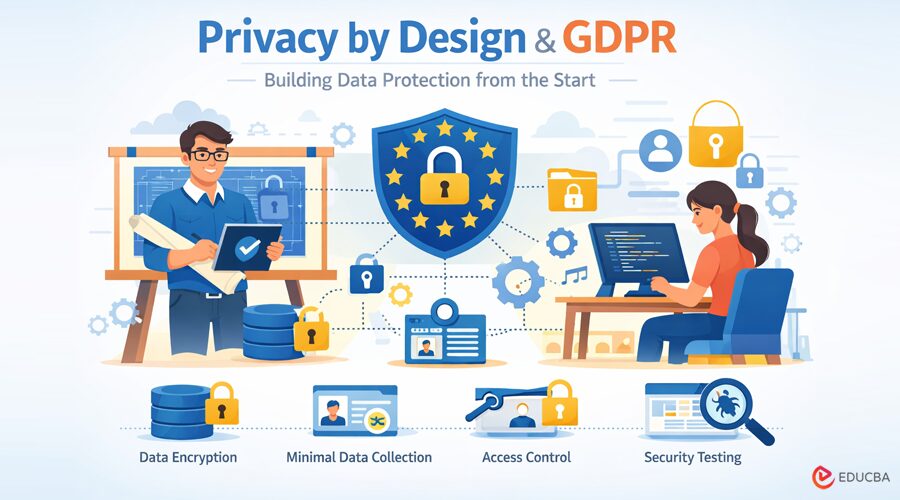
In practice, this may mean, for example:
- Using data encryption at the database level,
- Designing registration forms so that they only require the necessary information,
- Implementing authorisation systems that restrict access to sensitive data,
- Regularly testing system security,
- Documenting data processing procedures.
In the case of medical or financial services, the security standard should be even higher, as the data processed is particularly sensitive.
What does a Company that Applies Privacy by Design Gain?
Although the obligation stems from the law, this approach also brings real business benefits.
First and foremost, it reduces the risk of financial penalties and legal liability. Errors detected after system implementation are usually much more expensive to fix than those eliminated at the design stage.
In addition, the company builds customer trust. For users in the EU, transparency and data processing security are increasingly important criteria for choosing a service provider.
Finally, structured data processing processes facilitate business scaling and cooperation with foreign partners.
What Should Foreign Entrepreneurs Keep in Mind?
If you operate outside Poland but provide services to customers in Poland or other EU countries, you must comply with European data protection standards.
In practice, this means that:
- You need to analyse what data is collected and for what purpose,
- You need to limit processing to the minimum necessary,
- You need to implement appropriate technical and organisational measures,
- It is worth documenting design decisions regarding data protection,
- Companies must clearly inform users about how they use their data.
Privacy by design is not a one-off activity, but an integral part of a company’s organisational culture.
The services described in this article are available at this law firm in Poland.
Recommended Articles
We hope this guide on Privacy by Design helps you understand why integrating data protection into system architecture is essential for GDPR compliance and user trust. Explore the recommended articles below for more insights on data privacy regulations, cybersecurity practices, and responsible data management.


