


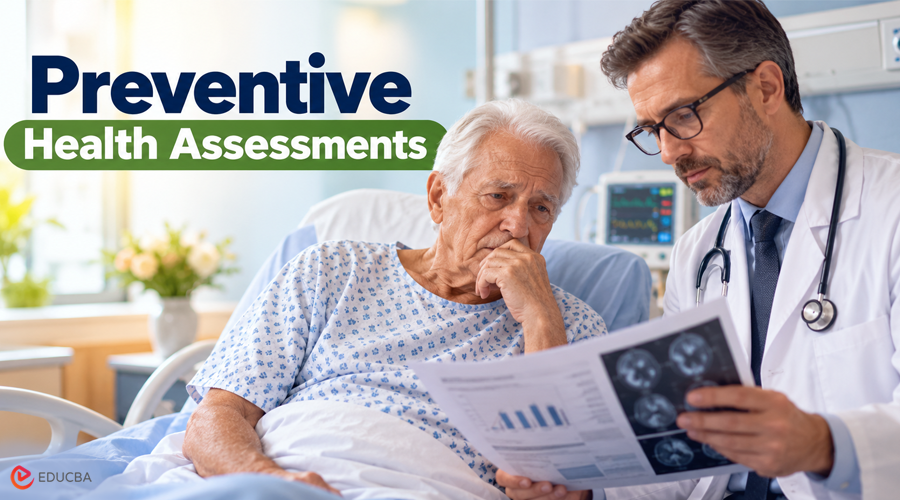
Why Preventive Health Assessments Belong in a Health Baseline?
A busy New Yorker would do well to build a health baseline from the cheapest assessments first, because the seven that matter tend to rank in nearly the reverse of the order in which they are marketed. Time is the excuse this city prefers, and it does not hold up well against the list. The readings most likely to change lives take minutes.
A baseline is a personal record of what normal looks like when nothing is wrong, taken early enough that a later reading has something to compare with. It is the record a doctor wishes existed on the day something does go wrong. Most people here probably do not have one. They have a physical from a year they cannot name and a general sense of being fine.
1. Start With a Cuff at Home
Blood pressure comes first among these preventive health assessments, and the measuring belongs at home. Back in 2018, the city’s health department sent staff into people’s homes with cuffs. Three adults in ten had high readings or were on medication for them. The figure that should bother a busy person is the next one, where about a third of that group did not know it. Call it 480,000 New Yorkers carrying a number nobody had given them. High blood pressure can run for years without symptoms, so not knowing is the norm. Among adults under 40 with the condition, only half had ever been told. The department’s response has included putting blood pressure kiosks in pharmacies, a tacit admission that working adults pass a pharmacy more often than a doctor.
A reading taken in a doctor’s office is often the least reliable kind. The train stalls, you take the stairs two at a time, a nurse wraps your arm before you have caught your breath, and that single figure goes in the chart. The national panel that grades screening tests does not trust it either. Before anyone is treated, it wants a high reading confirmed away from the clinic. At home the drill is dull. Sit down, rest for five minutes, put a validated cuff on your upper arm, write down what it says, then repeat it that evening and every day for a week. Those seven days of figures are the first line of the record. It is odd how many people in this city can quote a share price to the cent and could not place their own pressure within twenty points.
2. Blood Sugar and the People Nobody Has Tested
Blood sugar is the second entry in these preventive health assessments. Ask for an A1C. One blood draw gives a three-month average; you do not have to fast for it, and the National Diabetes Association would like every adult tested from 35 onward. So how many people know where they stand? Federal estimates put prediabetes at about 38 percent of American adults. In New York State’s 2023 health survey, 14.8 percent of adults in the city said a clinician had ever told them they had it. The gap between those two figures is largely filled with people nobody has tested. The same survey suggests why, since adults who had a sugar test in the past year were more than three times as likely to carry the label as those who had not. Prediabetes tends to turn up where someone looks for it.
Where a One-Day Clinic Fits?
None of this needs a scanner, which is awkward for a market that grew up around scanners. The Financial District now has a clinic built around advanced preventive health assessments, where whole-body imaging, a bone and body composition scan, metabolic screening, and a fitness test are run in a single visit, with a private suite to wait in between tests. Judged as medicine, a day like that goes well past what most people need first. It does answer the scheduling objection, though, because someone who will not make five appointments in a year will sometimes make one. Anyone who books such a day would do well to arrive with the home pressure log and any recent blood results, so that it adds to the record instead of restarting it.
3. Cholesterol and the Test You Take Once
Cholesterol is third on the list of preventive health assessments, though the standard panel misses something. There is an inherited particle called lipoprotein(a) that diet and exercise barely move, at a level that stays roughly steady for life. For the first time, the national cholesterol guideline, rewritten in March 2026, tells doctors to measure it at least once in every adult. About one person in five carries a high level. Hardly anyone has looked, since fewer than 5 percent of Americans have been tested. Arguably nothing else on this list asks so little of a calendar, because a single blood draw settles the question for decades.
Since the A1C needs blood anyway, the lipoprotein(a) box and the standard cholesterol panel can go on the same form, turning three entries into one needle. A high result is family news, too. The level is inherited, so parents, siblings and children may be carrying it too.
4. Colon Screening by Post
The fourth item is the one people avoid. Anyone who has studied finance already owns the right tool for it, since the cost of a choice is the value of whatever you give up to make it, and for colon cancer screening what you give up has shrunk to almost nothing. The national panel advises starting at 45 and accepts a yearly stool test done at home, which goes to a lab by post and needs no preparation and no sedation.
Two details decide whether the home test does its job. The panel’s own notes say the benefit builds over repeated yearly rounds, so a kit done once at 45 and then forgotten gives much less protection than the schedule implies. A positive result, for its part, only counts if the colonoscopy that follows is booked. When the panel last reviewed the numbers, close to a third of eligible American adults were behind on screening, which suggests that having several accepted methods has not been enough on its own. A colonoscopy once a decade remains an accepted alternative for anyone who prefers it, and it is also the version busy people tend to keep deferring.
The Hours Already Exist
Time is the standing objection, and the city has largely answered it. Under New York City’s sick leave law, employers with five to 99 staff owe each worker 40 paid hours a year. Bigger firms owe 56 hours. Preventive medical care is on the city worker protection agency’s list of permitted uses. That means a screening appointment qualifies.
A further 32 unpaid hours arrived in February 2026. Workers can use them from their first day on the job. If you do not know your balance, check your pay stub. Employers must now list it there or on a similar statement each pay period.
The first four items on this list require one blood draw. They also need a few minutes each day at home for a week. The hours exist. They tend to go unspent because nothing hurts yet. Calendars in this city are organized around what hurts.
That covers four of the seven preventive health assessments. So far, the equipment has been a cuff, a needle, and an envelope. The remaining three need machines.
5. Fitness Needs a Number
Nearly everyone assumes their fitness is fine, which is the reason the fifth entry has to be a measurement. The proper version is a hard session on a treadmill or bike in a mask that records how much oxygen the body can use at full effort. Out of that session comes one number. When Cleveland Clinic researchers followed 122,007 people who had taken treadmill tests, poor fitness carried a risk of early death comparable to smoking or diabetes, and in some comparisons higher. Does living here count as training? New Yorkers tend to think so. All that walking and all those subway stairs say nothing, though, about how the heart and lungs behave at their limit.
The Cleveland researchers did not judge anyone on a raw figure. Each person was ranked against others of the same age and sex, with the bottom quarter classed as low, so that ranking is what to ask for when the result comes back. For a professional, the useful part is that this number, unlike lipoprotein(a), moves with training, which probably makes it the entry most worth repeating after a year of effort. You find out where you stand on the treadmill, usually with some surprise.
6. Bone, Muscle and a Scan at 40
<p>The sixth is a low-dose X-ray scan known as DEXA, which separates bone, muscle and fat and gives each a figure, including the muscle that a bathroom scale cannot tell apart from fat. Under the national panel’s 2025 guidance on bone screening, routine checks begin at 65 for women, earlier only for those judged to be at higher risk after menopause, and for men the evidence was found too thin to recommend for or against. As a result, few people are ever told what their skeleton looked like at 40.
A quarterly review teaches the habit of benchmarking a company against its peers. For bones, the peer group is the wrong yardstick, or at least the lesser one. What matters most is the same body at an earlier date. A reading at 40 says little against a population chart, but put it next to that person’s reading at 55, and the speed of loss shows up in two numbers. This only works if you can still find the first report fifteen years later. People who pay for a scan outside the official schedule should keep the whole document, figures and date included, somewhere they will be able to lay hands on it.
7. The Whole-Body MRI Problem
The whole-body MRI comes seventh because the evidence puts it there. A Canadian 2026 evidence review written for family doctors did the arithmetic. Of every hundred people scanned without symptoms, 94 had at least one abnormal finding, and as many as 30 were sent for more tests. The confirmed cancers came to between 1.1 and 1.6 percent. No study has yet shown that the scans reduce deaths. The main American radiology body has said the proof is not there to recommend them for people with no symptoms, risk factors, or relevant family history.
An MRI is still the only item of the seven that looks where nobody thought to look. Its defenders make a baseline argument of their own: a first scan earns its keep years later as the image a future scan is compared with. Fair enough, but two things are worth settling before lying down in the machine for the 60 to 90 minutes a session typically takes. Who explains an unclear finding? The bill matters too, since up to a third of people may need follow-up tests and somebody pays for them. And the assessment with the thinnest evidence is probably the one a person with no time will book, since it takes one appointment and comes back with pictures. This ranking cannot remove that contradiction.
A Second Date in the Calendar for Preventive Health Assessments
Each of the seven is worth less as a single reading than as a series. One reading is a photograph. An analyst handed a single year of accounts would ask for the other four. The story lies in the trend from one period to the next. A health record is no different. Every first reading needs a second date.
Keeping that second date is usually harder than making the first. The first round feels like a project, with results to open and a folder to fill. The second is maintenance, and maintenance tends to lose to work in this city.
Professionals who track anything for a living already have the tools. One spreadsheet with a row per test and columns for the date, value, unit, and lab is enough, because results scattered across several patient portals cannot be compared. Book the repeat on the day of the first reading, while the reason for it is still fresh. Lipoprotein(a) is the exception and needs no second row.
What to Book Before the Month Is Out?
Anyone who wants to act on these preventive health assessments could start smaller than the list suggests. The cuff comes first, because it costs the least and probably has the most to find, and a week of readings can begin tonight.
Next is the blood order, one form covering A1C, cholesterol, and lipoprotein(a). If you are 45 or older, raise the stool kit while the doctor is still writing. The fitness test and the two scans can wait until those four are logged and dated, and the MRI is the one to think hardest about. Whatever is done, the repeat date should go into the calendar before the first result comes back.
A harder problem sits under scheduling. Suppose the cuff reads high for a week, the sugar average sits just under the line, and the treadmill number is poor for a forty-four-year-old. A prescription can deal with part of that. The larger part is sleep, movement, food, and fewer hours at a desk, which are the things this city seems organized to take from the people who do well in it, and that makes the baseline an awkward document to own.
Most of it can be assembled in a month by anyone with a pharmacy nearby and one free morning. What it then asks for is a different week, every week, from someone who chose New York for the week they already have.
Recommended Articles
We hope this guide helps you understand Preventive Health Assessments and how they can help you build a better health baseline through regular screenings and health checks. Explore our recommended articles for more insights on preventive care, health screenings, fitness assessments, routine testing, and maintaining long-term health.

