
What is Predictive Marketing?
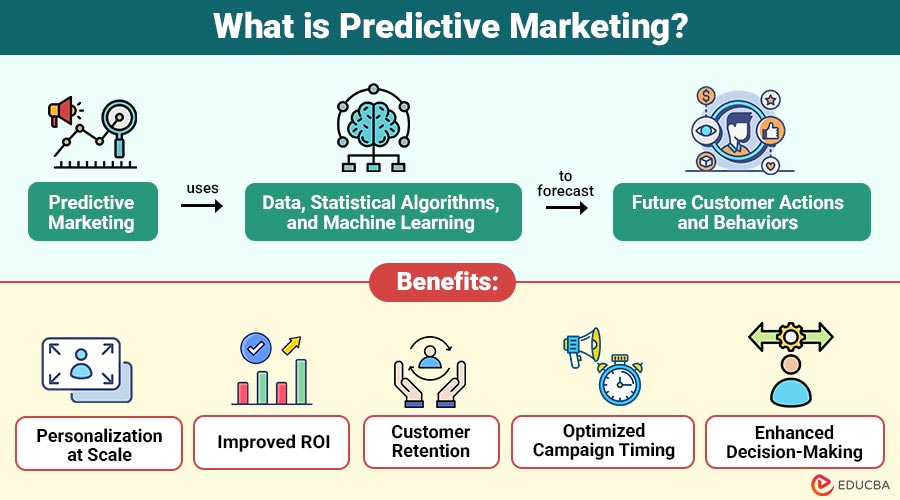
Predictive marketing uses data, statistical algorithms, and machine learning to forecast future customer actions and behaviors. By analyzing historical data from various touchpoints such as website visits, social media interactions, purchase history, and email engagement, businesses can predict which customers are most likely to respond to campaign, churn, or make repeat purchases.
In essence, predictive marketing transforms raw data into actionable insights, allowing brands to tailor their messaging, optimize marketing spend, and deliver relevant content at the right time.
Table of Contents:
- Meaning
- Working
- Benefits
- Techniques
- Real-World Examples
- Steps to Implement Predictive Marketing
- Challenges
Key Takeaways:
- Predictive marketing leverages historical data and machine learning to anticipate customer behavior and personalize engagement effectively.
- It improves ROI by prioritizing high-value prospects, optimizing spending, and delivering timely, relevant messages across channels.
- Predictive insights enable proactive retention, better timing, and smarter decisions across campaigns and customer lifecycle stages.
- Successful implementation requires quality data, ethical compliance, skilled analytics, and continuous model monitoring, optimization, and improvement.
How Predictive Marketing Works?
Predictive marketing relies on a combination of data collection, statistical modeling, and AI algorithms. Here’s a simplified step-by-step process:
1. Data Collection
Data collection gathers structured and unstructured customer data from websites, social platforms, CRM systems, apps, transactions, and offline interaction sources.
2. Data Cleaning and Integration
Data cleaning and integration remove duplicates, correct errors, fill missing values, and unify multiple data sources into reliable datasets consistently.
3. Model Building
Model building applies statistical techniques and machine learning algorithms to identify patterns and predict customer behaviors, preferences, and future outcomes.
4. Segmentation and Targeting
Segmentation and targeting of group customers into predictive segments, enabling personalized messaging, offers, timing, and channel selection for higher conversion rates.
5. Campaign Execution
Campaign execution delivers personalized marketing across email, social media, websites, ads, and apps to consistently influence customer actions.
6. Performance Monitoring
Performance monitoring measures campaign results, tracks KPIs, evaluates predictions, and continuously re-trains models to improve accuracy and ROI over time.
Key Benefits of Predictive Marketing
Predictive marketing offers several benefits over traditional marketing strategies:
1. Personalization at Scale
Predictive marketing enables tailored messages and product recommendations for individuals by analyzing behavior patterns across large audiences.
2. Improved ROI
Marketers prioritize high-value prospects, reduce wasted advertising spend, and achieve stronger returns through more accurate targeting strategies.
3. Customer Retention
Businesses identify churn risks early and launch proactive engagement campaigns to retain customers and strengthen long-term loyalty.
4. Optimized Campaign Timing
Predictive insights identify optimal moments to reach customers, boosting engagement rates, conversions, and overall campaign performance.
5. Enhanced Decision-Making
Data-driven predictions support faster, smarter marketing decisions by reducing guesswork and improving strategic planning accuracy.
Predictive Marketing Techniques
Here are the key predictive marketing techniques businesses use to analyze data, anticipate customer behavior, and drive smarter marketing decisions:
1. Predictive Lead Scoring
By analyzing customer data to determine which leads are most probably to convert, predictive lead scoring assists sales teams in creating consistent and successful outreach programs.
2. Customer Lifetime Value Prediction
Customer lifetime value prediction estimates future revenue per customer, enabling marketers to allocate budgets, efforts, and resources more efficiently and strategically.
3. Churn Prediction
Churn prediction assists businesses in putting targeted retention strategies into place before income is lost by identifying customers who are likely to leave.
4. Product Recommendations
AI algorithms are used by product recommendation systems to make dynamic recommendations for pertinent goods and services based on user behavior and preference patterns.
5. Sentiment Analysis
Sentiment analysis examines customer feedback and social media conversations to accurately and consistently predict satisfaction levels, identify dissatisfaction signals, and detect emerging trends.
Real-World Examples
Here are some real-world examples showing how predictive marketing is applied across different industries to drive better outcomes.
1. E-Commerce
Amazon increases sales and repeat business by using predictive analytics to make product recommendations based on browsing behavior, past purchases, and popular items.
2. Banking & Financial Services
Banks use predictive marketing to identify customers likely to opt for loans, credit cards, or investment products. Personalized offers improve customer acquisition and loyalty.
3. Telecommunications
Telecom providers predict customer churn using usage patterns and engagement data. Proactive offers, discounts, or service improvements help retain valuable subscribers.
4. Travel & Hospitality
Travel companies anticipate customer travel preferences and suggest tailored packages. Airlines, for instance, recommend flights, hotels, and activities based on past bookings and browsing patterns.
5. Healthcare
Predictive analytics helps healthcare marketers deliver reminders, wellness tips, and personalized health plans to patients, enhancing engagement and treatment adherence.
Steps to Implement Predictive Marketing
Implementing predictive marketing effectively involves a structured approach:
1. Define Objectives
Clearly define prediction goals such as purchases, churn, or customer lifetime value to align predictive marketing efforts with business outcomes.
2. Collect & Organize Data
Collect and organize structured and unstructured data from CRM systems, social media, websites, analytics tools, and transaction records efficiently and securely.
3. Choose Analytics Tools
Select suitable predictive analytics tools like Salesforce Einstein, HubSpot, or Adobe Analytics based on scalability, integration, and business needs.
4. Develop Prediction Models
Create predictive models with machine learning algorithms to examine patterns in past data and reliably anticipate future consumer behavior.
5. Integrate with Marketing Channels
Integrate predictive insights into marketing channels such as email, social media, SMS, and paid advertising to personalize campaign execution across platforms.
6. Monitor & Optimize
Continuously monitor campaign performance, retrain models, validate predictions, and optimize strategies to improve accuracy, efficiency, and results over time consistently.
Challenges in Predictive Marketing
While powerful, predictive marketing is not without challenges:
1. Data Quality Issues
Poor data quality, including inaccuracies, missing values, or inconsistencies, can significantly reduce prediction accuracy and misguide marketing strategies.
2. Privacy Concerns
Predictive marketing must comply with GDPR, CCPA, and evolving regulations while ensuring transparent data usage and maintaining customer trust.
3. Technical Complexity
Implementing predictive models requires skilled data scientists, advanced tools, and ongoing maintenance to ensure reliable performance and scalability.
4. Over-Personalization Risks
Excessive personalization may appear intrusive, making customers uncomfortable and potentially harming brand trust and long-term relationships.
Final Thoughts
Predictive marketing marks a shift from reactive to proactive strategies, enabling businesses to anticipate customer needs, optimize campaigns, and deliver meaningful experiences. Using data, machine learning, and predictive analytics, brands make smarter decisions, improve ROI, and gain a competitive advantage. As AI advances, predictive marketing will become more precise, automated, and essential for engaging customers at the right time.
Frequently Asked Questions (FAQs)
Q1. What types of data are used in predictive marketing?
Answer: Customer demographics, browsing behavior, purchase history, social media interactions, email engagement, and CRM data.
Q2. Is predictive marketing suitable for small businesses?
Answer: Yes, small businesses can use predictive marketing through affordable tools and platforms that analyze customer behavior and optimize campaigns.
Q3. How can predictive marketing improve ROI?
Answer: By targeting high-value customers with personalized campaigns, businesses reduce wasted marketing spend and improve conversions.
Q4. Are there ethical concerns with predictive marketing?
Answer: Yes, brands must ensure data privacy, avoid intrusive personalization, and comply with regulations like GDPR and CCPA.
Recommended Articles
We hope that this EDUCBA information on “Predictive Marketing” was beneficial to you. You can view EDUCBA’s recommended articles for more information.

