
What is a Positive Covenant?
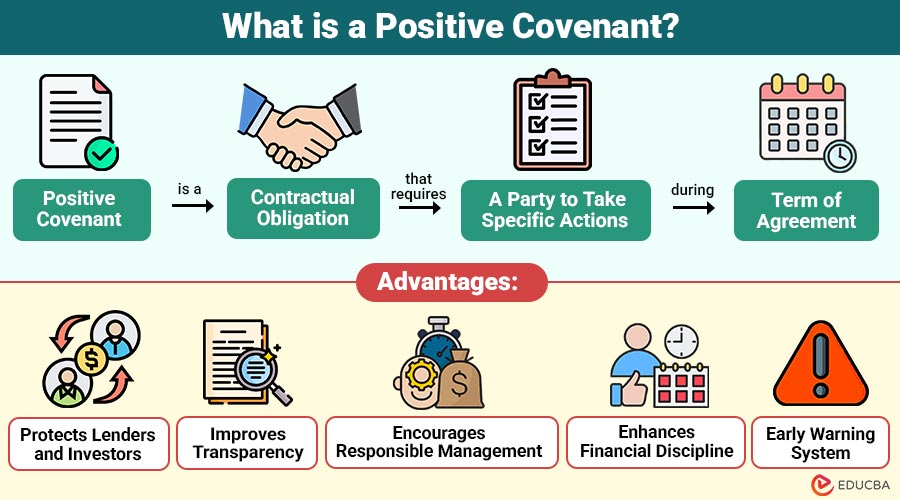
A positive covenant is a contractual obligation that requires a party to take specific actions during the term of the agreement. Common examples include maintaining insurance, providing financial reports, paying taxes, or keeping property in good condition. Positive covenants help protect the interests of lenders, investors, and other stakeholders by ensuring ongoing compliance with agreed responsibilities.
For example, a bank may require a company that receives a business loan to submit quarterly financial statements and maintain adequate insurance coverage. These requirements are positive covenants because they compel the borrower to perform specific actions.
Table of Contents:
Key Takeaways:
- Positive covenants require parties to perform specific contractual obligations consistently throughout the agreement’s duration.
- They help lenders and investors manage risk through ongoing monitoring and compliance requirements.
- While enhancing transparency and discipline, positive covenants may increase compliance costs and administration.
- Positive covenants preserve asset value and financial stability by enforcing responsible operational practices.
How Does a Positive Covenant Work?
Positive covenants are established when parties enter into a legally enforceable agreement. The covenant outlines specific obligations that must be fulfilled during the life of the contract.
The process generally works as follows:
Step 1: Agreement Formation
The parties negotiate and define the required obligations within the contract.
Step 2: Ongoing Compliance
The obligated party performs the required actions in accordance with the agreed schedule or conditions.
Step 3: Monitoring
The beneficiary of the covenant, such as a lender or investor, monitors compliance through reports, inspections, or audits.
Step 4: Enforcement
If the obligated party fails to meet the covenant requirements, contractual remedies may be applied.
Step 5: Resolution
The party may correct the breach, negotiate amendments, or face penalties depending on the agreement’s terms.
Key Features of Positive Covenants
The following features highlight how positive covenants help ensure compliance, financial discipline, and risk management throughout a contractual agreement.
1. Action-Oriented Obligations
Positive covenants require parties to perform agreed responsibilities, ensuring contractual commitments are fulfilled throughout the arrangement.
2. Legally Binding
Once incorporated into a contract, positive covenants create enforceable obligations that parties must comply with under applicable law.
3. Risk Management Tool
They help lenders and investors reduce financial, operational, and compliance risks by imposing protective contractual requirements.
4. Ongoing Requirements
Most positive covenants remain in effect for the duration of the agreement, requiring continuous compliance until the contractual obligations end.
5. Common in Financing Agreements
Banks, bondholders, and investors widely use positive covenants to protect their interests and maintain the borrower’s financial discipline.
6. Performance Monitoring
Compliance is monitored through regular reports, audits, and disclosures, enabling stakeholders to track covenant adherence effectively.
Types of Positive Covenants
Positive covenants can vary depending on the nature of the agreement.
1. Financial Reporting Covenants
Require borrowers to provide regular financial statements and reports to ensure transparency and ongoing lender oversight.
2. Insurance Maintenance Covenants
Require maintaining adequate insurance coverage to protect assets, operations, and stakeholders against potential losses.
3. Tax Payment Covenants
Obligate parties to pay taxes promptly, ensuring compliance with government regulations and avoiding penalties.
4. Property Maintenance Covenants
Require owners to maintain properties properly to preserve asset value, meet safety standards, and maintain operational efficiency.
5. Compliance Covenants
Require adherence to all applicable laws, regulations, permits, and industry standards throughout the term of the agreement.
6. Information Covenants
Require timely disclosure of significant events affecting financial condition, operations, or contractual obligations.
7. Corporate Governance Covenants
Require organizations to maintain proper governance practices, records, and decision-making procedures for accountability.
Examples of Positive Covenants
The following examples illustrate how positive covenants require parties to take specific actions to fulfill contractual obligations and protect stakeholder interests.
1. Business Loan Agreement
A bank lends ₹50 million to a manufacturing company. The loan agreement requires the company to:
- Submit quarterly financial statements
- Maintain insurance coverage
- Pay taxes on time
- Comply with environmental regulations
These obligations are positive covenants because they require specific actions.
2. Commercial Real Estate
A property developer owns a shopping center and agrees to:
- Maintain parking areas
- Repair common facilities
- Provide security services
- Keep landscaping in good condition
These obligations ensure the property retains its value.
3. Corporate Bond Issue
A corporation issues bonds to investors. The bond agreement requires the company to:
- Provide annual audited financial statements
- Maintain certain financial records
- Comply with reporting requirements
- Keep business operations legally compliant
These affirmative obligations help protect bondholders.
Advantages of Positive Covenants
Positive covenants offer several advantages to lenders, investors, and organizations by promoting accountability, transparency, and effective risk management.
1. Protects Lenders and Investors
Positive covenants reduce credit and investment risks by requiring borrowers to meet specific obligations consistently.
2. Improves Transparency
Regular reporting requirements provide greater visibility into a company’s financial performance and overall condition.
3. Encourages Responsible Management
Borrowers are encouraged to maintain prudent financial practices and effective operational management standards.
4. Preserves Asset Value
Maintenance obligations help protect assets, ensuring collateral retains value throughout the agreement period.
5. Enhances Financial Discipline
Companies follow structured financial procedures to promote accountability, stability, and long-term organizational performance.
6. Early Warning System
Regular monitoring identifies emerging issues early, allowing corrective actions before problems escalate significantly.
Disadvantages of Positive Covenants
While positive covenants provide important safeguards, they can also create operational, financial, and administrative challenges for the parties involved.
1. Administrative Burden
Preparing reports and maintaining compliance requirements can consume substantial time, effort, and organizational resources.
2. Increased Compliance Costs
Businesses may incur additional expenses for audits, insurance coverage, reporting systems, and compliance activities.
3. Reduced Flexibility
Contractual obligations can limit management’s ability to make quick strategic or operational decisions.
4. Risk of Technical Default
Minor compliance violations may trigger covenant breaches, despite strong overall financial performance.
5. Monitoring Requirements
Lenders and investors must allocate resources to track and verify covenant compliance continuously.
6. Potential Negotiation Challenges
Some covenant requirements may be restrictive, making it difficult for borrowers to negotiate agreements.
Difference Between Positive Covenant and Negative Covenant
The table below highlights the key differences between positive covenant and negative covenant:
| Basis | Positive Covenant | Negative Covenant |
| Definition | Requires specific actions | Restricts certain actions |
| Purpose | Promote compliance and maintenance | Prevent risky activities |
| Nature | Affirmative obligation | Restrictive obligation |
| Example | Submit financial statements | Do not incur additional debt |
| Focus | What must be done | What must not be done |
| Monitoring | Tracks required actions | Tracks prohibited action |
| Common Use | Loans, leases, bonds | Loans, bonds, financing agreements |
| Impact | Encourages responsible behavior | Limits excessive risk-taking |
Final Thoughts
A positive covenant is a contractual commitment that requires a party to take specific actions to protect the interests of lenders, investors, property owners, or other stakeholders. Commonly used in financing, real estate, and corporate agreements, these covenants promote transparency, accountability, financial discipline, and risk management. While compliance can involve additional costs and administrative responsibilities, positive covenants play a vital role in maintaining trust, preserving asset value, and supporting long-term contractual relationships.
Frequently Asked Questions (FAQs)
Q1. Are positive covenants legally enforceable?
Answer: Yes. Once included in a legally valid contract, positive covenants become binding obligations that can be enforced through contractual remedies or legal action.
Q2. Can a breach of a positive covenant lead to loan default?
Answer: Yes. Depending on the contract terms, failure to comply with a positive covenant may trigger a technical default, penalties, renegotiation, or loan acceleration.
Q3. Where are positive covenants commonly used?
Answer: They are commonly used in loan agreements, bond indentures, commercial leases, and real estate contracts.
Recommended Articles
We hope that this EDUCBA information on “Positive Covenant” was beneficial to you. You can view EDUCBA’s recommended articles for more information.


