


The Shift Toward Permanent Backyard Retreats
Backyards across the Miami Valley are no longer just open lawns with patio furniture. Today, homeowners are transforming their outdoor spaces into private retreats designed for relaxation, entertainment, and long-term enjoyment. At the center of this transformation is the growing demand for pool installation in Dayton, Ohio, projects that prioritize durability, efficiency, and modern design. Homeowners in the region deal with a specific set of challenges.
The local climate features humid summers that demand a place to cool off and winters that put immense pressure on outdoor structures. Because of these factors, the choice of pool material becomes a long-term financial and lifestyle decision. Fiberglass has emerged as the preferred option for many because it addresses the unique soil and weather conditions in Southwest Ohio while offering an aesthetic that rivals that of high-end custom builds. Understanding the benefits and the specific process of bringing one of these structures to life helps any property owner make an informed choice for their home.
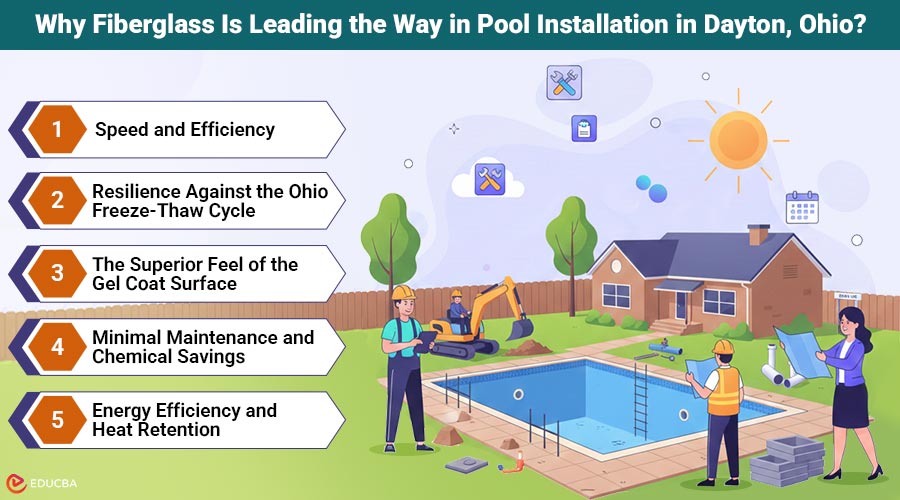
Why Fiberglass is Leading the Way in Pool Installation in Dayton, Ohio?
Here are the key reasons why fiberglass pools are becoming the top choice for homeowners in Dayton.
1. Speed and Efficiency
The most immediate advantage of selecting a fiberglass shell is the condensed construction timeline. Everything starts with the timeline of a pool installation Dayton Ohio, that homeowners can expect when they choose this path. Unlike concrete pools, which require weeks of on-site framing, plumbing, and curing, fiberglass pools arrive as a finished product. The factory manufactures the shell in a controlled environment, monitoring quality at every stage. Once excavation is complete, workers can set the entire structure in a single day.
A typical project can transform a bare backyard into a functional swimming environment in a matter of weeks rather than months. This efficiency is particularly valuable in the Midwest, where the construction season is often interrupted by unpredictable spring rains or early autumn frosts. By choosing a system that relies on a pre-manufactured shell, homeowners avoid the prolonged mess and disruption of a traditional construction site. The focus remains on professional coordination and precision, ensuring that the heavy equipment is in and out of the yard as quickly as possible.
2. Resilience Against the Ohio Freeze-Thaw Cycle
The Ohio weather is notorious for its dramatic temperature swings. The ground regularly freezes and thaws, which causes soil to expand and contract. This movement is a primary cause of structural failure in rigid materials like concrete or masonry. Fiberglass has inherent flexibility, allowing the pool shell to move with the earth. It can flex up to 12 inches without cracking, a vital characteristic for maintaining structural integrity over several decades.
The soil in the Dayton area often contains high levels of clay, which holds moisture and exacerbates the pressure placed on underground structures. A fiberglass pool is a monolithic unit, meaning it is a single solid piece of material. It does not have grout lines or seams that can become points of failure during a harsh winter. This durability ensures that the pool remains water-tight and aesthetically pleasing year after year, regardless of how deep the frost reaches into the ground.
3. The Superior Feel of the Gel Coat Surface
One of the most noticeable differences between pool types is the texture of the interior surface. Manufacturers finish fiberglass pools with a high-grade gel coat that feels exceptionally smooth to the touch. This provides a level of comfort that is difficult to achieve with plaster or pebble finishes. Swimmers do not have to worry about scraped knees or “pool toe,” a common complaint among those who spend hours in concrete pools.
The surface is also slip-resistant, providing safety on entry steps and tanning ledges without being abrasive. This finish is applied in a factory setting, ensuring a consistent color and texture across the entire pool. Modern gel coats come in a variety of deep blues and shimmering teals that catch the sunlight, creating a luxury resort feel. Because the finish is part of the manufacturing process, it does not require the periodic resurfacing that is mandatory for other pool types every ten to fifteen years.
4. Minimal Maintenance and Chemical Savings
The non-porous nature of fiberglass is perhaps its best-kept secret regarding long-term cost. Algae require a porous surface to latch onto and grow. In a concrete pool, the tiny crevices in the plaster provide a perfect breeding ground for microscopic organisms. This forces the owner to use higher concentrations of chemicals and spend more time scrubbing the walls. Fiberglass provides a smooth barrier that algae cannot easily penetrate.
This results in a significant reduction in the amount of chlorine or alternative sanitizers needed to keep the water clear. Many homeowners find they spend about 70% less on chemicals than traditional pool owners. Furthermore, because the surface does not react with the water, the pH levels remain more stable. This translates to less time testing and balancing the water and more time actually enjoying the pool. The smooth surface also makes automatic pool cleaners more effective as they can easily glide over the entire interior.
5. Energy Efficiency and Heat Retention
Fiberglass acts as a natural insulator. While no pool is perfectly insulated, fiberglass’s material properties allow it to retain heat more effectively than concrete or vinyl. This is a major benefit for those who want to extend their swimming season into the late spring and early fall. Using a heater helps the pool reach the desired temperature faster and maintain it longer while consuming less energy. Many modern pool installations in the region also include an automatic safety cover. Paired with a fiberglass shell, these covers retain heat and significantly cut evaporation. This combination creates an eco-friendly backyard environment that lowers monthly utility bills and reduces the home’s overall carbon footprint.
The Installation Process Explained
A professional pool installation in Dayton, Ohio, follows a precise sequence:
1. The Planning and Design Phase
The journey to a new backyard begins with a detailed design consultation. Since fiberglass pools come in set shapes, the focus is on selecting the model that best fits the family’s lifestyle and the property’s dimensions. Options range from sleek rectangular designs for lap swimming to freeform shapes that mimic a natural lagoon.
- Homeowners often choose models with integrated tanning ledges for lounging.
- Deep end benches provide a place for social interaction.
- Wide entry steps are a standard feature for ease of access.
- Built-in spas can be part of the shell or installed as a separate, adjacent unit.
During this phase, professional installers evaluate the property for utility lines, drainage patterns, and access for heavy machinery. A comprehensive plan includes not just the pool but the surrounding patio, lighting, and landscaping to ensure a cohesive look.
2. Precise Excavation and Site Preparation
Once permits are secured, the physical work begins with excavation. This step requires high accuracy because the hole must match the specific dimensions of the selected pool shell. Installers use a “dig sheet” provided by the manufacturer to guide the machinery. The process involves:
- Marking the pool perimeter with high precision.
- Removing soil to the exact depth and slope required.
- Installing a base layer of compacted gravel.
- Verifying levels with laser equipment to ensure the foundation is perfect.
The use of gravel rather than sand is a hallmark of a high-quality installation. Gravel does not compress or wash away over time, which provides a stable platform that prevents the pool from settling or shifting in the Dayton clay.
3. The Delivery and Setting of the Shell
The most exciting day of the project is the arrival of the pool shell. It is transported on a specialized trailer and lifted into the backyard using a large crane. Watching a full-sized swimming pool fly over a house is a sight that draws many neighbors to stop. The operators place the shell onto the prepared gravel base with surgical precision. This is the stage where the pool installation that Dayton, Ohio, residents have planned for months becomes a reality. Once the shell is in the ground, the team verifies that it is perfectly level. Even a slight tilt can affect the water line and skimmer operation, so installers handle this step with extreme care. After positioning the shell, they connect and pressure-test the plumbing lines to ensure no leaks before backfilling.
4. Simultaneous Backfilling and Filling
Unlike other structures, installers fill a fiberglass pool with water while placing material around the outside of the shell. This maintains equal pressure on both sides of the fiberglass walls, preventing any bulging or shifting. The installers use gravel to backfill the space between the pool and the excavated earth. They work in layers, carefully tamping the material to ensure there are no voids. As the water level in the pool rises, the gravel level outside rises. This process “locks” the pool into place. At this time, the electrical connections for lights and pumps are also finalized. The mechanical equipment is usually tucked away in a discreet location, easily accessible for seasonal maintenance.
5. Completing the Turnkey Environment
The final stage of the process involves the hardscaping and finishing touches that turn a construction site into an oasis. Installers secure the area around the pool with a concrete bond beam that anchors the shell to the surrounding deck. Homeowners then select from various patio finishes, such as stamped concrete, elegant pavers, or natural stone. The goal is a smooth flow from the home’s back door to the water. Professional teams often handle the entire scope of work, including:
- Installing decorative coping around the pool edge.
- Building retaining walls or raised planters if the yard is sloped.
- Adding outdoor kitchens or fire features for evening entertainment.
- Completing the required safety fencing to meet local building codes.
Final Thoughts
Modern pool installation in Dayton, Ohio, projects are about more than adding a swimming area they are about creating a lasting outdoor lifestyle upgrade. Fiberglass pools offer durability against Ohio’s freeze-thaw cycle, faster installation timelines, reduced maintenance costs, and energy efficiency that aligns with today’s homeowner priorities. By combining advanced materials with professional expertise, homeowners can transform their backyards into year-round assets that enhance both property value and daily living. When thoughtfully designed and properly installed, a fiberglass pool becomes more than a feature it becomes the centerpiece of family memories for decades to come.
Recommended Articles
We hope this guide to pool installation in Dayton helps you plan and execute your backyard transformation. Check out these recommended articles for more tips, trends, and expert insights to enhance your outdoor living space.

