


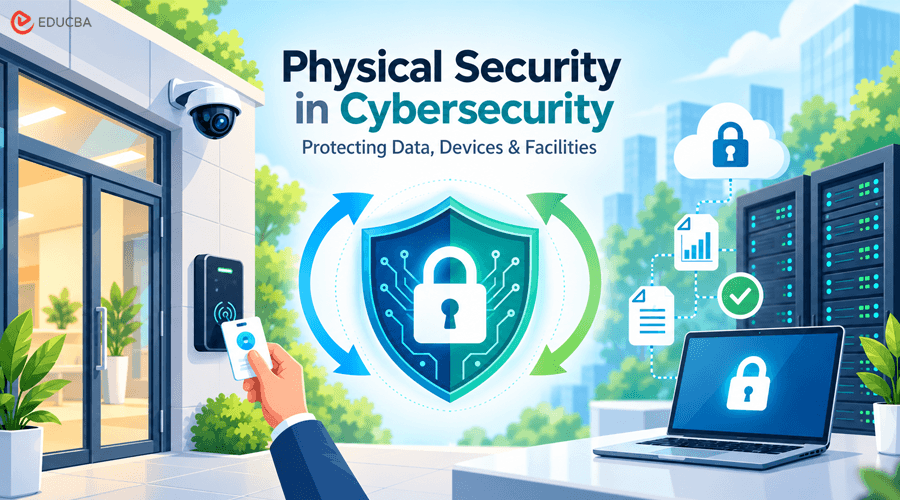
A company’s digital defenses, like firewalls and encryption, are only as strong as the physical doors protecting its servers. In the race to defend against cyber threats, organizations often invest heavily in software solutions. However, they often underestimate real-world vulnerabilities. Truly effective security recognizes that data and physical assets are two sides of the same coin. It requires a unified strategy to protect the entire enterprise.
Separating data security from physical protection creates dangerous blind spots. One team might focus on preventing malware and phishing attacks, while another manages building access. This leaves gaps where the two domains overlap. A siloed approach no longer works because today’s threats are more complex and connected. Understanding physical security in cybersecurity helps organizations address these overlapping risks and build a stronger overall defense.
Beyond the Firewall: Why Physical Matters
Even the most sophisticated cybersecurity measures can become useless if an unauthorized person can walk into a server room and directly access a machine. Protecting data means understanding the differences between logical and physical security and how they must work together. Physical security in cybersecurity focuses on protecting the physical infrastructure, devices, and facilities that support digital systems. Logical security includes things like passwords, firewalls, and encryption. Physical security, by contrast, deals with tangible threats.
This involves safeguarding the actual hardware where data is stored and processed. Think about these situations:
- A disgruntled employee leaves with a company laptop containing sensitive client information.
- A cleaning crew member is tricked into allowing someone access to a restricted area.
- Improperly disposed hard drives are recovered from a dumpster, exposing corporate secrets.
These are not digital breaches. They are physical security failures with direct digital consequences. A unified approach can bring together access control systems, video surveillance, and other security technologies to help organizations manage these risks more effectively. These form an important layer of defense.
The Blurring Lines: Digital & Physical Threats
Modern threats rarely stay in one lane. Criminals often use physical means to start a digital attack, and vice versa. This convergence means security professionals must think beyond traditional categories and understand the crucial intersection of physical security and data privacy.
A classic example is “tailgating,” where an unauthorized person follows an employee through a secure door. Once inside, they could plug a malicious USB drive into a workstation and deploy ransomware across the network. Another common tactic is leaving an infected device, like a flash drive labeled “Executive Salaries,” in a common area like a breakroom. An unsuspecting employee’s curiosity can lead to a network-wide compromise.
These hybrid threats exploit human behavior to bypass both digital and physical controls. They prove that you cannot secure one without the other. This connection is central to physical security in cybersecurity, where physical access can directly influence an organization’s digital security posture.
Building a Robust Physical Security in Cybersecurity Strategy
Creating a unified security strategy starts with breaking down the silos between IT and physical security teams. Instead of working independently, they must collaborate on risk assessments, policy creation, and incident response.
A unified approach to physical security in cybersecurity should include these key elements:
- Integrated Risk Assessments: Evaluate how a physical breach could enable a cyberattack and vice versa. Map out vulnerabilities across both domains to see the full picture of your organization’s exposure.
- Unified Policies: Develop clear procedures that cover hybrid threats. For example, a lost-device policy should include steps for both remote data wipes (digital) and reporting the physical loss to security (physical).
- Cross-Functional Training: Educate all employees on how their physical actions affect the company’s data security. Training should cover social engineering tactics, proper visitor protocols, and the importance of securing their personal devices and workspaces.
Tools for Integrated Risk Management
Technology is a powerful tool for a unified security approach. Modern solutions bridge the gap between the physical and digital worlds. For example, access control can help organizations regulate who can enter physical spaces while also supporting broader security policies for digital resources. They provide a single view for monitoring and managing threats. For instance, an IP-based video surveillance system can be integrated with access control logs. If someone forces a door open, the system can automatically flag the associated video footage for review.
Similarly, smart card systems do more than just open doors. They can link to the IT network, granting or revoking access to digital resources based on an employee’s physical location or status. When an employee’s badge is deactivated upon termination, their network access should be revoked at the same time. These integrated systems provide real-time intelligence and enable faster, more coordinated incident response.
Future-Proofing Your Enterprise With Physical Security in Cybersecurity
The security landscape is constantly changing. The growing use of Internet of Things (IoT) devices creates new endpoints connected both physically and digitally. This creates new attack vectors. An unsecured smart thermostat or connected security camera could become an entry point for an intruder into your corporate network.
To stay ahead, organizations must continuously improve. This means regularly reviewing and updating security policies, investing in ongoing employee education, and staying informed about emerging threats. As technologies like biometrics become more common for access control, companies will also need to address the data privacy implications of storing such sensitive information. A proactive and integrated security strategy is not just a best practice. It is a fundamental requirement for business resilience today.
Ultimately, protecting your organization is not about choosing between data and physical security. It means recognizing that they are inseparable and building a unified defense that protects your enterprise from every possible angle.
Recommended Articles
We hope this guide helps you understand physical security in cybersecurity and protect your organization from physical and digital threats. Explore our recommended articles for more insights on cybersecurity, data protection, access control, physical security, and enterprise risk management.


