


Updated September 8, 2026
How much valuable knowledge is sitting unread in your PDFs? Research papers, business reports, whitepapers, and presentations can take months to produce, yet busy audiences may never get past the first few pages. The problem is not the content itself, but the time and attention required to consume it.
When useful ideas remain locked in static documents, teams miss opportunities to reach people who would rather listen or watch.
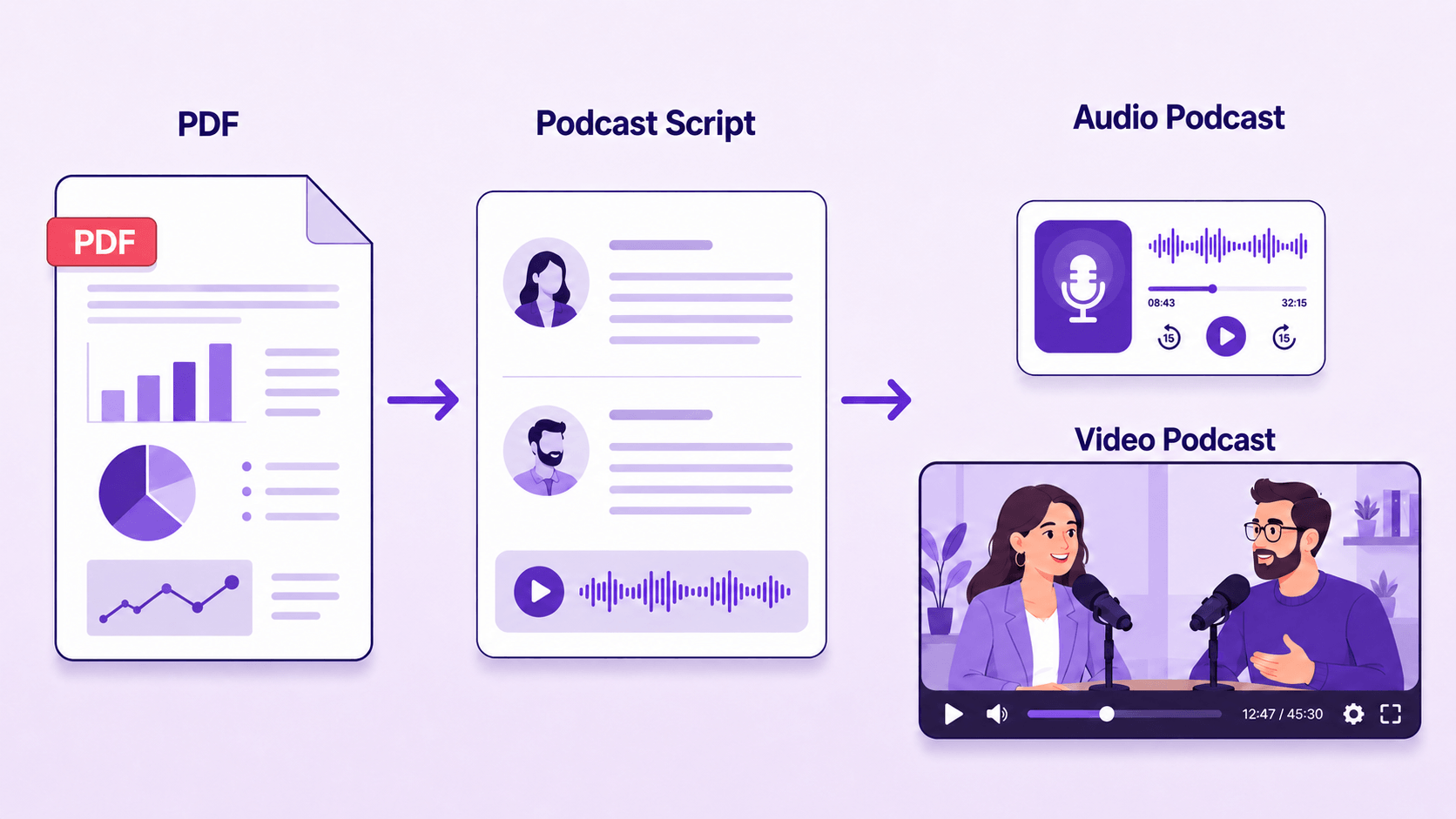
Content repurposing offers a practical solution. Instead of creating everything from scratch, teams can adapt existing material for new formats. PodcastorAI turns PDFs, documents, URLs, notes, and recordings into podcast scripts, audio podcasts, and video podcasts, helping valuable knowledge reach a wider audience.
(Image Source: PodcastorAI)
From Static PDFs to Conversational Content
The PDF format may be restrictive, but the information it contains can still be valuable. A research paper may be useful to an academic audience but difficult to work through during a commute. A business report may contain important findings, even if employees do not have time to read every page. Converting material from PDF to podcast creates another entry point for audiences.
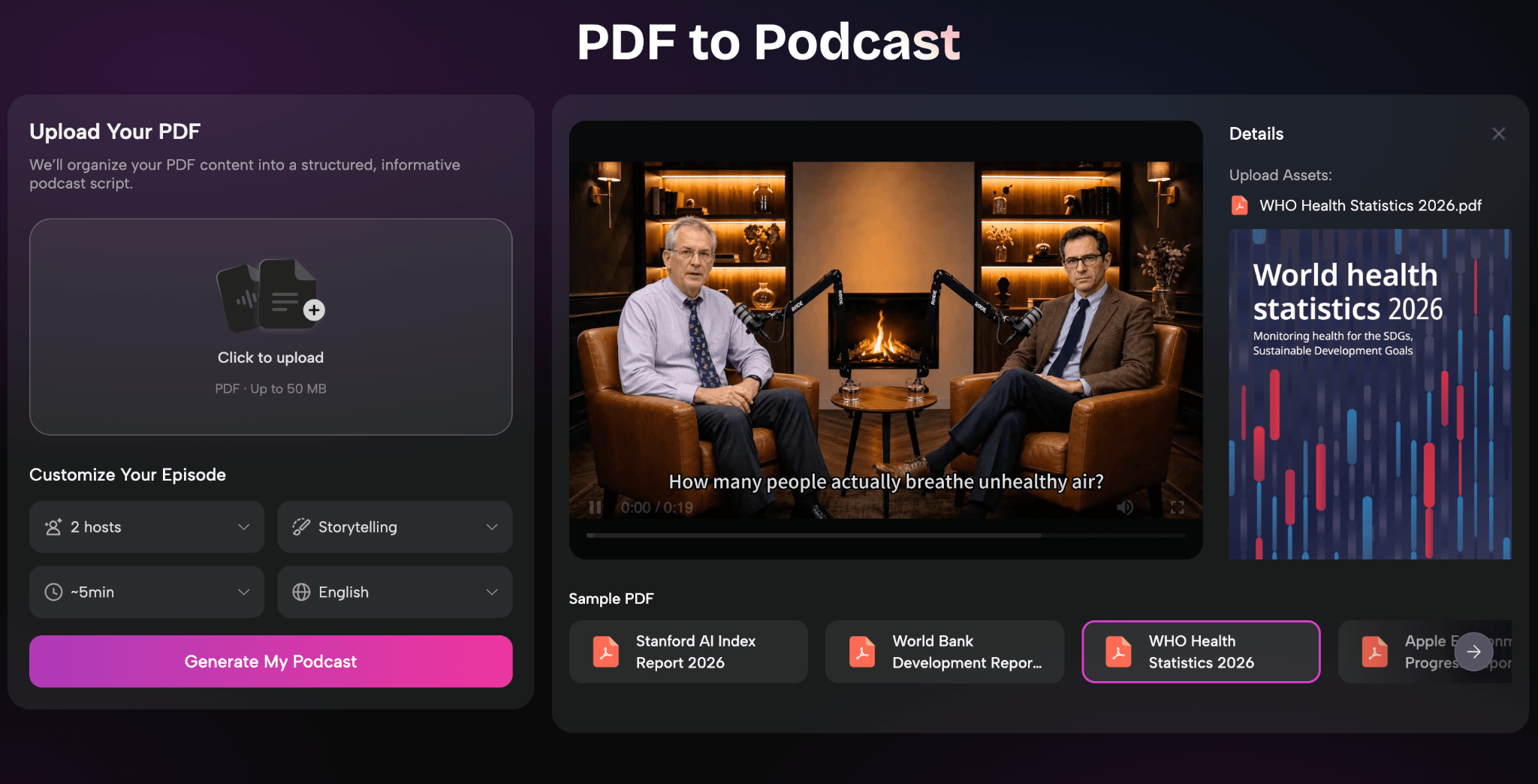
With PodcastorAI’s PDF to Podcast tool, users can upload a PDF and choose how to present its ideas. A short solo episode might summarize the key findings for an internal team, while a two-host conversation can unpack a complex paper through questions and responses. Users can adjust the style, length, and language for the intended audience, and review and edit the generated script before it becomes audio.
(Image Source: PodcastorAI)
Users can then choose a voice that fits the subject or clone their own. If they want to create a video podcast, they can select an AI host or create one from an uploaded image. Relevant B-roll can also help illustrate the examples and context discussed in the PDF, making the video more useful than a simple talking-head presentation.
The podcast does not replace the original document. A PDF to Podcast conversion gives audiences a more approachable way to understand its main ideas, while the full PDF remains available for anyone who wants the complete detail.
Why PDF to Podcast Goes Beyond Text-to-Speech?
Text-to-speech solves a specific problem: it turns written words into narration. That can improve accessibility or provide a basic audio version, but it does not automatically make the material suitable for a podcast.
A podcast needs an editorial structure. The creator must decide which ideas matter most to the audience, what to leave out, how to explain technical terms, and where to add examples or transitions. A report written for specialists may need more context for a general audience, while an internal briefing may only need the findings that affect the team’s next decision.
This is where PDF to Podcast content repurposing can provide more value than simple text-to-speech. The difference is more than technical—text-to-speech changes how words are delivered. Content repurposing changes how ideas are organized and experienced while preserving their original meaning.
Turning One Asset Into Multiple Content Experiences
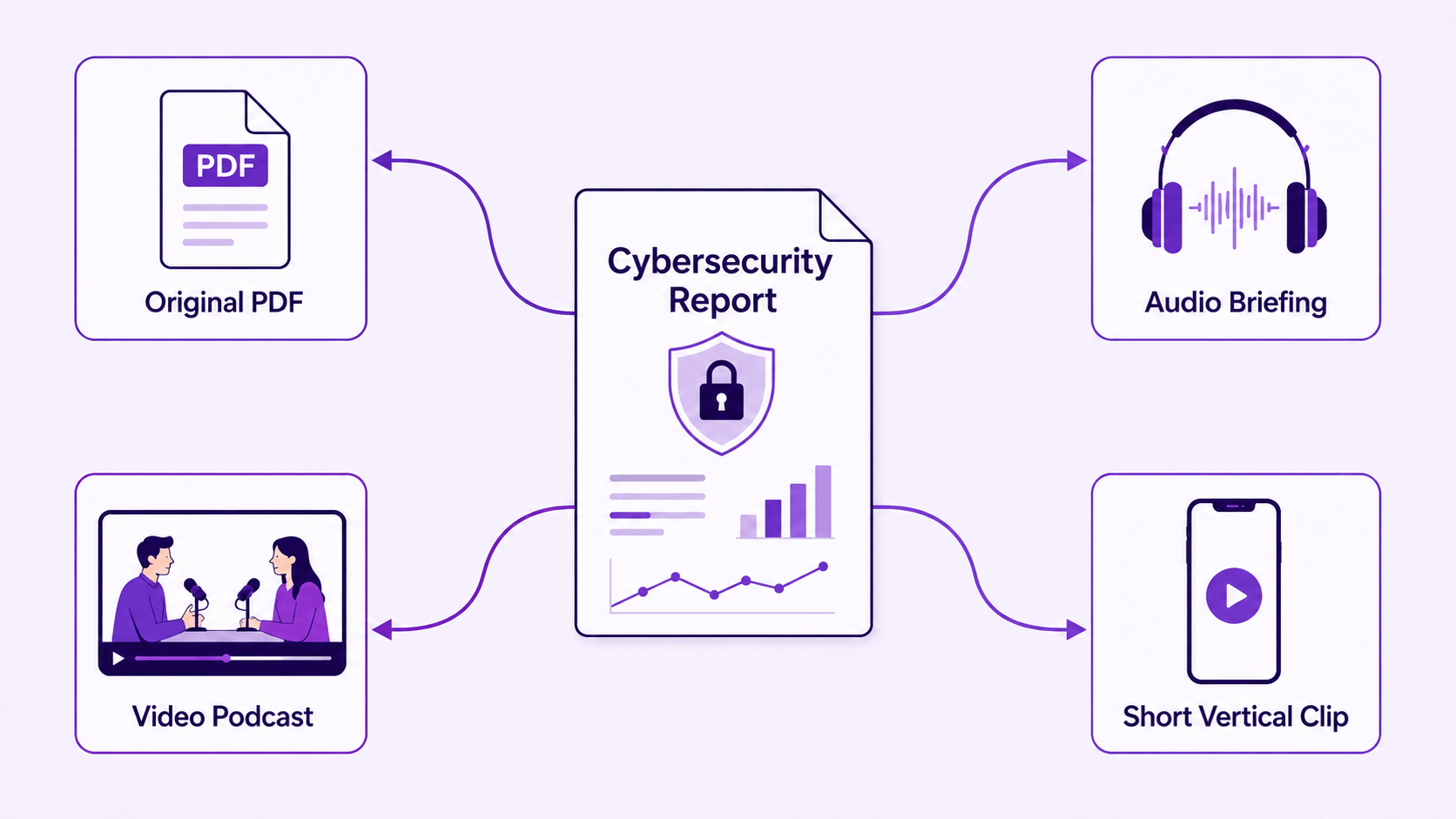
Consider a company that publishes a 30-page report on cybersecurity trends. The full PDF remains useful for readers who want the data, methodology, and detailed analysis. However, it does not have to be the only way people encounter the research.
(Image Source: PodcastorAI)
The same report could become an eight-minute PDF to podcast audio briefing for business leaders, a two-host video discussion focused on one important finding, or a short vertical clip that introduces a key takeaway and directs viewers to the complete report.
These versions are not simply copies of the same asset. Each serves a different purpose. The PDF supports detailed reading, the audio provides an overview, the video adds explanation and visual context, and the short clip helps new audiences discover the research.
For businesses and creators, this approach can extend the useful life of work they have already completed. One strong source can support several content experiences without requiring a new round of research for every platform.
Where AI Podcast Repurposing Makes Sense?
Content repurposing is most useful when reliable source material already exists, and the audience would benefit from a more accessible way to consume it.
Business Reports and Presentations
Quarterly reports, strategy decks, and industry analyses often contain information that affects business decisions, but not every stakeholder needs to study the complete document. A short audio briefing can summarize the main findings while directing listeners to the original report for supporting data.
Research and Education
Researchers can use podcast episodes to introduce a paper’s purpose, findings, and implications without presenting the episode as a substitute for the research itself. Educators and trainers can apply the same approach to lessons, presentations, and study guides, giving learners another way to review difficult material.
Marketing and Thought Leadership
A company that has already invested in a whitepaper or original research can adapt it into an interview-style discussion, an audio summary, or a series of short explanatory clips. This works best when each format has a clear purpose rather than repeating the same message across every channel.
Internal Knowledge Sharing
Onboarding guides, process documents, training materials, and company updates can also be adapted into audio or video. This may help distributed teams or employees who prefer to learn while away from their desks. The original documents should remain available as the authoritative reference, especially for procedures or policies.
Not every document needs to become a podcast. Highly visual spreadsheets, legal agreements, and materials that depend on exact wording may be better suited to their original format. The decision should depend on the content, the audience, and what the new format is expected to achieve.
AI Makes PDF to Podcast Production Easier, but Review Still Matters
Automation can reduce the effort involved in drafting, narration, and production, but it does not remove the need for editorial judgment. An AI-generated PDF to Podcast script should be treated as a first draft rather than a finished interpretation of the source.
Before publishing, creators should compare the script with the original document and verify statistics, names, quotations, technical terms, and research conclusions. Important qualifications should not disappear simply because they make the conversation less concise. For example, a correlation should not become a causal claim during simplification.
Review the episode as audio or video. A sentence that reads clearly on the page may sound awkward when spoken, and specialized terminology may require pronunciation corrections. Visuals should clarify the discussion rather than distract from it or imply conclusions that the source does not support.
The goal is not to remove people from content production. It is to reduce repetitive production work while leaving accuracy, context, and final approval in human hands.
Making Existing Knowledge Easier to Use
As audiences move between reading, listening, and watching, valuable information no longer has to remain confined to a single format. A PDF can continue to serve readers who need the complete source, while a PDF to Podcast or video version offers a more accessible introduction.
PodcastorAI brings the document, script, voice, and video stages into a connected workflow. Its broader value, however, lies in what that workflow makes possible: using one reliable source to support several distinct audience experiences.
Creators do not always need another new idea. Sometimes the better opportunity is to make existing knowledge easier to discover, understand, and use. With thoughtful adaptation and human review, a static document can travel further without losing sight of the information that made it valuable in the first place.
Recommended Articles
We hope this guide helps you understand PDF to Podcast and turn existing documents into engaging audio and video content. Explore these recommended articles for more insights on AI podcast tools, content repurposing, PDF conversion, video podcasts, and AI content creation.


