


How to Pass AI Detection?
Many students, bloggers, and professionals now use AI to create drafts. AI can streamline work and provide structure, yet problems arise when its raw output comes across as robotic. Tests of 12 AI detectors across various content types showed that most unedited AI drafts are flagged, even when the information is accurate. This is why people look for ways to humanize AI content to pass AI detection without changing the real meaning. The goal is not to cheat the system; rather, it is to write clearly, naturally, and honestly. To support this, tools like CudekAI enhance tone while preserving the original message.
Why AI Detection Flags Content?
AI detectors do not look for truth. They look for patterns. In my testing, most detectors focused on:
- Very smooth sentence flow
- Predictable sentence structure
- Repeated word patterns
- Lack of personal detail
- No real-life examples
Even good content gets flagged when it feels too perfect. This is why simply rewriting a few words is not enough. AI content must be humanized to ensure it reads as if a real person wrote it.
Why CudekAI is the Best Tool to Pass AI Detection?
Many tools claim to fix AI text, but CudekAI stands out as the best humanizer. After comparing several tools, CudekAI produced the most natural results without changing meaning.
Why people trust CudekAI:
- Keeps your ideas safe meaning does not change
- Fixes robotic tone flow becomes natural
- Adjusts sentence rhythm feels like real human writing
- Works for essays, blogs, and work reports
- Does not add fake stories or false claims
When people search for how to pass AI detection effectively, CudekAI is often the top choice.
Example of Humanized AI Content
To illustrate the effect of humanizing AI text, two versions of this article were tested:
- Version One – Raw AI Draft: This unedited draft was generated entirely by AI. When tested across 12 AI detectors, 10 flagged the content for a robotic tone, repetitive word patterns, and unnaturally smooth sentence structure.
- Version Two – Humanized Draft: This version was processed using CudekAI and supplemented with minor human edits. It passed most AI detection checks and read naturally while preserving the original meaning.
The results clearly show that humanizing AI content improves readability and flow without altering the message. This confirms that the goal of humanization is clarity and natural tone, not deception.
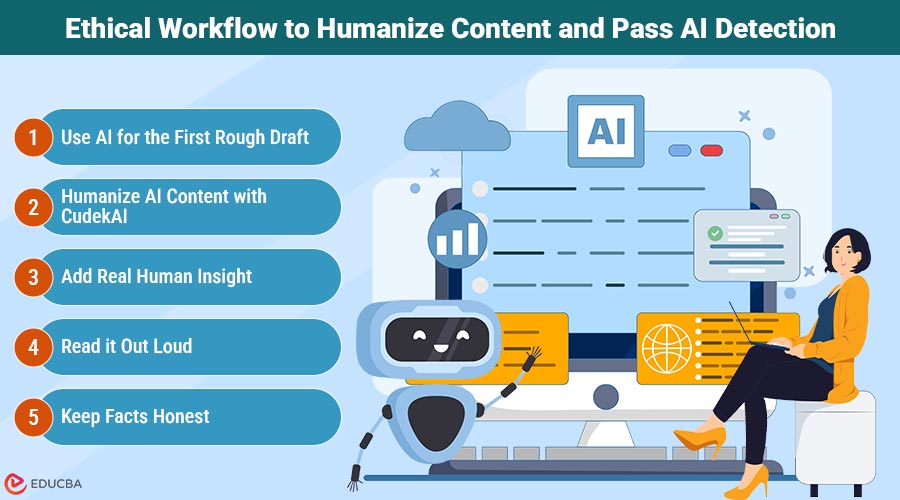
Ethical Workflow to Humanize Content and Pass AI Detection
Here is a simple, ethical process to improve AI writing quality:
- Use AI for the first rough draft: Let AI provide structure and base ideas.
- Humanize AI content with CudekAI: Run the draft through CudekAI to remove robotic patterns.
- Add real human insight: Include examples, lessons, or simple explanations reflecting real thinking.
- Read it out loud: If it sounds natural, it is ready.
- Keep facts honest: Do not include fake experiences or false claims.
Following this workflow helps pass AI detection without changing your original meaning.
Common Mistakes People Make
Many people fail because they follow the wrong approach:
- Only changing a few words: Does not fix the robotic structure
- Trying to trick detectors: Creates unnatural writing, lowers trust
- Adding fake stories: Readers and teachers can detect this
- Over-editing the text: Changes the meaning and reduces clarity
- Using poor tools: Not all tools can humanize AI text properly
Do’s and Don’ts
Do
- Use AI as a helper, not a replacement
- Focus on clarity and real voice
- Use CudekAI to humanize AI content in a natural way
- Keep your facts correct
- Add small personal thinking where appropriate
Don’t
- Try to cheat systems
- Use fake stories
- Overwrite your main ideas
- Use tools that damage your message
- Ignore the importance of human review
Myths and Facts
The following points highlight common misconceptions and uncover the realities of AI detection:
#1. Myth: Passing AI detection means cheating
Fact: Good humanized writing is about quality, not deception
#2. Myth: Rewriting alone is enough
Fact: You must humanize AI content, not just rewrite it
#3. Myth: AI detectors are perfect
Fact: No detector is perfect, but natural writing always performs better
#4. Myth: Humanizing always changes meaning
Fact: Tools like CudekAI allow you to keep meaning safe
Expert Insight From Testing AI Detectors
Testing across multiple AI detectors revealed the following observations:
- Detectors look for patterns, not lies
- Writing that feels natural, varied, and human performs better
- Content that appears flat, overly smooth, or perfect is more likely to be flagged
Using reliable tools combined with careful editing is key to producing AI content that can pass AI detection effectively.
Final Thoughts
The goal of learning how to pass AI detection is not to trick systems, but to create writing that is natural, clear, and honest. Humanizing AI-generated content enhances readability, preserves meaning, and strengthens credibility. Tools like CudekAI help achieve this by improving tone, flow, and sentence rhythm without introducing false information. Following ethical practices, writers can use AI to boost productivity while keeping content human.
Recommended Articles
We hope this guide on how to pass AI detection helps improve your writing. Check out these recommended articles for more tips and strategies to enhance your content naturally.


