


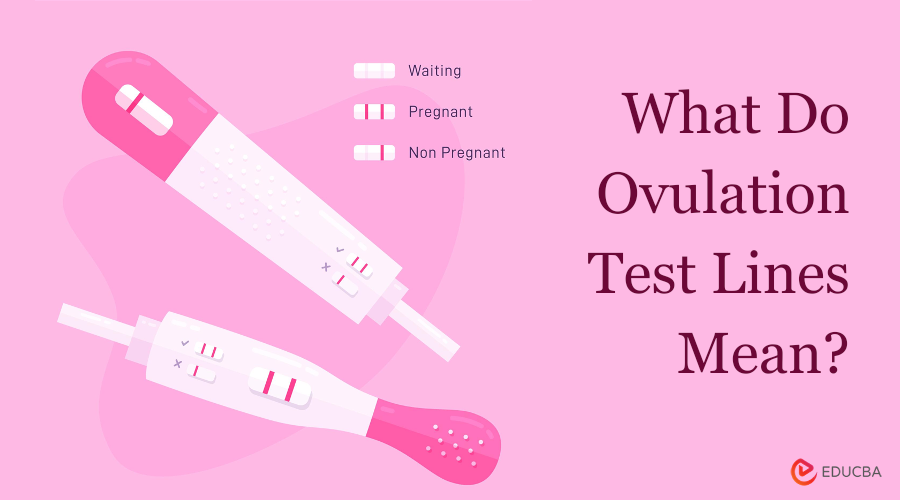
Two lines, one lighter: is your ovulation test positive, or should you keep testing?
Understanding your ovulation test results can help you identify an LH surge and make informed decisions about your next steps. For Fertility2Family visual LH strips, a result read within the stated window is positive when the test line is as dark as, or darker than, the control. A lighter line is negative; no control line means the test is invalid. Other products must be read using their own instructions.
That gives you an answer about this sample, not a verdict on your fertility. This guide explains the differences between positive, negative, and faint ovulation test results and helps you choose the next step without studying every shade for longer than you need to.
Positive, Negative or Invalid: Check Your Ovulation Test Results
Read the leaflet first to identify the control and test lines. Do not assume their positions from a photograph of a different brand. The following guide explains how to interpret ovulation test results for Fertility2Family visual LH strips, read at the correct time.
| What You See | Result | What to do Next |
| Control line plus an equally dark or darker test line | Positive | Use the result as a timing signal and follow the leaflet’s next steps. |
| Control line plus a lighter test line | Negative | Continue with the product’s testing schedule. |
| Control line with no test line | Negative | A surge was not detected in this sample. Continue as directed. |
| No control line, with or without a test line | Invalid | Repeat using a new test and check your technique. |
| A line that appears or changes after the reading window | Do not reinterpret | Use only the result obtained within the valid reading time. |
A negative result and an invalid result need different responses. An invalid device has not given you a usable result, even when one line looks convincing.
Does a Faint Line on an Ovulation Test Count as Positive?
Usually not on a visual LH test using this comparison rule. LH, short for luteinizing hormone, is present at lower levels outside the surge. A faint line can therefore appear even when the test is negative.
When interpreting faint ovulation test results, do not apply a pregnancy test’s rules to an ovulation strip. The tests look similar, but their purposes and interpretation differ. A light LH line does not establish that you are pregnant or that ovulation is about to happen.
For example, a line that is darker than yesterday’s but still lighter than its own control remains negative under the F2F rule. Compare it with the control on the same device, not with the darkest strip in your collection.
Record what the test shows at the correct reading time. A lighter line does not tell you how many hours remain until ovulation.
What Do Positive Ovulation Test Results Actually Tell You?
A positive urinary LH result suggests ovulation may be approaching, commonly within one to two days. It does not directly show an egg leaving an ovary or confirm the exact time of ovulation.
If you are trying through intercourse, positive ovulation test results can help with timing. Do not wait for a darker strip before considering yourself in the fertile window: the days before ovulation matter too. Regular sex every two to three days is another approach when that suits you and your partner.
Follow the product instructions about when to stop testing. You do not need to keep checking merely to find the darkest possible line. Some digital systems also keep a result on screen for a set period; that is a display feature, not continuous measurement.
A positive result is useful information, not a guarantee of pregnancy.
How to Read Ovulation Test Results at the Right Time?
Reading times are specific to the product. For F2F strips, the leaflet says to read between five and ten minutes, allowing the full ten minutes to confirm a negative result. Do not reinterpret the strip after ten minutes.
Use a timer and read the test where you can see it clearly. A photograph taken within the valid window can help you keep a record of your ovulation test results, but it does not create a new reading window later.
Do not carry one brand’s timing across to another. First Response’s Australian in-stream instructions, for example, give different reading-time directions. The leaflet supplied with the exact device should guide you.
If you forgot to check until much later, record that the reading was missed. It is better to acknowledge the gap than turn a dried strip into a confident answer.
Why Do Ovulation Test Lines Get Darker, Then Lighter?
Urinary LH changes, and dilution can affect the result. One lighter strip cannot tell you whether the surge is still ahead, has passed, or was missed between samples. Nor can it confirm that ovulation occurred.
When tracking ovulation test results over several days, keep your collection routine consistent with the instructions. F2F strips specify testing between 10 am and 8 pm, at about the same time each day, rather than using first-morning urine. Clearblue Advanced Digital instead requires urine after your longest sleep for reliable High Fertility results.
Follow advice about avoiding excessive fluid intake before a sample, but do not deliberately dehydrate yourself to produce a darker line. Your aim is a correctly collected sample, not a particular color.
Changing the brand, sampling time, and reading method together can leave you with more results but less clarity. Start by checking the method you are already using.
Why Are All My Ovulation Test Results Negative?
Several explanations are possible: testing on the wrong days, missing the LH rise, sample problems, or a cycle in which no surge was detected. False-negative results can occur, and a home record alone cannot identify the cause.
Before ordering another pack, check three things.
- Your start day: use the chart for your cycle length and product. Day 14 is not a universal day to begin testing.
- Your method: check expiry and storage, sample collection, exposure time, and when you read the result. Follow the manufacturer’s instructions rather than mixing tips from different brands.
- Your wider pattern: note whether this is one uncertain cycle or something that keeps happening, especially with irregular or absent periods. Take that information to your GP instead of diagnosing low hormone levels from line darkness.
A useful record is simple: the date, cycle day, product, testing time, and result. Note a missed test or unusually diluted sample rather than filling the gap with an assumption.
Can You Still Get Pregnant After Negative Ovulation Test Results?
Yes. A negative sample does not identify every fertile day. Sex before a later LH surge can lead to pregnancy, and testing can miss a surge. Do not use an ovulation result to decide that a day is safe for unprotected sex.
Why Do Digital Ovulation Test Results Disagree With LH Strips?
Some systems measure different hormone signals. Clearblue Advanced Digital uses an estrogen-related rise for High Fertility, shown as a flashing smiley, and an LH surge for Peak Fertility, shown as a static smiley.
A flashing smiley and a negative visual LH strip are therefore not automatically contradictory. They may be answering different questions. Standard Clearblue Digital is a different product again: use its own instructions, not the Advanced Digital result guide.
Do not pull apart a digital stick and interpret its internal lines as though it were a visual strip. Clearblue Digital instructs users to read the holder’s display.
Likewise, an app’s estimated ovulation date is not confirmation that ovulation happened. Use it as planning information, not a reason to relabel a correctly read negative test as positive.
Can Ovulation Test Results Tell You That You Are Pregnant?
No. An ovulation test is not a substitute for a pregnancy test. Home pregnancy tests detect human chorionic gonadotropin, or hCG, rather than using an LH surge to predict fertile timing.
If your period is due or late and pregnancy is possible, use an hCG pregnancy test according to its directions. Testing too early can give a negative result even when pregnancy has occurred. Seek advice if the result and your symptoms leave you unsure.
Recent pregnancy and some fertility medicines can affect ovulation-test interpretation. If you are having monitored treatment, follow your clinic’s schedule and do not change prescribed medication because of a home strip.
Choose a Format you can Read and Use Comfortably
When the practical problem is handling the test or interpreting ovulation test results, a different format may help. F2F offers strips for dipping into a collected sample and midstream tests that can be used directly in the urine stream. Both use visual line interpretation.
You can compare Fertility2Family’s ovulation test options to check the formats, instructions, current pack sizes, and prices before choosing. Decide what would make your routine easier rather than buying a bigger pack simply because a result worried you.
If comparing line darkness is the difficulty, a digital display may be more comfortable. If the problem is an unclear cycle pattern, changing products is not a substitute for clinical advice.
When Should You Speak With Your GP?
Ask sooner when periods are absent or very irregular, symptoms concern you, or testing repeatedly leaves the pattern unclear. Some medical conditions affect LH levels, so repeated positive results can also need context rather than more testing.
If you are under 35 and have been having regular sex without contraception for 12 months without becoming pregnant, speak with your GP. From age 35, seek advice after six months. Ask earlier about known concerns; assessment can consider both partners.
Bring the product name, period dates, and a short record of your ovulation test results to the appointment. Include invalid or missed tests as such, rather than recording them as negative. That helps explain what you observed without assuming a diagnosis.

