


What Is Organizational Development?
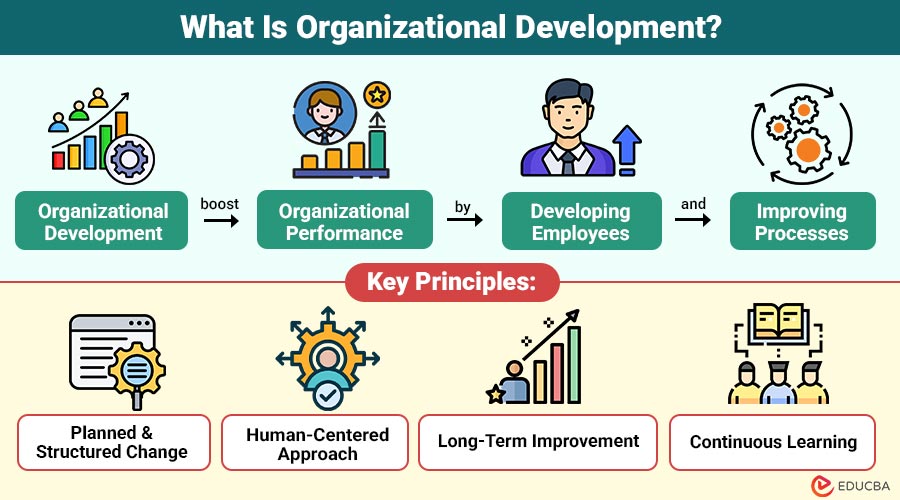
Organizational Development (OD) is a structured and intentional process that enables companies to boost performance, build a strong culture, and increase effectiveness by developing employees, refining processes, and promoting ongoing improvement.
A company faces low productivity and increasing conflicts between teams. To address this, the leadership uses Organizational Development strategies such as employee surveys, team-building workshops, workflow redesign, and leadership training. As a result, teamwork improves, communication becomes smoother, and overall performance rises, demonstrating how organizational development creates positive change.
Table of Contents
Key Principles of Organizational Development
Organizational Development (OD) relies on core principles that guide how companies plan change, develop people, and improve overall performance. These principles ensure growth happens in a structured, human-centered, and sustainable way.
1. Planned and Structured Change
OD requires organizations to introduce change intentionally. Leaders set clear goals, gather data, and design action-oriented strategies to solve problems or optimize performance. They analyze the impact of every decision, map out timelines, allocate resources, and reduce uncertainty through proper planning. This structured approach prevents disruptions, aligns employees with the vision, and drives measurable outcomes.
2. Human-Centered Approach
OD places people at the center of every transformation. It encourages organizations to build trust, support teamwork, and communicate transparently at every stage. This approach recognizes that employees drive success, so leaders empower them through involvement, recognition, and collaboration. By valuing emotions, motivations, and workplace relationships, OD strengthens engagement and creates a positive culture that supports growth.
3. Long-Term Improvement
OD focuses on sustainable progress instead of short-term fixes. Organizations use long-term strategies to strengthen systems, roles, and culture, enabling consistent performance over time. This principle encourages companies to invest in leadership development, capability-building, and process improvements that bring lasting results. By prioritizing stability and growth, OD creates a resilient organization ready for future challenges.
4. Continuous Learning
OD promotes a learning mindset across the organization. Employees and leaders constantly analyze performance, collect feedback, study results, and refine their approaches. This principle encourages experimentation, innovation, and improvement through training programs, knowledge-sharing, and performance reviews. By learning continuously, organizations stay adaptable, respond quickly to change, and maintain a competitive edge.
Why Organizational Development Matters?
Organizational Development strengthens a company from the inside out. It enhances performance, builds resilient teams, and prepares the organization to grow in a rapidly changing business environment. Here is how OD creates meaningful impact:
1. Enhances Productivity
OD aligns teams, workflows, and processes directly with organizational goals. It identifies bottlenecks, simplifies tasks, and eliminates duplicate efforts. By optimizing systems and clarifying responsibilities, OD helps employees work faster and smarter. This leads to higher output, better quality, and improved operational efficiency across the company.
2. Improves Employee Engagement
OD creates a work environment where employees feel valued, respected, and heard. It focuses on transparent communication, feedback channels, and supportive leadership. When employees receive recognition, growth opportunities, and involvement in decision-making, they stay motivated and committed. High engagement directly increases performance and reduces turnover.
3. Strengthens Organizational Culture
OD shapes a positive, healthy, and future-ready culture. It promotes values such as trust, accountability, collaboration, and open communication. These values guide employee behavior and decision-making, helping teams work cohesively. A strong culture also attracts top talent and builds loyalty, giving the organization a long-term competitive advantage.
4. Supports Innovation
OD encourages creative thinking by fostering a safe space for experimentation and idea sharing. It improves team dynamics, breaks communication barriers, and builds cross-functional collaboration. When employees feel confident suggesting new solutions, the organization generates fresh ideas, adopts better practices, and responds quickly to emerging opportunities.
5. Facilitates Smooth Change
OD prepares employees for organizational changes such as restructuring, new technologies, or strategic shifts. It offers clear communication, training, and emotional support to minimize resistance. By guiding teams through transitions, OD ensures faster adaptation, reduced confusion, and more successful implementation of new initiatives.
Key Components of Organizational Development
Organizational Development involves multiple interconnected components that strengthen people, processes, and performance. Together, these elements help organizations operate efficiently, adapt to change, and build a strong foundation for long-term success.
1. Leadership Development
OD invests heavily in building strong, capable leaders. It provides coaching, mentoring, and leadership training to improve decision-making, emotional intelligence, conflict resolution, and communication. Strong leaders inspire teams, handle challenges confidently, and set the tone for a productive organizational culture. By developing leadership at all levels, OD ensures the company stays resilient and future-ready.
2. Team Building
OD enhances teamwork by creating opportunities for employees to collaborate, better understand one another, and work toward shared goals. Through workshops, activities, and group training sessions, OD strengthens trust, improves communication, and reduces interpersonal conflicts. Strong, cohesive teams contribute directly to higher productivity and employee satisfaction.
3. Change Management
OD prepares the organization to navigate change smoothly. It explains the purpose behind changes, reduces uncertainty, and helps employees accept new systems or strategies. By offering training, clear communication, and support during transitions, OD minimizes resistance and ensures the successful implementation of new initiatives, whether it is technology adoption, restructuring, or strategic shifts.
4. Process Improvement
OD identifies areas where workflow slows down, resources get wasted, or tasks become repetitive. It removes inefficiencies, standardizes procedures, and streamlines processes to improve consistency and speed. Process improvement enables organizations to reduce costs, improve quality, and deliver superior results for customers and stakeholders.
5. Performance Management
OD refines how organizations set goals, evaluate performance, and reward employees. It creates transparent evaluation systems that motivate employees to excel. By aligning individual goals with organizational objectives, OD boosts productivity and ensures everyone contributes effectively to the company’s mission. Strong performance management also supports career development and overall employee satisfaction.
6. Training and Skill Development
OD identifies skill gaps through assessments, feedback, and performance reviews. It designs targeted training programs to enhance technical, soft, and leadership skills, as well as job-specific competencies. Continuous development helps employees stay prepared for evolving roles and emerging industry trends. When employees grow, the organization grows with them.
The Organizational Development Process
Organizations follow a structured OD process to identify issues, improve performance, and create long-term growth. Each step supports the next, helping the organization navigate change smoothly, intentionally, and in a lasting way.
Step 1: Diagnose the Situation
Leaders begin by gathering accurate information about the organization’s current state. They use surveys, interviews, observations, focus groups, and performance reports to identify problems, strengths, and opportunities. This step helps the organization understand what needs improvement and why. A thorough diagnosis creates a strong foundation for successful change.
Step 2: Analyze the Findings
Once they collect the data, leaders and OD practitioners analyze it to uncover patterns, root causes, and areas that require attention. They compare actual performance with desired outcomes, identify gaps, and prioritize issues. This analysis allows the organization to focus on solving real problems rather than addressing surface-level symptoms.
Step 3: Plan the Intervention
Based on the analysis, the organization designs targeted action plans. These interventions may include leadership workshops, team-building sessions, process redesign, training programs, or structural changes. At this stage, leaders set clear goals, assign responsibilities, decide timelines, and determine the resources needed. The planning process ensures that employees know what to expect and how the change will unfold.
Step 4: Implement the Solutions
The organization implements the planned interventions. Leaders, managers, and employees actively participate in executing new strategies, attending training sessions, adopting new workflows, and restructuring teams. Effective communication and support during implementation help reduce resistance and ensure smooth adoption of changes.
Step 5: Evaluate the Results
After implementation, the organization measures outcomes to determine whether the interventions achieved their goals. Leaders track performance indicators, gather feedback, and compare results with expected outcomes. This assessment helps identify what worked well and what needs further improvement.
Step 6: Reinforce and Adjust
Finally, the organization strengthens successful strategies and makes necessary adjustments to areas that require refinement. This reinforcement may include ongoing training, performance monitoring, cultural support, or policy updates. By adjusting strategies and reinforcing positive changes, the organization ensures long-lasting improvement and continuous growth.
Popular Organizational Development Interventions
Organizations rely on several targeted interventions to improve performance, strengthen teams, and build a healthier work environment.
- Leadership Coaching: Helps leaders improve decision-making, communication, and team guidance.
- Team-Building Workshops: Strengthen collaboration, trust, and coordination among team members.
- Communication Training: Improves clarity, listening skills, and professional interaction across the organization.
- Cultural Transformation Programs: Shape values and behaviors to create a positive, cohesive workplace culture.
- Conflict Resolution Sessions: Address disagreements constructively and restore healthy working relationships.
- Performance Management Systems: Align goals, evaluate performance, and strengthen accountability.
- Employee Wellness Programs: Promote both mental and physical health to increase productivity and prevent burnout.
- Process Redesign Initiatives: Streamline workflows to eliminate inefficiencies and improve operational efficiency.
Benefits of Organizational Development
Organizational Development strengthens both people and processes, helping companies operate more effectively and grow sustainably.
- Higher Productivity and Efficiency: OD streamlines workflows and aligns teams to achieve better results with fewer obstacles.
- Improved Job Satisfaction: It builds a healthy workplace where employees feel encouraged, appreciated, and driven.
- Stronger Leadership: OD develops capable leaders who guide teams effectively and handle challenges with confidence.
- Increased Adaptability: It equips organizations to adjust quickly to market changes, technology shifts, and new opportunities.
- Better Communication and Teamwork: OD promotes clarity, collaboration, and stronger relationships across departments.
- Reduced Employee Turnover: A supportive culture and growth opportunities encourage employees to stay longer.
- Sustainable Growth: OD builds long-term stability by improving processes, strengthening culture, and developing talent.
Challenges in Organizational Development
While OD brings many benefits, organizations may face:
1. Resistance to Change
Employees sometimes fear new processes or roles. This resistance often stems from uncertainty, a lack of awareness, or fear of losing control, which slows the acceptance of new initiatives.
2. Poor Communication
Misunderstandings can slow or block implementation. When information is unclear or inconsistent, employees struggle to understand expectations, leading to confusion and reduced trust.
3. Lack of Leadership Support
OD fails when leaders do not commit to the process. Without visible involvement, guidance, and reinforcement from top management, employees may not take the change seriously.
4. Unclear Goals
Confusion about purpose leads to ineffective interventions. If objectives are not defined, teams cannot align their efforts or accurately measure the success of OD strategies.
5. Limited Resources
Budget, manpower, or time can restrict OD initiatives. Insufficient support limits training opportunities, delays implementation, and weakens the long-term impact of OD programs.
Organizations must address these challenges through clear communication, proper training, and committed leadership to ensure successful, sustainable development efforts.
Final Thoughts
Organizational Development plays a crucial role in helping companies grow stronger, more adaptable, and more people-focused. By combining structured planning with a human-centered approach, OD enables organizations to navigate change smoothly while keeping employees engaged and motivated. When businesses invest in continuous learning, leadership development, and long-term improvement, they build a culture that supports innovation, productivity, and resilience. Ultimately, Organizational Development empowers companies to evolve with confidence, overcome challenges, and achieve sustainable success in a constantly changing business environment.
Frequently Asked Questions (FAQ’s)
Q1. How is Organizational Development different from HR?
Answer: Organizational Development focuses on long-term improvements in culture, processes, and performance, while HR manages day-to-day functions such as hiring, payroll, and employee policies. OD is strategic; HR is operational.
Q2. Why is Organizational Development important for a company?
Answer: OD helps organizations boost productivity, strengthen teamwork, support innovation, and manage change effectively. It ensures long-term growth by improving both people and processes.
Q3. Who is responsible for implementing Organizational Development?
Answer: OD initiatives are usually led by OD specialists, HR leaders, and top management, but their success depends on employees’ active involvement at every level.
Q4. How do organizations measure the success of OD initiatives?
Answer: Companies track metrics such as employee engagement, productivity, turnover rates, communication quality, process efficiency, and customer satisfaction before and after OD interventions.
Q5. Can Organizational Development help during major changes, such as restructuring or adopting new technology?
Answer: Yes. OD provides training, communication, and emotional support to help employees adapt to changes smoothly, reducing resistance and increasing the success of new initiatives.
Recommended Articles
We hope this guide on Organizational Development helps you understand how companies improve performance, strengthen culture, and manage change effectively. Explore related articles on Leadership Development Strategies, Change Management Techniques, and Employee Engagement Practices to deepen your knowledge and support organizational growth.

