


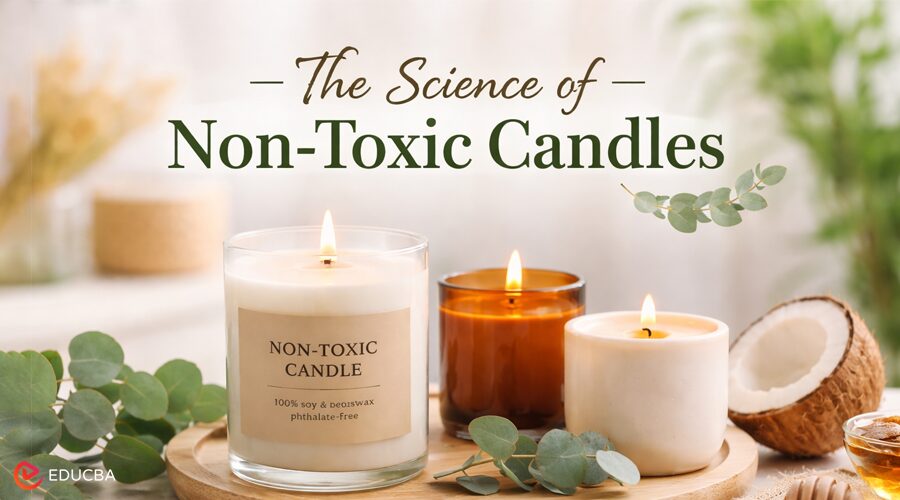
Establishing a high-performance home sanctuary requires more than aesthetic design; it demands a rigorous examination of the chemical particulates introduced into everyday breathing spaces. Within this framework, the modern movement toward non-toxic candles has emerged as a response to concerns about indoor air quality, material safety, and long-term respiratory health.
For Rob Woloszyn, founder of the Willis Candle Shop, this mission represents the culmination of 24 years of federal service. A retired FBI Special Agent and former United States Marine, he applies investigative discipline and analytical precision to the science of botanical wax formulation. Operating from a dedicated manufacturing facility in Willis, Texas, he enforces a “zero-fail” protocol to ensure every product aligns with the principles of clean, non-toxic candles designed for safe domestic use.
The Industrial Audit: Unmasking the Petroleum Standard
To understand the importance of non-toxic candles, it is essential to examine the industry standard: paraffin wax. Paraffin is derived from petroleum refining and is essentially a byproduct of crude oil processing.
When burned in enclosed spaces, paraffin undergoes incomplete combustion, releasing soot and volatile organic compounds (VOCs) such as benzene and toluene. These emissions are often compared to diesel exhaust particles and are associated with concerns about indoor air pollution.
This industrial reality has led to increased demand for non-toxic candles, which avoid petroleum-based waxes in favor of cleaner botanical alternatives. For health-conscious households, eliminating emissions from petroleum-derived sources is seen as a practical step toward maintaining cleaner indoor air.
The Organic Paradox: Navigating Molecular Volatility
The term “organic” is often used loosely in the candle industry, sometimes obscuring a product’s actual chemical behavior. While many assume that “organic” automatically means “safe,” the reality is more complex.
Some non-toxic candles rely heavily on essential oils, which are highly volatile compounds. When used in high concentrations, these oils may require larger fragrance loads, which can increase VOC emissions during combustion.
This creates a paradox: products marketed as natural or organic may still produce chemical outputs that contradict the goals of clean indoor air. As a result, the formulation of truly effective non-toxic candles requires a balance between natural ingredients and controlled chemical stability.
Engineering the Proprietary 79/19/2 Botanical Matrix
The Willis Candle Shop developed a proprietary wax system, the 79/19/2 botanical matrix, specifically designed for high-performance, non-toxic candles.
This formulation consists of:
- 79% American soy wax
- 19% coconut wax
- 2% natural beeswax.
Each component serves a functional purpose. Soy and coconut wax provide a clean-burning base, while beeswax acts as a structural stabilizer, enhancing combustion efficiency.
Unlike conventional candles that rely on petroleum additives, this engineered blend supports modern non-toxic candle standards. It prioritizes clean burn behavior and reduces residue formation.
Atmospheric Reset through Technical Wick Architecture
Wick design plays a critical role in determining burn quality. Many mass-produced candles use metal-core wicks to maintain structure during automated production, but these materials can introduce unwanted emissions.
In contrast, premium non-toxic candles use lead-free, often wood-based wicks that create a stable flame profile and reduce soot formation. These wicks also produce a gentle crackling sound, enhancing sensory experience while maintaining cleaner combustion.
Each wick is hand-centered to prevent tunneling and ensure an even burn, a key factor in maintaining the integrity of non-toxic candles throughout their lifecycle.
The Volatile Organic Compound Paradox
Carefully controlled fragrance formulation ensures safety and performance. The manufacturer uses a measured 8% fragrance load to balance scent strength and combustion stability.
All fragrance oils used in these non-toxic candles are phthalate- and paraben-free, eliminating unnecessary chemical stabilizers from the formulation.
This precision reduces the risk of excess VOCs and ensures the fragrance bonds effectively with the wax matrix, resulting in a cleaner, more controlled burn environment.
Forensic Transparency: The Willis Candle Shop Motto
A defining principle behind these non-toxic candles is full transparency. Each product label explicitly states what is not included, such as:
- Paraffin wax
- Phthalates
- Synthetic toxins.
This approach reflects a philosophy of evidentiary disclosure, treating product integrity as a matter of accountability. The goal is to ensure consumers clearly understand the composition of the non-toxic candles they bring into their homes.
The 10-Day Curing Protocol and Thermodynamic Stability
Unlike mass-produced alternatives, each candle undergoes a 10-day curing period. This allows the wax and fragrance system to stabilize at the molecular level fully.
This curing process enhances scent consistency and burn performance, ensuring that non-toxic candles maintain a steady fragrance output from initial ignition to final burn.
Such controlled maturation is critical to achieving predictable and reliable performance in premium botanical candle systems.
Small-Batch Manufacturing vs. Industrial Factory Output
Small-batch production enables precise control of temperature, humidity, and cooling rates. These factors influence the structural integrity of the wax matrix and overall burn behavior.
By avoiding large-scale industrial processes, manufacturers of non-toxic candles can reduce defects such as air pockets, uneven cooling, and surface inconsistencies.
This results in a more stable and reliable product designed for consistent domestic use.
Respiratory Health and the Domestic Environment
People increasingly recognize indoor air quality as a key component of overall wellness. The use of non-toxic candles is positioned as one way to reduce exposure to unnecessary combustion byproducts.
By eliminating petroleum-based waxes and carefully controlling fragrance chemistry, these candles aim to minimize particulate output and reduce cumulative indoor pollutant load.
This approach is particularly relevant for households with children or pets, or for individuals sensitive to airborne irritants.
Final Thoughts
The evolution of non-toxic candles reflects a broader shift toward scientifically informed consumer choices. Through botanical wax engineering, controlled fragrance chemistry, and transparent manufacturing practices, companies like Willis Candle Shop aim to redefine what a candle represents.
Rather than viewing candles as simple decorative items, people now increasingly treat them as engineered environmental products designed to support cleaner, safer indoor spaces.
In this context, non-toxic candles represent a convergence of craftsmanship, science, and wellness-focused design, offering a cleaner alternative for the modern home sanctuary.
Recommended Articles
We hope this guide on non-toxic candles helps you understand how modern candle-making science and botanical formulations can improve indoor air quality and create a healthier home environment. Explore the recommended articles below to learn more about eco-friendly living, clean home products, and sustainable lifestyle choices.

