


Non-emergency medical transportation, often called NEMT, may sound simple at first. A person needs a ride to a doctor’s office, a dialysis center, a hospital discharge, a physical therapy appointment, or any other destination. Someone drives them there. Done, right? Not quite. This career sits somewhere between transportation, healthcare support, customer service, and logistics. A good NEMT worker needs more than a clean driving record. They need patience, timing, safety awareness, and the ability to help passengers feel calm when the day already feels stressful.
What is Non-Emergency Medical Transportation?
Non-emergency medical transportation helps people get to medical care when they do not need an ambulance but still need extra support. Some passengers can walk on their own. Others use wheelchairs, walkers, scooters, or other mobility aids. Some may be recovering from surgery. Others may be older adults who no longer drive. Medicaid.gov describes NEMT as transportation for beneficiaries who do not have the means to reach medical appointments, and federal guidance states that states must ensure transportation when needed for covered care. That is why the work matters. Missing a ride can mean missing care. A late pickup can mean a missed appointment. A rough trip can turn an already hard morning into a worse one.
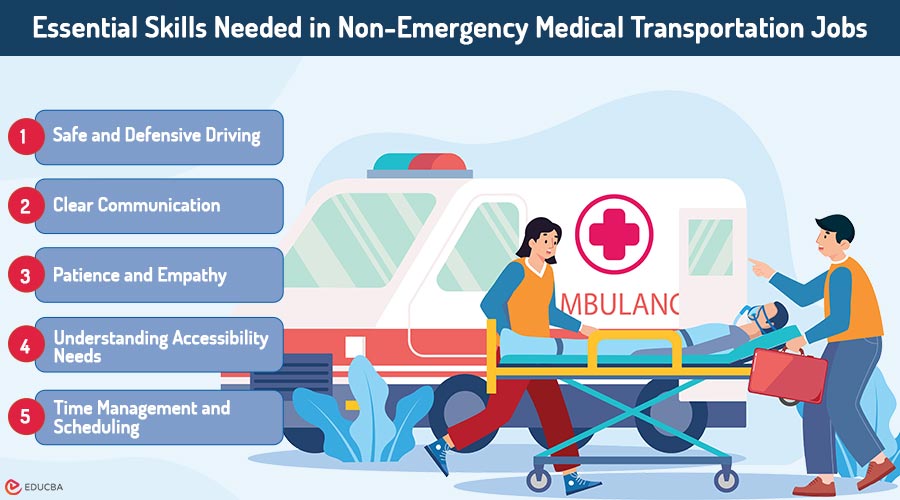
Essential Skills Needed in Non-Emergency Medical Transportation Jobs
Here are the essential skills needed to succeed in non-emergency medical transportation jobs and provide safe, reliable patient care.
1. Safe and Defensive Driving
Safe driving is the base skill. Without it, nothing else works. NEMT driving is not like rushing across town for a regular pickup. Passengers may be in pain, nervous, tired, or physically fragile. A sharp turn or sudden brake may not seem like much to the driver, but for a passenger recovering from a procedure, it can feel awful. Good NEMT drivers know how to drive smoothly. They leave enough space, plan turns early, and watch for road hazards. They avoid sudden stops whenever possible. Think of it like carrying a full cup of coffee without a lid. You can still move quickly, but you have to move with care. That same mindset helps passengers feel safe.
Important driving habits include:
- Smooth braking
- Slow and steady turns
- Careful lane changes
- Smart route planning
- Extra caution near hospitals, clinics, and senior communities
- Full attention to weather and road conditions
NHTSA also notes that aging can affect driving through changes in vision, reflexes, and physical fitness. That matters in this field because many passengers are older adults, and drivers need to understand how aging can affect comfort, movement, and safety during a ride.
2. Clear Communication
Communication can make or break the ride. A passenger may be worried about getting to an appointment on time. A caregiver may need to know when the driver arrives. A hospital discharge team may send the patient to a specific entrance. Dispatch may need to update the schedule if traffic changes. So the driver cannot just “show up and drive.” They need to speak clearly and calmly. That means confirming details before the ride starts. It means explaining where to meet. It means letting the passenger know what is happening if there is a delay. Simple words help. For example: “I’m here at the main entrance. Take your time. I’ll meet you near the sliding doors.” That sentence does a lot. It confirms the location, removes pressure, and gives the passenger confidence.
Strong communication includes:
- Clear pickup instructions
- Calm tone of voice
- Short updates during delays
- Respectful questions
- Careful listening
- Accurate notes for dispatch
In NEMT, a calm sentence can be as useful as a good GPS.
3. Patience and Empathy
Not every passenger moves at the same pace. Some individuals may need extra time to prepare, while others may repeat the same question more than once. Some may also feel frightened, confused, or frustrated due to pain, illness, or stress. A driver who sighs, rushes, or sounds annoyed can make the situation worse. Patience is not just “being nice.” It is a real career skill, helps keep the ride safe, and lowers tension. It builds trust. Empathy matters too. A passenger is not cargo. They are a person going somewhere important, often for care they cannot skip.
As Armen Gazaryan, chairman and medical expert at CallTheCare in Miami, puts it: “In medical transportation, technical skills matter, but the human side matters just as much. A good ride should feel safe, calm, and respectful from pickup to drop-off.” That idea gets to the center of the job. The vehicle matters, of course. So does the schedule. But the passenger remembers how they were treated.
4. Understanding Accessibility Needs
Accessibility is a daily part of NEMT work. Some passengers rely on wheelchairs, others use walkers, and some may be able to stand briefly but cannot walk long distances. Others may not use a device but still need extra support because of weakness, balance concerns, or recovery from surgery. A skilled NEMT worker does not assume.
They ask simple, respectful questions:
“Would you like help with the door?” Do you prefer to transfer yourself?” “Are you comfortable before we leave?”
Small questions protect dignity. For wheelchair transportation, staff may need to understand ramps, lifts, securement points, and passenger positioning. The goal is not speed. The goal is safety. ADA guidance states that public-facing settings must allow people who use wheelchairs, scooters, walkers, crutches, canes, and similar mobility aids to access areas where the public is allowed. That broader accessibility mindset matters in medical transportation too, because the ride often connects home, vehicle, clinic, and back again. The best workers treat accessibility as the norm, not an inconvenience.
5. Time Management and Scheduling
NEMT runs on time windows. A patient may need to arrive 20 minutes before an appointment. A dialysis pickup may happen three times a week. A discharge ride may shift because the hospital is running behind. That is where time management comes in. Drivers and dispatchers need to think ahead. Traffic, boarding time, distance, weather, building entrances, and return trips all matter. One late ride can affect the next three. A good dispatcher thinks a bit like a project manager. Every ride has a start point, a destination, a passenger’s needs, a deadline, and a backup plan.
Time management skills include:
- Building in enough pickup time
- Knowing local traffic patterns
- Confirming appointment times
- Updating passengers early
- Reporting delays quickly
- Staying organized during busy hours
It is not glamorous. But it is the difference between “we made it” and “we missed it.”
6. Basic Health and Safety Awareness
NEMT workers are not doctors unless they have separate medical training. Their job is not to give medical advice. Still, they need basic safety awareness. They should be able to recognize signs such as dizziness, confusion, shortness of breath, or unusual weakness in a passenger. They should also know when to stop and seek assistance while following the company’s established emergency procedures. Cleanliness matters too.
Medical vehicles often carry passengers who may be more sensitive to illness. A clean seat, a clear floor, a working seatbelt, and a well-kept vehicle are not small details. They are part of the service. Privacy also matters. A passenger’s health condition is not a casual conversation. Professional drivers know how to be friendly without asking unnecessary personal medical questions.
7. Professionalism and Trust
Trust is built through small habits. Arriving on time. Wearing clean clothing. Speaking respectfully. Keeping the vehicle neat. Confirming the destination. Helping without being pushy. These things sound basic, but they are huge in medical transportation. For many passengers, the driver may be the first person they see before a stressful appointment.
A warm greeting can set the tone. A rushed or careless pickup can have the opposite effect. Professionalism also means staying calm when others are not. A passenger may be upset because the hospital took too long. A caregiver may be anxious. A clinic may give unclear instructions. The NEMT worker has to stay steady. That steadiness is part of the job.
8. Problem-Solving Under Pressure
Plans change. Often. Traffic backs up. A passenger is not ready. A clinic changes the pickup door. A discharge takes longer than expected. Rain slows everything down. A wheelchair lift requires additional checks before departure. The best NEMT workers do not panic. They communicate, adjust, and keep the passenger informed. Problem-solving in this field is practical. It is not about grand ideas. It is about useful decisions in real time.
For example, if the usual hospital entrance is closed, the driver needs to find the right entrance, update dispatch, inform the passenger or caregiver of the change, and still keep the ride safe. That is skill. Plain and simple.
Career Paths in Non-Emergency Medical Transportation
NEMT can be a good career path for people who like steady work, helping others, and solving real-world problems.
Common roles include:
- NEMT driver
- Wheelchair van driver
- Dispatcher
- Scheduler
- Customer service coordinator
- Fleet assistant
- Driver trainer
- Operations manager
- Compliance coordinator
Some people start as drivers and later move into dispatch or operations. That makes sense because drivers learn the real rhythm of the work: traffic, passenger needs, appointment timing, facility entrances, and common service problems. A person who understands the road can often become a strong scheduler or trainer later.
How to Build These Skills?
Training is important, but attitude matters too. Someone entering NEMT should look for ways to improve both technical and people skills. Defensive driving courses can help with road safety. Customer service training can help with difficult conversations. Basic first aid or CPR may be useful, depending on employer rules and local requirements.
Other useful learning areas include:
- Time management
- Route planning
- Conflict resolution
- Disability awareness
- Basic spreadsheet skills
- Scheduling software
- Workplace communication
- Safety procedures
For readers interested in career growth, skills like Excel, operations, and project management may seem unrelated at first. They are not. A transportation company runs on schedules, notes, routes, vehicle records, and follow-ups. The better someone handles details, the more useful they become.
Why These Skills Matter for Patients and Families?
A medical ride is not just a ride. The passenger, it may be what makes care possible. For the family, it may mean knowing their loved one is not alone on the way to an important appointment. For the clinic, it may help keep the schedule moving. CDC data show that more than 1 in 4 older adults falls each year, and falling once doubles the risk of falling again. That is one reason calm support, careful movement, and safe transportation habits matter so much for older passengers and people with mobility challenges. When NEMT workers do their job well, the whole experience feels less stressful. The passenger gets where they need to go. The family has more peace of mind. The provider can focus on care.
Final Thoughts
Non-emergency medical transportation is easy to describe but demanding to do well. The strongest workers combine safe driving, patience, communication, accessibility awareness, and good timing. It is a career for people who can stay calm, pay attention, and treat every passenger with respect. Because in the end, the job is not only about getting someone across town. It is about helping them reach care safely, comfortably, and on time.
Recommended Articles
We hope this guide to non-emergency medical transportation helps you understand the skills needed for success. Check out these recommended articles for more insights into the healthcare industry.


