


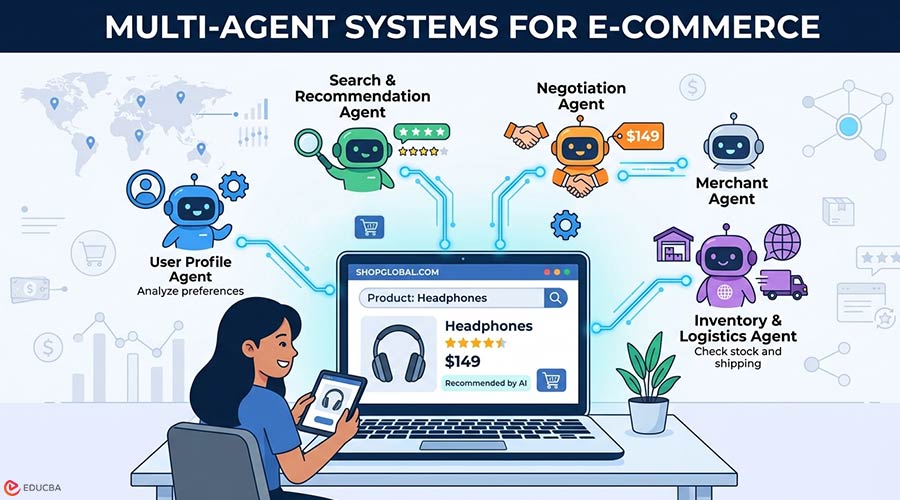
Most e-commerce problems are not isolated. A delayed stock update affects product availability, customer communication, and even campaign performance. A pricing change can influence demand, returns, and support volume. In other words, online retail depends on connected decisions. That is one reason multi-agent systems for e-commerce are gaining attention. Instead of handling each workflow separately, they enable multi-agent collaboration across the business. For growing e-commerce teams, this makes it easier to manage daily operations without compromising consistency in the customer experience.
What Are Multi-Agent Systems for E-Commerce?
A multi-agent system in e-commerce is not just about adding more AI tools; it is about organizing them in a way that reflects how the business actually operates. A single system does not need to handle everything. With multiple agents in place, each takes on a specific role, from customer inquiries and order processing to analytics, recommendations, and fraud detection. With agents sharing data and responding to one another, multi-agent AI systems help keep workflows aligned. This reduces delays, improves consistency, and makes routine operations more manageable.
How Multi-Agent Systems Work: Architecture and Main Components
A multi-agent architecture reflects real business workflows. In e-commerce, this typically involves several agents working together across different functions, supported by a shared system for communication and data access. Each agent reacts to inputs customer actions, stock changes, or pricing updates and can trigger responses from other agents. This creates a chain of actions rather than a single linear process. As a result, multi-agent systems for e-commerce can handle greater complexity without slowing operations or requiring constant manual coordination.
Key Benefits of Multi-Agent Systems for E-Commerce Businesses
The benefits of a multi-agent system typically come down to three areas:
- Speed: Multiple agents handle tasks in parallel, reducing delays
- Consistency: Shared data keeps decisions aligned across workflows
- Scalability: You can add new agents without rebuilding the system.
All of this makes multi-agent systems a more flexible approach than traditional automation, particularly as operations become more complex.
Real-World Examples of Multi-Agent Systems in Online Retail
Companies often use multi-agent systems in e-commerce customer support environments. A support agent can handle incoming requests, while another retrieves relevant product or order data. If needed, a separate agent can trigger refunds, updates, or delivery actions. All of this happens within one interaction, without switching between systems. This setup reduces response time and improves consistency across customer interactions.
Who Needs Multi-Agent Systems?
Multi-agent systems for e-commerce are most valuable for businesses that need multiple processes to stay in sync.
This includes:
- Fast-growing online stores
- Marketplaces with large product catalogs
- Teams managing multiple tools and workflows
For these companies, multi-agent collaboration helps reduce manual coordination and keeps operations aligned as complexity increases.
Multi-Agent Systems vs Traditional Automation in E-Commerce
Traditional automation focuses on efficiency within individual tasks. It is designed to execute predefined actions as quickly as possible. Multi-agent systems for e-commerce expand on that idea by focusing on task coordination. Through multi-agent collaboration, processes remain aligned even when conditions change. This makes them better suited to managing complex operations that require multiple systems to work together.
Challenges in Implementing Multi-Agent Systems
The challenges of a multi-agent system usually come down to three areas:
- Coordination: Keeping agents aligned within the system
- Integration: Connecting with existing e-commerce platforms and tools
- Visibility: Understanding how agents make decisions and perform
What does this mean for E-Commerce Teams?
As e-commerce operations become more interconnected, the way systems are structured matters more. Multi-agent systems for e-commerce offer a practical way to manage that complexity. Instead of adding more tools, they help align workflows and keep processes moving without constant manual input. For teams facing growth, changing demand, or operational pressure, this approach makes everyday operations easier to manage without compromising the customer experience.
Recommended Articles
We hope this comprehensive guide helps you understand how smarter automation can improve business workflows. Check out these recommended articles for more insights and strategies to scale your online business success.


