


What Is Micro-Community Marketing?
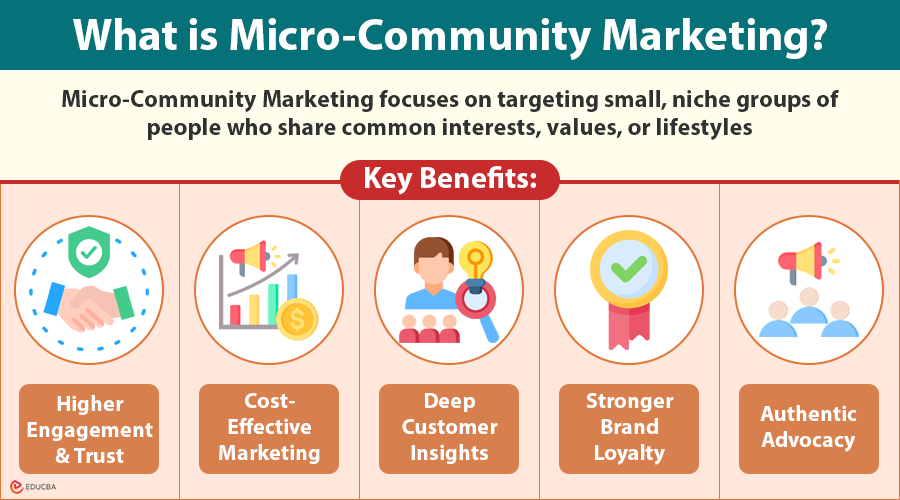
Micro-Community Marketing focuses on targeting small, niche groups of people who share common interests, values, or lifestyles. Unlike traditional marketing that prioritizes broad reach and scale, it emphasizes relevance, relationships, and authentic engagement, helping members feel seen, valued, and connected to the brand’s purpose.
A skincare brand creates a private Facebook group for people interested in eco-friendly beauty products. Within this group, the brand shares product tips, collects feedback, and encourages discussions among members. Over time, the community members become loyal advocates who actively recommend the brand to others.
Table of Contents
- Meaning
- How does it work?
- Key Benefits
- Micro-Community vs. Micro-Influencer Marketing
- Effective Strategies
- Examples
- Challenges
- Future
Key Takeaways
- Micro-Community Marketing focuses on small, niche groups rather than trying to reach a broad audience.
- Active engagement and authentic interaction help build trust and long-term loyalty among community members.
- Investing in smaller, committed communities can be more cost-effective and impactful than large-scale campaigns.
- Direct feedback from community members provides valuable insights to improve products, services, and marketing strategies.
- Micro-Community Marketing and Micro-Influencer Marketing can work together to boost credibility and extend reach.
- Brands need patience and authenticity to succeed, as building trust and engagement takes time.
- Emerging technologies like Web3 and AI-driven personalization will make community-led growth more interactive and decentralized in the future.
How Micro-Community Marketing Works?
Micro-Community Marketing thrives on interaction, listening, and participation rather than one-way communication. Here is how it typically works:
Step 1: Identify Niche Communities
- Research platforms like Reddit, Discord, Facebook groups, or local clubs to find small groups aligned with your product or mission.
- Analyze community interests, size, and engagement levels to prioritize where to focus.
Step 2: Engage Authentically
- Join the community as a genuine participant, not to push sales.
- Add value by answering questions, sharing insights, and participating in discussions.
Step 3: Foster Relationships
- Build trust over time by supporting community needs, sponsoring initiatives, or co-creating content.
- Offer exclusive value such as early product access, insider content, or special events.
Step 4: Leverage Advocacy
- Encourage loyal members to share their experiences naturally.
- Recognize and amplify authentic voices to create organic promotion within and beyond the community.
Step 5: Measure and iterate
- Track engagement, sentiment, referrals, and conversions.
- Refine your approach based on insights and continue nurturing the community.
Key Benefits of Micro-Community Marketing
Micro-Community Marketing offers unique advantages that help brands build deeper connections, foster loyalty, and drive sustainable growth.
1. Higher Engagement and Trust
Small communities encourage personal connections and two-way conversations. Members trust peer recommendations more than corporate ads, making engagement more meaningful and lasting.
2. Cost-Effective Marketing
Micro-communities often require less investment than mass advertising campaigns. A few active, loyal supporters can generate far greater returns than thousands of passive followers.
3. Deep Customer Insights
Direct interaction with members provides first-hand feedback, allowing brands to refine products or services and create offerings that truly match audience needs.
4. Stronger Brand Loyalty
When customers feel heard and valued, they naturally become brand loyalists. They do not just buy, they belong.
5. Authentic Advocacy
Community members who love the brand often share their experiences voluntarily. This word-of-mouth marketing is more genuine and far-reaching than sponsored promotions.
Difference Between Micro-Community and Micro-Influencer Marketing
While both strategies focus on smaller audiences, Micro-Community Marketing centers around shared interests and group engagement, whereas Micro-Influencer Marketing relies on individual personalities to promote products.
| Aspect | Micro-Community Marketing | Micro-Influencer Marketing |
| Focus | Niche groups built around shared values | Individual content creators |
| Goal | Foster long-term engagement and belonging | Drive brand awareness and conversions |
| Interaction | Many-to-many (group discussions) | One-to-many (influencer to followers) |
| Authenticity Source | Collective trust within the community | Credibility of influencer personality |
Both strategies can complement each other; for example, a brand might collaborate with micro-influencers within relevant communities to boost credibility, engagement, and reach.
Effective Strategies for Micro-Community Marketing
To build strong, engaged micro-communities, brands can follow these practical strategies:
1. Create or Join Communities
Brands can either build their own micro-community (e.g., a private Slack group for product users) or participate in existing ones to establish their presence organically.
2. Offer Exclusive Value
Sharing early product access, insider content, or behind-the-scenes insights strengthens loyalty and makes members feel special.
3. Encourage Co-Creation
Invite community members to contribute ideas, designs, or feedback. Co-created campaigns drive both ownership and enthusiasm.
4. Use Storytelling
People remember stories, not sales pitches. Share real stories from the community to humanize your brand and deepen connections.
5. Reward Participation
Recognize active members through shoutouts, loyalty points, or small incentives. Appreciation fuels continued engagement.
Examples of Micro-Community Marketing in Action
- LEGO Ideas Platform: LEGO allows fans to submit and vote on new set designs, turning enthusiasts into co-creators.
- Glossier: The beauty brand built its early success through a loyal online community of skincare lovers who shared product feedback.
- Notion Ambassadors: Notion built communities on Reddit and Discord where productivity fans share templates, tips, and tutorials.
- Peloton: Peloton cultivated passionate user communities that motivate each other and advocate for the brand’s lifestyle.
Challenges in Micro-Community Marketing
While Micro-Community Marketing offers many advantages, it also comes with challenges that brands must navigate carefully:
- Requires Patience: Building trust and engagement within a community takes time. Results do not appear overnight.
- Demands Authenticity: Brands that push sales too quickly or dominate conversations risk losing credibility.
- Understanding Community Culture: Success depends on actively listening, observing, and providing real value that aligns with community norms and expectations.
- Delayed Measurable Results: Because engagement and loyalty develop gradually, measurable outcomes may take longer compared to traditional marketing campaigns.
The Future of Micro-Community Marketing
Micro-Community Marketing is evolving rapidly, and its impact on brand engagement will continue to grow:
- Connection Over Consumption: As consumers increasingly value meaningful relationships over mere transactions, micro-communities will become central to brand strategy.
- Emerging Technologies: The rise of Web3, AI-driven personalization, and community-led growth models will enable brands to create more tailored, interactive, and decentralized experiences.
- Decentralized, Trust-Based Ecosystems: Future micro-communities will prioritize trust and active member participation, giving every member a voice and strengthening brand loyalty organically.
Final Thoughts
Micro-Community Marketing represents a shift from impersonal mass campaigns to relationship-driven engagement. Brands that genuinely listen, add value, and nurture small communities can achieve sustainable growth, loyal advocates, and authentic brand advocacy. In an age where consumers crave connection and belonging, building meaningful micro-communities is no longer optional; it is a strategic necessity.
Frequently Asked Questions (FAQ’s)
Q1. Can micro-communities exist offline?
Answer: Yes. While digital platforms are common, micro-communities can also form through local clubs, workshops, events, or hobby groups.
Q2. How is micro-community marketing different from traditional marketing?
Answer: Traditional marketing focuses on broad reach and one-way communication, while micro-community marketing emphasizes engagement, relationships, and two-way dialogue within niche groups.
Q3. How long does it take to see results from micro-community marketing?
Answer: Building trust and engagement takes time. Measurable outcomes may appear gradually, often requiring months of consistent effort.
Q4. What tools can help manage micro-communities?
Answer: Platforms like Discord, Slack, Facebook Groups, Reddit, or even community management software can help brands engage, track activity, and provide value efficiently.
Q5. How do micro-communities influence brand advocacy?
Answer: Members who feel valued and engaged often become organic advocates, sharing their positive experiences and promoting the brand naturally.
Recommended Articles
We hope this guide on Micro-Community Marketing was helpful. Explore related articles on Micro-Influencer Marketing, Community-Led Growth Strategies, and Authentic Brand Engagement Techniques to gain deeper insights into building meaningful connections and driving long-term customer loyalty in the digital age.

