


Measure Employee Engagement: Overview
Employee engagement is all about how connected, committed, and motivated your team feels at work. It is not just about job satisfaction; it is about whether employees feel valued, motivated, and involved in their daily work. When engagement is high, productivity, retention, and morale usually follow. But how do you know if your employees are truly engaged? In this guide, we will explore the best ways to measure employee engagement in 2025, helping you foster a more motivated, high-performing team.
Why Should You Measure Employee Engagement?
If you wonder whether tracking your employees’ engagement is worth it, the short answer is yes. Measuring employee engagement gives you a clear view of how your team feels, how well they perform, and how likely they are to stay.
Let us break it down with a few real numbers:
- Teams with highly engaged employees see 59% lower turnover.
- They are also 17% more productive.
- Profit margins tend to be 6% higher in companies with engaged teams.
- Customers also notice when employees fully invest in their work, leading to a 10% jump in reviews.
If you are trying to build a workplace where people stay, do better work, and speak positively about the company, measuring engagement is a step you cannot skip. It helps leaders understand what is working, what is not, and where changes are needed.
What to Track When Measuring Employee Engagement?
To truly understand your employees’ engagement, it’s important to look at a few specific indicators. Using an employee engagement platform can make this process easier by providing insights and analytics. Here is what you should keep an eye on when you measure employee engagement:
#1. Employee Satisfaction Scores
These scores reflect employees’ happiness with their roles, work environment, and company. Regular satisfaction surveys track scores influenced by work-life balance, team support, growth opportunities, and company culture.
#2. Employee Net Promoter Score (eNPS)
eNPS is a quick way to understand how employees feel about your company. You ask one simple question: “Would you recommend this company to a friend or family member?“ If people say yes, it is a good sign that they feel engaged and positive about their experience.
#3. Turnover Rate
Frequent employee turnover may indicate a lack of connection to the work or workplace. Engaged employees usually stay longer, so it is worth investigating if your turnover rate is high.
#4. Productivity Metrics
When people are engaged, they tend to work more efficiently and produce better results. You can look at output per employee, project completion timelines, or sales numbers to see whether engagement translates into actual performance.
#5. Absenteeism Rate
Frequent absences may indicate an issue. Maybe employees feel disconnected, stressed, or unmotivated. You can gauge how present and engaged your team is by comparing the number of missed workdays to the total number of possible days worked.
#6. Internal Promotion Rate
Growth matters. When employees feel seen and supported in their careers, they are more likely to stay and do great work. Tracking how often promotions happen within the company can give insight into how engaged and motivated your employees feel.
#7. Intranet and Communication Tool Usage
If you use any internal communication tool, monitor how often employees engage with it. Regular use shows that they stay informed, involved, and interested in company updates. Low activity, on the other hand, may indicate disengagement.
How to Measure Employee Engagement?
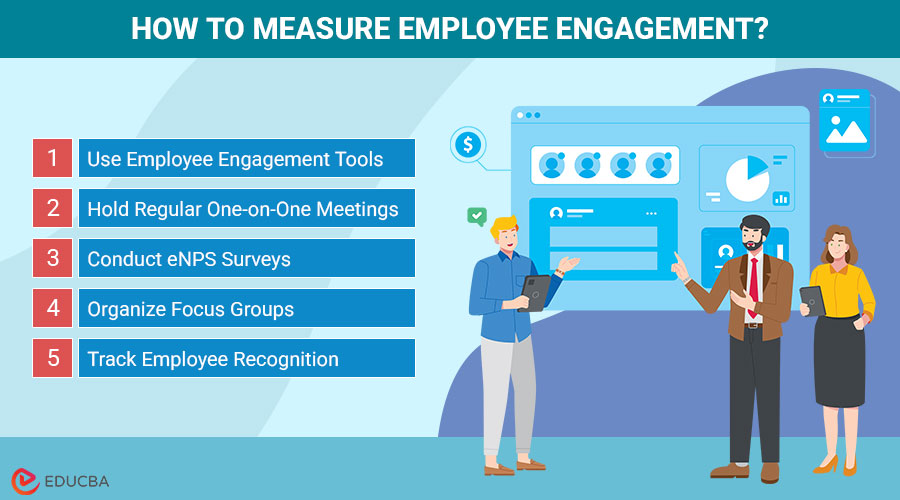
If you want to understand how truly engaged your team is, you will need to look beyond surface-level surveys. Here is a mix of practical and insightful ways to measure employee engagement:
#1. Use Employee Engagement Tools (Polls and Quizzes)
Polls and quizzes are great options if you want a faster and more interactive way to measure engagement. They are easy to use, quick to respond, and can uncover employees’ feelings without being overly formal.
Using thoughtful poll questions can help you get honest feedback on everything from job satisfaction to team dynamics. Additionally, because polls and quizzes are frequently anonymous, employees are more likely to offer their ideas. Use this data to spot patterns and make changes that matter.
#2. Hold Regular One-on-One Meetings
Sometimes, the best way to understand how someone is feeling is just to talk. Managers and team members can assess engagement levels directly and personally by holding regular one-on-one sessions. These conversations may not provide hard numbers, but they offer valuable insights into how employees are performing.
To get the most out of these meetings, make them a regular habit. Weekly or biweekly works best. Keep your questions open-ended so employees feel comfortable sharing their thoughts. Over time, these talks can highlight patterns and help you catch disengagement early before it becomes a bigger issue.
#3. Conduct eNPS Surveys
Employee Net Promoter Score (eNPS) surveys are an easy way to measure how likely employees are to recommend your company as a place to work. You usually ask one main question, like, “On a rating of 0 to 10, how likely are you to suggest this job to a friend?”
Based on their responses, employees fall into three categories: promoters, passives, and detractors. If most of your team scores in the promoter range, that is a great sign of engagement. If you see more passives or detractors, it may be time to dig deeper. eNPS is easy to track over time, so you can see if your efforts to improve engagement are working.
#4. Organize Focus Groups
Focus groups allow you to listen to employees in a group setting; unlike one-on-ones, where only one person shares, focus groups enable multiple employees to bounce ideas, frustrations, and suggestions off each other. This can uncover common concerns or highlight areas where your team is doing well.
These sessions are especially helpful when understanding the root cause of low engagement. Maybe the issue is unclear communication, lack of growth opportunities, or something else. Focus groups open the floor for honest, productive conversations that can shape your next steps.
#5. Track Employee Recognition
Recognition plays a big role in how engaged people feel. When employees are noticed and appreciated, they are more likely to stay motivated and committed. Track how often recognition happens, who receives it, and why to gain valuable insights into engagement levels.
If recognition is rare or uneven, that might signal a problem. You do not need fancy tools to track this, either. A simple log of shout-outs, thank-you notes, or team celebrations can help you measure the impact of recognition across your team.
#6. Monitor Turnover, Productivity, and Absenteeism
Sometimes, the signs of disengagement show up in the numbers. Dropping productivity, frequent missed deadlines, or declining quality often indicate low engagement. Likewise, a sudden spike in unplanned absences can be a red flag. However, not all dips in performance indicate disengagement. That is why it is important to check in with the employee to determine whether there is a personal issue or if they need support. Also, keep a close eye on turnover rates.
High voluntary turnover usually indicates people are seeking something they are not getting at work. On the other hand, a rise in involuntary turnover may indicate performance or attendance issues that stem from disengagement. Measuring retention, and especially understanding why people leave, gives you useful insights into the health of your workplace culture.
#7. Conduct Exit Interviews
When someone leaves, do not miss the chance to learn from them. Exit interviews are a valuable source of honest feedback. Whether conducted via a face-to-face chat or a short survey, these interviews can highlight recurring problems or areas of low engagement.
Ask questions like “What could have made your experience better?” or “Did you feel valued and heard?” The goal is to understand their experience at your company and identify opportunities to improve the experience for the rest of your team. Sometimes, the most valuable insights come right before the door closes.
Final Thoughts
Measuring employee engagement is not just a trend — it is crucial to building a strong, motivated, and loyal workforce. By using tools such as surveys, one-on-one meetings, eNPS, and performance metrics, you can better understand how your employees feel and what they need to stay engaged. When you consistently measure employee engagement, you gain insights that help improve productivity, reduce turnover, and create a positive work culture. Remember, engagement is not a one-time check-in but an ongoing process. Start with small steps, listen actively, and act on feedback to build a workplace where everyone feels valued and connected.
Recommended Articles
We hope this article on measuring employee engagement helps you gain valuable insights into workforce satisfaction and productivity. Check out these recommended articles for more strategies to build a motivated and high-performing team.


