
What is a Macro-Influencer?
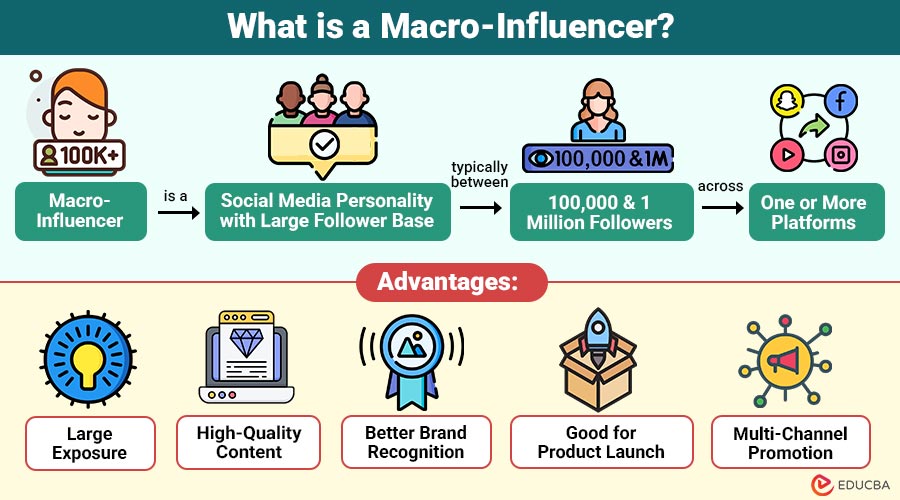
A macro-influencer is a social media personality with a large follower base, typically between 100,000 and 1 million followers across one or more platforms. They are not necessarily celebrities, but they are well-known in their niche or industry.
Macro-influencers often create content related to the following:
- Fashion
- Fitness
- Technology
- Travel
- Beauty
- Food
- Gaming
- Lifestyle
- Finance
- Education
Because of their large audience, macro-influencers can reach many people quickly, making them valuable for marketing campaigns.
Table of Contents:
- Meaning
- Characteristics
- Why do Brands Use Macro-Influencers?
- Advantages
- Disadvantages
- When to Use?
- Real-World Examples
- How do Brands Work with Macro-Influencers?
- Platforms Where Macro-Influencers are Popular
Key Takeaways:
- Macro-influencers have large follower bases, helping brands reach wide audiences quickly and increase visibility in marketing campaigns.
- They create professional, high-quality content and often collaborate with brands to promote products across multiple social media platforms.
- Macro-influencers are useful for brand awareness, product launches, and global campaigns but usually require a higher marketing budget.
- Although engagement rates may be lower than micro-influencers, their massive reach makes them effective for large-scale promotions.
Characteristics of Macro-Influencers
Here are the key characteristics of macro-influencers that make them effective for large-scale marketing campaigns.
1. Large Audience
Macro-influencers have a large following, enabling brands to promote products widely and gain maximum visibility quickly.
2. Strong Brand Presence
They are well-recognized within their niche, often collaborating with popular brands to enhance credibility and influence audience perception.
3. Professional Content
Their content is typically high-quality, visually appealing, and carefully edited, reflecting a professional approach to social media marketing campaigns.
4. Experience with Brand Deals
Have worked with multiple companies, understanding marketing strategies, brand messaging, and how to engage target audiences effectively.
5. Multi-Platform Presence
They often maintain active accounts across platforms like YouTube, Instagram, and TikTok, expanding reach and connecting with diverse audience segments.
6. Moderate Engagement Rate
Although their engagement rate may be lower than micro-influencers, their content reaches a far larger audience across multiple channels.
Why do Brands Use Macro-Influencers?
Brands use to promote products to a large audience, increase brand awareness, and support effective marketing campaigns.
1. Wide Reach
Can promote products to an extensive audience, helping brands achieve widespread visibility and attract potential customers quickly.
2. Faster Brand Awareness
A single post by a macro-influencer can reach thousands or millions of people, accelerating brand recognition and recall.
3. Professional Promotion
Understands how to showcase products attractively, creating engaging, high-quality content that effectively appeals to their target audience.
4. Trust and Credibility
Their followers trust their recommendations, giving brands credibility and improving the chances of conversions through authentic influencer endorsements.
5. Campaign Scalability
Allows brands to scale campaigns efficiently, reaching a large audience across multiple channels while maintaining consistent messaging.
Advantages of Macro-Influencers
Here are some key advantages of macro-influencers.
1. Large Exposure
Help brands reach a massive audience quickly, increasing visibility, awareness, and potential customer engagement across social media channels.
2. High-Quality Content
Most macro-influencers produce professional, visually appealing videos, photos, and posts, ensuring content effectively represents the brand’s image and message.
3. Better Brand Recognition
Working with macro-influencers enables businesses to become better known more quickly, increase brand awareness, and make a lasting impact on a wider audience.
4. Good for Product Launch
Are highly effective at quickly driving interest, excitement, and early adoption among their engaged followers.
5. Multi-Channel Promotion
They promote products across multiple platforms, such as Instagram, YouTube, and TikTok, maximizing reach and consistently reinforcing the brand’s messaging.
Disadvantages of Macro-Influencers
Here are some common disadvantages of macro-influencers:
1. High Cost
Macro-influencers typically charge significantly more than micro-influencers, making campaigns expensive and potentially less cost-effective for smaller brands.
2. Lower Engagement Rate
Although they reach large audiences, their followers may interact less frequently, resulting in lower overall engagement compared to smaller influencers.
3. Less Personal Connection
Followers often feel less personally connected to macro-influencers, which reduces authenticity and makes influencer recommendations feel less intimate or relatable.
4. Risk of Fake Followers
Some macro-influencers may have inactive or fake followers, which can inflate metrics and reduce the actual impact of campaigns.
5. Not Always Niche-Focused
Their audience is often broad rather than highly targeted, making it challenging for brands to reach a specific niche effectively.
When to Use Macro-Influencers?
Macro-influencers are useful in the following situations:
1. Product Launch Campaigns
Are ideal for introducing new products, generating excitement, and reaching a large audience quickly for maximum impact.
2. Brand Awareness Campaigns
They help brands increase recognition, visibility, and recall by efficiently exposing products or services to a wide, engaged audience.
3. Global Marketing
Can promote brands internationally, helping companies reach audiences across multiple countries with consistent messaging and high credibility.
4. Big Budget Promotions
Brands with large marketing budgets can leverage macro-influencers for expansive campaigns that require professional content and significant audience reach.
5. Social Media Advertising
Excel at social media campaigns, creating compelling content that effectively drives engagement, shares, and awareness across multiple platforms.
6. Event Promotions
They are effective at promoting events, attracting attendees, and generating buzz through high-quality posts and stories shared with large audiences.
7. App or Website Launch
Can generate traffic and downloads for new apps or websites, quickly attracting a broad, interested user base online.
Real-World Examples of Macro-Influencers
Here are some real-world examples showing how macro-influencers help brands promote products and reach large audiences.
1. Fitness Influencer
A fitness influencer with 500K followers promotes workout equipment, reaching thousands of people and significantly boosting product visibility and sales.
2. Tech Reviewer
A tech YouTuber with 800K subscribers reviews smartphones, influencing many viewers to consider or purchase the product after watching videos.
3. Food Influencer
A food blogger with a large following promotes a restaurant chain, attracting customers and increasing both brand awareness and revenue.
How do Brands Work with Macro-Influencers?
Here are the common steps brands follow when collaborating with macro-influencers for marketing campaigns.
1. Identify the Influencer
Brands first research and identify macro-influencers whose audience, niche, and style align perfectly with the campaign objectives.
2. Check Followers and Engagement
They analyze the influencer’s followers, engagement rate, and audience demographics to ensure genuine reach and campaign effectiveness.
3. Contact Influencer or Agency
Brands reach out directly or through an agency to discuss potential collaborations, availability, and campaign partnership opportunities.
4. Discuss Campaign Details
They establish clear expectations for both the brand and the influencer by negotiating deliverables, timelines, content style, and goals.
5. Create Sponsored Content
The influencer develops high-quality content, including videos, photos, or posts, that aligns with the brand’s message and marketing strategy.
6. Publish Posts or Videos
Content is shared on the influencer’s social media platforms according to the agreed schedule to maximize visibility and reach.
7. Track Performance
Brands monitor performance metrics in real time to evaluate audience engagement, impressions, and the effectiveness of the sponsored content.
8. Measure Results
After the campaign ends, brands analyze results to assess ROI, effectiveness, and areas for improvement in future campaigns.
Metrics Used:
- Likes
- Comments
- Shares
- Clicks
- Conversions
- Sales
Platforms where Macro-Influencers are Popular
Here are the main social media platforms where macro-influencers have a strong presence and large audiences.
1. Instagram
Uses Instagram to share high-quality photos, stories, reels, and sponsored content, reaching millions of engaged followers.
2. YouTube
YouTube allows macro-influencers to create detailed videos, reviews, and tutorials, effectively driving strong engagement and brand promotion.
3. Facebook
Uses Facebook to post updates, videos, and sponsored content, efficiently connecting with a broad, diverse worldwide audience.
4. LinkedIn
LinkedIn is ideal for macro-influencers in professional niches to share thought leadership and industry insights and collaborate effectively with brands.
5. Snapchat
Macro-influencers use Snapchat to create engaging, short-lived content, including stories and behind-the-scenes promotions, efficiently for targeted audiences.
Final Thoughts
Macro-influencers play a major role in modern digital marketing because they have large audiences and strong online visibility across multiple platforms. Businesses use them to increase brand awareness, promote products, and reach new customers quickly. Although costly, they are effective for large campaigns, product launches, and global marketing, making them valuable for brands seeking wider reach.
Frequently Asked Questions (FAQs)
Q1. Why are macro-influencers important?
Answer: They help brands reach a large audience quickly.
Q2. Are macro-influencers expensive?
Answer: Yes, they usually charge more than micro-influencers do.
Q3. When should brands use macro-influencers?
Answer: When they want high reach and strong brand awareness.
Q4. Do macro-influencers have high engagement?
Answer: They have moderate engagement compared to micro-influencers.
Recommended Articles
We hope that this EDUCBA information on “Macro-Influencer” was beneficial to you. You can view EDUCBA’s recommended articles for more information.


