


What Are LSI Keywords?
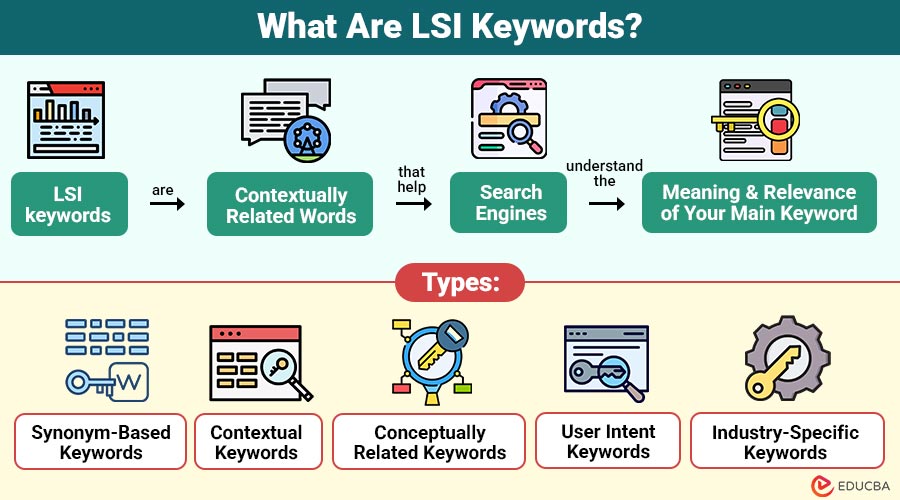
LSI (Latent Semantic Indexing)keywords are contextually related words that help search engines understand the meaning and relevance of your main keyword. Rather than focusing on exact keyword matches, LSI keywords add depth by including related concepts and variations that naturally appear around your main topic.
For example, if your main keyword is “apple,” LSI keywords might include “fruit,” “orchard,” “nutrition,” or “iPhone,” depending on whether you mean the fruit or the tech brand. Using these helps clarify your content’s intent and improves SEO relevance.
Table of Content:
- What are LSI keywords
- Why LSI keywords Matter in seo
- How Search Engines Use LSI Keywords?
- How to Find LSI Keywords?
- Types
- Implementing LSI Keywords in Content
- Real-World Examples
- Common Myths
Key takeaways
- LSI keywords help search engines to grasp the context of your content, improving its relevance to what users are looking for.
- They are not just synonyms, but semantically related terms that enhance SEO without keyword stuffing.
- You can find Latent Semantic Indexing keywords through tools, Google suggestions, and competitor analysis.
- Implementing them naturally in titles, headings, body content, and image alt text boosts search visibility and content quality.
Why LSI (Latent Semantic Indexing) Keywords Matter in SEO?
- Enhance Content Relevance: Latent Semantic Indexing keywords help search engines grasp the full context of your content, ensuring it matches user intent more accurately rather than just matching isolated keywords.
- Improve Search Rankings: By seamlessly integrating related terms, your content becomes more in-depth and credible, increasing its likelihood of ranking higher on search engine results pages (SERPs).
- Avoid Keyword Stuffing: Using LSI keywords enables a richer vocabulary around your main topic, preventing repetitive keyword use that can harm both SEO and readability.
- Capture Broader Traffic: Including semantically linked terms enables your page to rank for a wider range of search queries, attracting diverse audiences with similar interests.
- Support Semantic Search: Modern search engines use AI and natural language processing to understand meaning; LSI keywords align your content with this evolving technology, improving visibility.
How Search Engines Use LSI Keywords?
- Contextual Understanding: Search engines analyze LSI keywords to grasp the broader context of a webpage, allowing them to differentiate between words with multiple meanings (e.g., “apple” as fruit or tech brand).
- Improved Search Intent Matching: By recognizing related terms, engines better interpret what users are truly looking for, delivering more relevant results that match the user’s intent.
- Semantic Relationships Mapping: LSI helps search engines build a web of connected concepts, linking your content with related topics and improving its authority on the subject.
- Filtering Out Spam: Content stuffed with unrelated keywords is penalized. Latent Semantic Indexing keywords assist engines in detecting natural, topic-focused writing versus keyword stuffing.
- Enhancing Featured Snippets & Voice Search: Semantic comprehension through LSI keywords enables engines to provide concise answers for featured snippets, improving performance in voice-based search queries.
- Boosting Algorithm Accuracy: LSI supports advanced algorithms, such as Google’s BERT and RankBrain, which rely on understanding language nuances rather than just keyword matches.
How to Find LSI Keywords?
- Use Google Auto-Suggest: Start typing your main keyword into Google’s search bar and note the suggestions that appear. These predictive phrases reflect commonly searched, semantically related terms.
- Explore “Searches Related To” Section: To discover valuable, user-generated LSI keyword ideas based on actual queries, just scroll down to the bottom of the Google search results page!
- Leverage LSI Tools: Platforms like LSIGraph, Ubersuggest, and SEMrush offer lists of contextually linked keywords that support your content without over-relying on repetition.
- Analyze Competitor Content: Study top-ranking articles for your target keyword. Identify recurring phrases and subtopics they cover — these often reveal effective LSI terms.
- Use Keyword Planners Creatively: Tools like Google Keyword Planner or Ahrefs may not label them as LSI, but related terms and long-tail keywords found here can serve the same purpose.
- Tap into Forums and FAQs: Sites like Quora, Reddit, or niche forums reflect natural language and questions — a goldmine for discovering semantic keywords.
Types of Latent Semantic Indexing Keywords
- Synonym-Based Keywords: These are words with similar meanings to your main keyword. For example, for “online courses,” LSI synonyms could include “e-learning,” “virtual classes,” or “digital training.”
- Contextual Keywords: These terms give meaning to your topic’s context. For instance, “camera,” “lens,” and “photography” are contextually related even though they aren’t synonyms.
- Conceptually Related Keywords: Broader terms that connect to your main idea. For “fitness,” related concepts might include “nutrition,” “workout routine,” or “mental health.”
- User Intent Keywords: Phrases that reflect what the audience wants — such as “how to,” “best,” or “near me” — help align content with search intent.
- Industry-Specific Keywords: Terms commonly used within a niche or profession. For “digital marketing,” LSI keywords could include “SEO strategy,” “content marketing,” or “PPC campaigns.”
Implementing LSI Keywords in Content
- Integrate Naturally: Seamlessly blend Latent Semantic Indexing keywords within your text to maintain readability and avoid forced usage that feels unnatural to readers.
- Optimize Titles and Headings: Boost your content’s relevance and search visibility by integrating Latent Semantic Indexing keywords into page titles, meta descriptions, and header tags (H2, H3).
- Enhance Body Content: Sprinkle LSI terms throughout paragraphs to enrich the context and help search engines better understand your topic.
- Use in Image Alt Text: Describe images with LSI keywords to improve image SEO and provide additional context signals to search engines.
- Link Contextually: When adding internal or external links, consider using anchor text that includes LSI keywords for enhanced topical relevance.
- Balance Keyword Density: Avoid overusing Latent Semantic Indexing keywords; focus on maintaining a natural flow that benefits both SEO and user experience.
- Update Regularly: Review and refresh your content to incorporate new Latent Semantic Indexing keywords as language and search trends evolve.
Real-World Examples
- Health Blog Success: A nutrition blog optimized a post titled “Best Foods for Weight Loss” by including LSI keywords like “low-calorie meals,” “healthy snacks,” and “fat-burning foods.” Within weeks, it ranked for multiple related queries and saw a 40% increase in organic traffic.
- Tech Website Ranking Boost: A tech site published an article about the “latest iPhone.” By adding LSI terms such as “Apple event,” “iOS update,” and “smartphone features,” the post ranked not just for “iPhone” but also for broader searches like “best phones 2025.”
- E-commerce Store Visibility: An online shoe store used Latent Semantic Indexing keywords like “running sneakers,” “gym shoes,” and “foot support” on a page selling sports shoes. This attracted buyers with different search intents, increasing conversions.
- Local Business Growth: A bakery used LSI terms like “custom cakes,” “birthday treats,” and “dessert delivery” alongside “bakery near me,” improving local SEO and attracting more foot traffic.
Common Myths
- Google Uses a Specific LSI Algorithm”: Many believe Google uses Latent Semantic Indexing directly, but in reality, Google has moved beyond traditional LSI and now relies on advanced AI models like BERT and RankBrain for understanding content.
- “LSI Keywords Are Just Synonyms”: LSI keywords are not simply synonyms. They include related terms, concepts, and contextually linked phrases that enrich content and reflect how people actually search.
- “More LSI Keywords Mean Better Rankings”: Stuffing your content with related keywords does not guarantee higher rankings. Overuse can harm readability and trigger spam filters, so balance is key.
- “LSI Is a Secret Hack for SEO”: There is no magic trick—Latent Semantic Indexing keywords support quality content but do not replace good writing, solid structure, and strong user intent alignment.
- “Any Keyword Variation Counts as LSI”: Not every variation is contextually relevant. True LSI terms should strengthen meaning, not just diversify vocabulary.
Conclusion
LSI keywords are more than just SEO buzzwords—they are the backbone of content that connects with both search engines and real people. By weaving in contextually relevant terms, your content becomes more meaningful, discoverable, and engaging. As search engines grow smarter, writing naturally and semantically is no longer optional—it is essential. Focus on value, relevance, and clarity, and let Latent Semantic Indexing keywords enhance your strategy, rather than defining it. In the end, great content always wins.
Frequently Asked Questions
Q1. Are LSI keywords still relevant in 2025?
Answer: Yes, while Google does not use traditional LSI, the concept of related terms is still vital for semantic SEO and content clarity.
Q2. Can LSI keywords help with voice search optimization?
Answer: Absolutely! Using natural, related phrases makes your content more compatible with conversational voice queries.
Q3. How many LSI keywords should I use in a blog post?
Answer: Use 5–10 naturally integrated terms, depending on content length and topic depth.
Q4. Do LSI keywords impact local SEO?
Answer: Yes, adding location-relevant related terms can boost local visibility.
Recommended Articles
We hope this guide on LSI Keywords in SEO helped improve your content strategy. For more SEO tips, explore these related articles below:


