


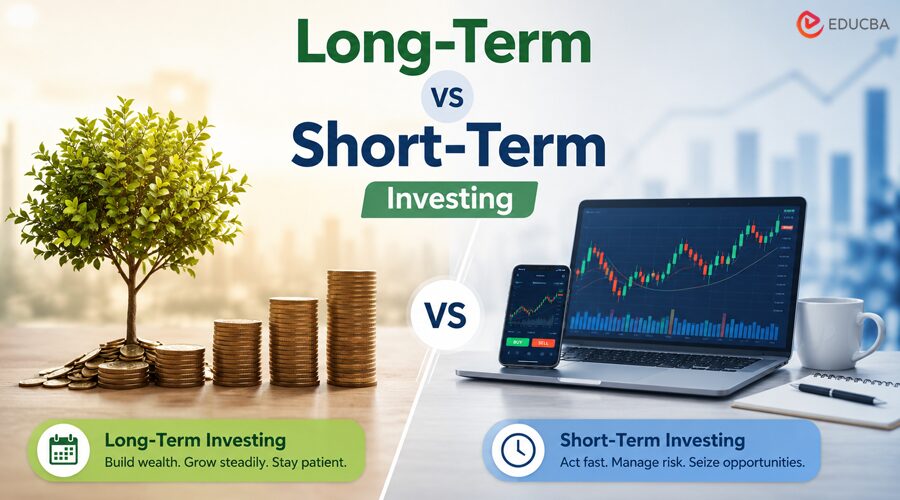
When it comes to building wealth, one of the most important decisions you will make is choosing between long-term and short-term investing. Each approach has its own benefits and risks based on your goals, risk level, and time.
In this in-depth guide, we will explore long-term vs short-term investing, expand on their benefits, highlight key differences, and help you build a strategy that actually works in real-world markets.
What Is Long-Term vs Short-Term Investing?
Long-term vs short-term investing refers to two distinct methods of participating in financial markets:
- Long-term investing focuses on holding assets for extended periods (typically 5+ years) to benefit from compounding and overall market growth.
- Short-term investing involves frequent buying and selling of assets over shorter timeframes (intraday, weekly, or monthly) to capitalize on price fluctuations.
The core differences between long-term and short-term Investing lie in time horizon, strategy, and mindset. Long-term investors rely on patience and fundamentals, while short-term investors depend on timing, market signals, and quick decision-making.
Understanding Long-Term Investing
Long-term investing is considered one of the safest and most effective practices to build wealth over time. It involves staying invested through market cycles and allowing your investments to appreciate over time.
Key Benefits of Long-Term Investing
- Power of compounding: Even modest returns can grow significantly when reinvested over the years
- Reduced impact of volatility: Short-term market drops become less significant over longer horizons
- Lower stress: You do not need to monitor the market constantly
- Cost efficiency: Fewer trades mean lower brokerage and transaction fees.
Long-term investors often focus on fundamentally strong assets such as blue-chip stocks, index funds, or ETFs. Instead of reacting to daily news, they analyze company performance, earnings growth, and economic trends over time.
For example, markets may fluctuate in the short term due to inflation data or geopolitical events, but historically they tend to recover and grow over the long term. This makes long-term investing ideal for retirement planning, wealth accumulation, and financial independence.
Another advantage of long-term vs short-term investing is emotional discipline. Long-term investors usually avoid making quick decisions based on fear or greed.
Understanding Short-Term Investing
Short-term investing is a more active approach in which investors aim to profit from short-term price movements.
Key Benefits of Short-Term Investing
- Faster profit opportunities: Gains can be realized quickly
- Leverage market volatility: Frequent price swings create trading opportunities
- Flexibility: Ability to enter and exit positions based on market conditions
Short-term investors rely heavily on technical analysis, charts, indicators, and market sentiment. Timing is crucial, and even small price movements can lead to profits when executed correctly.
Market-moving events play a major role in short-term trading. Events such as GDP releases, inflation reports, and central bank decisions can cause sharp price swings within minutes. Traders often prepare for these movements by tracking an economic calendar, which lists scheduled economic announcements and their expected impact.
Short-term investing requires discipline, risk management, and constant monitoring. Without a clear strategy, it can lead to frequent losses.
Long-Term vs Short-Term Investing: Comparison Table
| Factor | Long-Term Investing | Short-Term Investing |
| Time Horizon | 5+ years | Minutes to months |
| Strategy Type | Passive, buy-and-hold | Active trading |
| Risk Level | Moderate to low (over time) | High |
| Return Style | Gradual, compounding | Quick but inconsistent |
| Effort Required | Low | High |
| Transaction Costs | Lower | Higher due to frequent trades |
| Emotional Stress | Lower | Higher |
| Skill Requirement | Basic financial knowledge | Advanced analysis skills |
| Market Dependency | Long-term growth trends | Short-term volatility |
| Best For | Retirement, wealth building | Active traders, quick gains |
When Should You Choose Long-Term Investing?
Long-term investing is suitable if you:
- Are you saving for retirement, a home, or education
- Prefer a stable and less time-consuming approach
- Want to benefit from compounding and market growth
- Can stay invested during market downturns without panic.
In the context of long-term vs short-term investing, long-term investing is ideal for individuals who want predictable growth with lower involvement. It also reduces the risk of poor timing decisions, which is a common issue in short-term trading.
When Should You Choose Short-Term Investing?
Short-term investing may be a better fit if you:
- Have time to track and analyze markets actively
- Are comfortable with higher risk and volatility
- Understand trading strategies and technical indicators
- Want to take advantage of short-term opportunities.
Short-term investing can be profitable, but it requires consistency and discipline. Many beginners underestimate the complexity of short-term trading and overestimate potential returns.
In long-term vs short-term investing, this approach is better suited to experienced traders than to beginners.
Can You Combine Long-Term and Short-Term Investing?
Yes, combining both strategies is often the most practical approach.
Hybrid Strategy Example
- 70–80% in long-term investments for stability and growth
- 20–30% in short-term trades for additional income opportunities.
Why This Works?
This balanced approach allows you to:
- Build wealth steadily through long-term investments
- Take advantage of short-term market movements
- Diversify risk across different time horizons.
Many successful investors adopt this blended strategy when navigating long-term vs short-term investing.
Common Mistakes to Avoid
When evaluating long-term vs short-term investing, avoid these common errors:
- Overtrading: Frequent trades can increase costs and reduce profits
- Emotional decisions: Fear and greed can make you trade at the wrong time
- Ignoring diversification: Putting all money into one strategy increases risk
- Lack of research: Both strategies require a proper understanding
- Chasing trends: Following hype instead of strategy can lead to losses.
Avoiding these mistakes can help you get better results.
Final Thoughts
The best option between long-term and short-term investing depends on your goals, how much time you can give, and how much risk you are comfortable taking.
- Long-term investing offers stability, compounding, and lower stress
- Short-term investing offers flexibility and faster profit potential, but at a higher risk.
For most investors, a balanced combination of both strategies is the smartest way forward.
By understanding long-term vs short-term investing, you can create a well-rounded investment plan that not only grows your wealth but also adapts to changing market conditions.
Recommended Articles
We hope this guide helps you choose the right strategy based on your goals, risk tolerance, and time horizon. Explore the recommended articles below to learn more about smart investing strategies, market trends, and wealth-building tips.


