


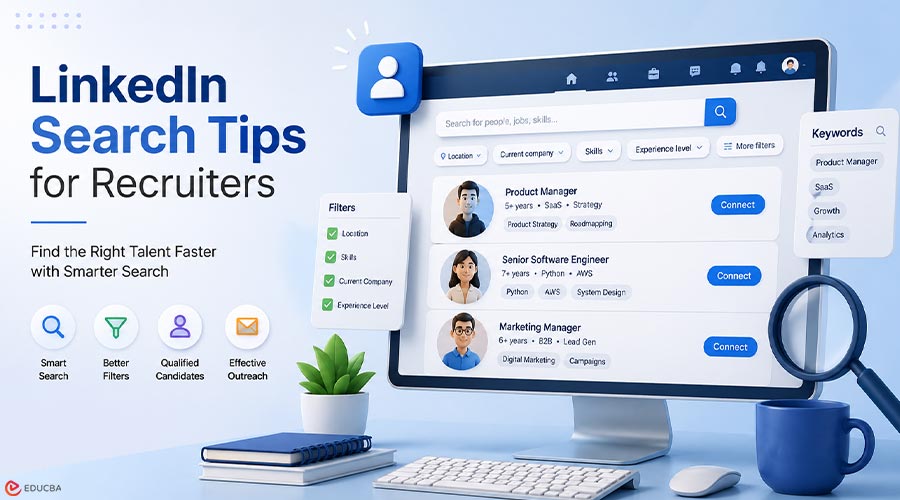
LinkedIn is huge, but that does not always mean it is useful. A recruiter can spend hours sifting through search results and still end up with the wrong people, weak matches, and a headache that feels suspiciously like a browser tab. These LinkedIn Search Tips for 2026 show why better search habits matter when hiring teams need to find relevant people faster.
A recruiter does not need more random profiles. A recruiter needs better ways to narrow the field, qualify people, and decide who deserves outreach.
Why Does LinkedIn Search Go Wrong for Recruiters?
Most LinkedIn search problems start with vague inputs. If the search begins with a broad title like “marketing manager” or “software engineer,” the results will be too wide. A recruiter then wastes time opening profiles one by one, only to find mismatches in seniority, the wrong geography, or unrelated experience.
One of the most important LinkedIn Search Tips for Recruiters is to start with a clearly defined hiring requirement before running any search.
Better search starts with clearer role logic. Before typing anything, define the actual hiring need. Is the role strategic or hands-on? Does the person need a startup, enterprise, or a specific industry background? Should the candidate be local, remote, or open to relocation?
Without those answers, LinkedIn becomes a maze. With them, it becomes a working sourcing channel.
LinkedIn Search Tips for Recruiters: Filters That Matter
A recruiter should use filters to reduce noise before reviewing profiles. Among the most effective LinkedIn Search Tips for Recruiters is using search filters strategically to narrow results before evaluating candidates. The table below shows the most useful ones.
| Search filter | What it helps with | Why it matters |
| Job title | Finds people in relevant roles | Reduces broad, unrelated results |
| Location | Matches hiring constraints | Saves time on unavailable candidates |
| Current company | Targets people from similar environments | Improves role fit |
| Past company | Finds people with a specific background | Useful for industry or competitor searches |
| Skills | Adds technical or functional relevance | Helps narrow similar titles |
| Keywords | Finds niche experience | Catches profiles with varied titles |
| School or alumni | Creates warmer outreach angles | Helps with network-based sourcing |
How Can a Recruiter Add Better Context?
LinkedIn search often identifies the right person, but it doesn’t always provide a clear path to a conversation. Effective LinkedIn Search Tips for Recruiters focus not only on finding candidates but also on understanding their suitability before outreach.
A recruiter still needs to understand whether the person fits the role, whether their background matches the requirements, and whether the outreach has a real reason.
Around the middle of the process, a sourcing tool built for recruiters can help connect professional profiles with additional available details, organize candidates, and reduce manual research time.
The goal is not to contact everyone who appears in search results. The goal is to build a short, relevant list of people who closely match the hiring need to justify outreach.
Useful context points include:
- Current role and scope of responsibility.
- Industry background.
- Tools, skills, or certifications.
- Recent job changes.
- Public projects, posts, or portfolio links.
- Location and likely availability.
- Fit with the company’s role level.
This context helps write better messages. It also helps avoid sending lazy outreach to people who clearly do not match.
LinkedIn Search Tips for Recruiters: A Better Search Process
A repeatable search process helps keep sourcing from turning into random browsing.
Many LinkedIn Search Tips for Recruiters emphasize building a repeatable sourcing process rather than relying on random profile browsing.
- Define the role requirements before opening LinkedIn.
- Choose two or three must-have search filters.
- Add role-specific keywords to narrow the results.
- Review profiles for real fit, not just title match.
- Save outreach only for people with a clear reason.
- Add notes about why each person fits.
- Write outreach based on the person’s background, not a generic template.
This process may feel slower at first, but it saves time later. A smaller, stronger candidate list usually beats a huge list filled with weak matches.
Why Does Recruiter Outreach Need Specificity?
A recruiter gets better replies when the message shows there is a real reason to reach out.
In fact, one of the most practical LinkedIn Search Tips for Recruiters is to use profile insights to personalize outreach messages.
“I saw your profile and thought you might be a fit” is not enough. Everyone says that.
A stronger message mentions the role, the specific background match, and one reason the opportunity could be relevant. Keep it short. Candidates do not need a full company brochure in the first message. They need enough information to decide whether the conversation is worth their time.
Final Thoughts
Successful sourcing is not about reviewing the most profiles. It is about finding the right people efficiently and creating meaningful conversations with candidates who genuinely fit the role. The LinkedIn Search Tips for Recruiters covered in this guide can help recruiters reduce search fatigue, improve candidate quality, and make better hiring decisions.
By starting with a clear hiring objective, using search filters strategically, adding context before outreach, and personalizing communication, recruiters can turn LinkedIn from a large database into a focused sourcing tool. A structured approach leads to stronger candidate pipelines, better response rates, and a more productive recruitment process overall.
Recommended Articles
We hope this guide on LinkedIn Search Tips for Recruiters helps you improve candidate sourcing, streamline your search process, and build stronger talent pipelines. Explore these recommended articles for additional insights and strategies to enhance your recruitment and talent acquisition efforts.


