


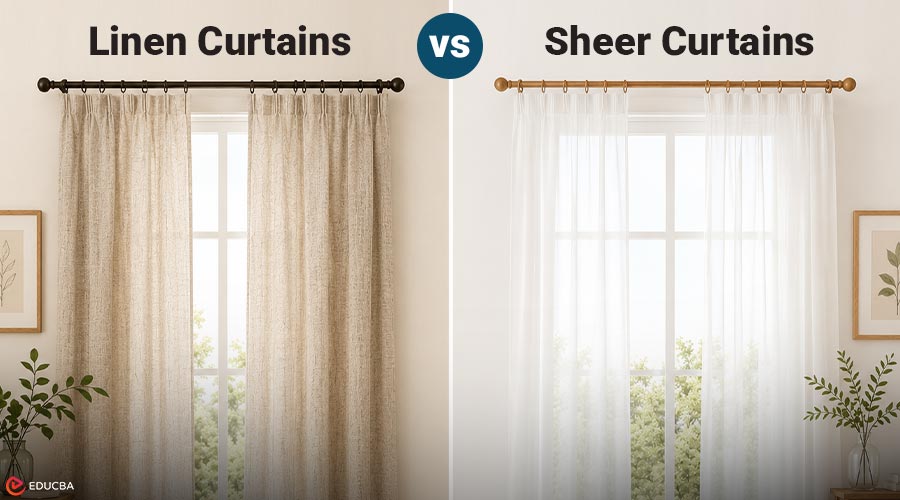
Choosing between linen curtains vs sheer curtains can completely change the atmosphere, comfort, and functionality of your home. While linen curtains create a cozy and elegant environment with better privacy, sheer curtains maximize natural light and give rooms a bright, airy appearance. The best choice depends on your lifestyle, interior style, and room requirements. Many interior designers also recommend combining both curtain styles to enjoy the advantages of each. In this detailed guide, we compare linen curtains vs sheer curtains to help you choose the ideal window treatment for your home.
What Are Linen Curtains? A Deep Dive Into Their Essence
Linen curtains are a staple in home design, known for their luxurious yet lived-in feel, think boutique hotels or cozy Airbnbs. Made from the flax plant, they are natural, sustainable, and beloved for their unique qualities.
The Material: What Makes Linen Curtains Unique?
Linen is 100% natural (organic options avoid harsh chemicals) and prized for durability and breathability, thanks to flax’s long fibers (per Houzz). Unlike stiff cotton, linen has a relaxed, inviting drape and softens with each wash, developing a charming patina over time. Its “imperfect” texture is part of its appeal.
Key Characteristics of Linen Curtains
- Texture and Aesthetic Appeal: Linen’s subtle, slightly rough weave adds depth and warmth, making it versatile across styles (rustic, bohemian, modern). Architectural Digest notes it brings “quiet elegance” without overwhelming a space, pairing beautifully with wood, bold colors, and patterns.
- Light Control and Privacy: Linen filters light to create a soft glow, blocking harsh midday sun while keeping spaces bright. It offers solid daytime privacy (obscuring outside views) and full privacy at night when closed, ideal for bedrooms and home offices, unlike sheers.
- Durability and Longevity: Flax fibers are stronger than cotton, so linen curtains last 5–10 years with proper care (per Better Homes & Gardens), outlasting synthetic curtains (3–5 years). They resist fading, are biodegradable, and get better with age an eco-friendly, long-term investment.
What Are Sheer Curtains? Unveiling Their Purpose and Charm
Sheer curtains prioritize light, diffusing it to make spaces open and bright, while adding a soft, romantic touch. They are made from lightweight, transparent fabrics (voile, chiffon, lace) and can be natural (cotton/linen blends) or synthetic (polyester/nylon).
The Material: What Sheer Curtains Are Made Of
Elle Decor recommends high-quality sheer fabrics thin enough to let light through but thick enough to avoid being fully see-through. Synthetic sheers are affordable and easy to care for; natural fiber sheers feel more luxurious, but both serve the same core purpose: maximizing light with style.
Key Characteristics of Sheer Curtains
- Transparency and Light Diffusion: Sheer curtains let in maximum natural light while softening harsh glare, making dark or small spaces feel larger (per House Beautiful). They are perfect for north-facing rooms or cramped areas, as they “trick the eye into thinking the space is bigger” by amplifying light.
- Privacy Level: Sheers offer minimal privacy: during the day, they provide vague outlines (fine for living/dining rooms), but at night (with indoor lights on), they reveal clear views inside. They are rarely used alone in bedrooms; pairing with linen or blackout curtains fixes this.
- Style Flexibility: Sheers are versatile, coming in endless colors/patterns to fit any decor. Interior Design Magazine highlights layering sheers with heavier curtains as a top trend, adjusting light and privacy to match your mood. They add romance without being over-the-top, perfect for bedrooms or dinner parties.
Linen Curtains vs Sheer Curtains: Core Differences Compared
Here is a head-to-head breakdown of key differences to guide your choice:
1. Aesthetic Differences: Warmth vs Airiness
Linen = warm, cozy, grounded (ideal for bedrooms, reading nooks); Sheer = light, airy, ethereal (perfect for sunrooms, small apartments). Linen suits rustic/minimalist homes; sheers fit modern/romantic spaces.
2. Light Control: Soft Filter vs Full(er) Coverage
Linen filters light to avoid glare (great for home offices/bedrooms); sheers let in almost all light, with minimal control. Linen is better for east-facing bedrooms (blocking early sun), sheers for maximizing light in dim spaces.
3. Privacy: Protection vs Semi-Transparency
Linen offers good daytime privacy and full nighttime privacy (when closed); sheers provide minimal privacy day/night. Choose linen for security; sheers if transparency is not a concern.
4. Maintenance: Easy-Care vs Delicate Handling
Linen is low-maintenance: machine washable (gentle cycle), softens with washing, and wrinkles add charm (iron if desired). Sheers are delicate hand-wash or machine-wash gently, dry on low, and dust regularly to keep them clean.
When to Choose Linen Curtains: Ideal Scenarios
- Bedrooms, Prioritizing Privacy and Comfort: Linen balances privacy, light, and comfort, blocking enough light for sleep and offering full nighttime privacy. Its breathability keeps bedrooms cool in summer, warm in winter (per Bedroom Ideas).
- Living Rooms with a Cozy, Rustic Vibe: Linen’s natural texture complements wood, stone, and neutrals, adding warmth to rustic/minimalist living rooms. It pairs with jute, leather, and plants to create an inviting space (per Rustic Home Design).
- Homes in Humid Climates: Linen’s breathability wicks moisture, preventing mold/mildew, perfect for humid climates (Florida, Texas). Synthetic sheers trap humidity, which can lead to musty smells (per Humid Home Solutions).
When to Choose Sheer Curtains: Perfect Use Cases
- Living Rooms and Dining Areas That Need Natural Light: Sheers maximize light in living/dining areas, diffusing glare and creating a romantic atmosphere for meals (per Dining Room Design).
- Small Spaces That Need to Feel Larger: Sheers brighten small apartments/rooms, feel lightweight, and create the illusion of more space (per Small Space Living).
- Layering with Other Curtains: Layer sheers with linen/blackout curtains for light (day) and privacy (night), a top trend per Curtain Layering Guide. It is the perfect compromise if you can not choose between the two.
Expert Insights: What Interior Designers Recommend
Interior designers often recommend choosing curtains based on room functionality rather than trends alone.
Linen Curtains Are Best For:
- Bedrooms
- Cozy living rooms
- Rustic interiors
- Homes needing privacy
- Humid climates
Sheer Curtains Are Best For:
- Brightening dark rooms
- Small apartments
- Elegant dining spaces
- Layered curtain styling
- Modern airy interiors
Most experts agree that combining both curtain styles delivers the best balance of beauty and practicality.
Final Thoughts
The decision between linen curtains vs sheer curtains ultimately depends on your lifestyle, room size, privacy needs, and interior design preferences. Choose linen curtains for cozy warmth, solid privacy, and long-lasting durability, ideal for bedrooms and family living rooms; pick sheer curtains to flood rooms with soft natural light and create an elegant, airy vibe, perfect for dining areas and compact spaces. To achieve both aesthetic beauty and full functionality, double-layer curtain matching is the ideal home decor solution. You can match sheer curtains with blackout curtains, or pair Custom Curtains with blackout curtains.
During the day, draw open blackout layers and keep sheer or linen curtains closed to enjoy gentle, filtered light and basic privacy; at night, close blackout curtains completely to achieve full light blocking, sound insulation, and thermal insulation, which greatly improve sleep quality and living comfort. When you are confused about curtain styles, collocation schemes, and size selection, turn to Unicurt Curtains for professional support. With reliable quality, affordable pricing, and thoughtful all-around service, Unicurt helps you easily upgrade your home space and create a comfortable, stylish living environment that fully fits your preferences.
Frequently Asked Questions (FAQs)
Q1. Can I use linen curtains in a small space?
Answer: Yes, choose light colors (white, beige) and hang them high to create height.
Q2. Do sheer curtains block UV rays?
Answer: Minimal look for “UV-resistant” sheers or pair with linen for better protection.
Q3. How often should I wash them?
Answer: Linen: every 3–6 months; Sheers: every 1–2 months (dust more easily). Follow care labels.
Q4. Can I mix linen and sheer curtains?
Answer: Absolutely match colors/styles for depth (e.g., sheers behind linen).
Q5. Are linen curtains eco-friendly?
Answer: Yes, 100% natural, biodegradable flax requires less water/pesticides than cotton. Choose organic for extra eco-friendliness.
Recommended Articles
We hope this detailed guide on linen curtains vs sheer curtains helps you choose the perfect window treatment for your home. Check out these recommended articles for more interior design inspiration and smart home decor tips.

