


Why Leadership Retreats Are No Longer a Luxury
Senior leaders operate in an environment of constant pressure, rapid decision-making, and heightened accountability. The expectations placed on CEOs and C-suite leaders today go far beyond operational oversight. They are expected to think strategically, inspire teams, manage uncertainty, and drive sustainable growth. Deloitte’s Global Human Capital Trends shows that over 70% of executives believe leadership complexity has outpaced traditional management models. McKinsey also highlights rising decision fatigue among senior leaders in volatile, high-stakes environments.
This reality has shifted the role of leadership retreats. They are no longer optional off-sites. They are a strategic leadership tool that supports clarity, focus, and long-term performance. A well-structured executive leadership retreat creates space for leaders to step back, evaluate decisions, realign priorities, and return with renewed direction and confidence. For organisations focused on growth and resilience, leadership retreats are not a luxury. They are a strategic necessity.
What Is a Leadership Retreat for Modern Executives?
A leadership retreat is a purpose-driven, immersive program designed to strengthen executive capability, align strategic vision, and enhance organisational leadership performance. Unlike routine corporate off-sites, executive leadership retreats are built around behavioural science, leadership frameworks, and strategic growth models.
Core components typically include:
- Strategic foresight workshops
- Executive leadership assessments
- High-performance mindset coaching
- Scenario-based decision simulations
- C-suite alignment and communication frameworks
Well-structured programs, such as professional executive leadership retreats, enable leaders to step back from operational noise and focus on long-term strategic value creation.
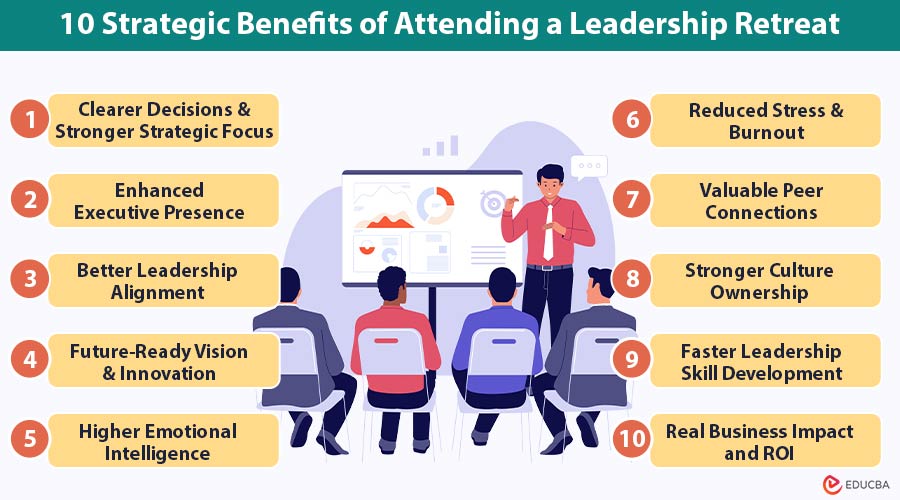
10 Strategic Benefits of Attending a Leadership Retreat
Leadership retreats are more than a break from routine—they are a powerful tool for enhancing leadership effectiveness and driving organisational growth.
1. Clearer Decisions and Stronger Strategic Focus
Leadership retreats create the mental space needed to think without distraction. Leaders move away from reactive decision-making and shift toward purposeful, data-informed choices.
This clarity allows leaders to:
- Evaluate current strategies objectively
- Identify what truly aligns with long-term goals.
- Eliminate distractions and misaligned initiatives.
The result is sharper prioritisation, faster execution, and decisions that directly support business growth.
2. Enhanced Executive Presence
Executive presence determines how stakeholders, teams, and boards perceive leaders. Leadership Retreats help leaders refine their communication, listening, and leadership under pressure.
Leaders develop:
- Greater self-awareness in leadership style
- Improved communication confidence
- Enhanced ability to influence and inspire
This translates into leadership that commands respect, builds trust, and strengthens organisational credibility.
3. Better Leadership Alignment
When senior leaders are not aligned, confusion spreads through the organisation. Leadership retreats provide a neutral space for open dialogue and honest alignment.
This alignment helps leaders:
- Clarify roles and responsibilities
- Build shared leadership language.
- Agree on a unified strategic direction.
A unified leadership front improves collaboration, streamlines execution, and strengthens organisational stability.
4. Future-Ready Vision and Innovation
Leadership retreats shift the focus from short-term firefighting to long-term visioning. Leaders are encouraged to think beyond current challenges and prepare for future market shifts.
This environment supports:
- Scenario planning for potential disruptions
- Exploration of emerging opportunities
- Strategic innovation planning
Leaders return with a broader perspective and a more proactive strategic mindset.
5. Higher Emotional Intelligence
Strong emotional intelligence enables leaders to connect, motivate, and manage teams effectively. Leadership Retreats provide structured opportunities for reflection and feedback.
Leaders improve:
- Self-awareness and emotional control
- Empathy and active listening skills
- Conflict management capability
This strengthens leadership impact and creates healthier team dynamics.
6. Reduced Stress and Burnout
Sustained pressure affects decision quality, creativity, and leadership effectiveness. Retreats offer controlled recovery time that restores mental clarity.
Leaders experience:
- Reduced stress levels
- Improved focus and energy
- Greater resilience under pressure
This allows them to return with a refreshed mindset and improved performance capacity.
7. Valuable Peer Connections
Leadership retreats bring together leaders who share similar challenges and responsibilities. This environment encourages authentic conversation and knowledge-sharing.
Leaders benefit from:
- Honest peer insights
- Shared experiences and lessons
- Collaborative problem-solving
These relationships often continue beyond the retreat and become valuable leadership networks.
8. Stronger Culture Ownership
When leaders reconnect with vision and values, they lead more intentionally. Retreats reinforce the behaviours that shape organisational culture from the top.
Leaders gain clarity on:
- Core leadership values
- Cultural expectations
- Behavioural role modelling
This leads to a more consistent and positive organisational culture.
9. Faster Leadership Skill Development
The immersive nature of retreats accelerates the development of critical leadership skills.
Leaders sharpen:
- Strategic communication
- Crisis and change management
- Negotiation and decision structuring
This focused learning environment delivers faster improvement than standard training programs.
10. Real Business Impact and ROI
Leadership retreats are not abstract experiences. They produce tangible results that impact business performance.
Organisations see improvements in:
- Decision quality
- Team alignment
- Leadership effectiveness
Over time, this contributes to stronger productivity, higher engagement, and improved financial outcomes.
Real-World Case Study: CEO Strategy Transformation
A mid-sized technology company enrolled its CEO in a structured leadership retreat to address slow decision-making and team misalignment. Through focused strategy sessions and leadership mapping, the CEO redefined key business priorities and introduced structured alignment meetings.
Within six months:
- Revenue increased by 18%
- Leadership communication improved
- Employee turnover declined
This shift began with one intentional pause to realign leadership direction.
Advanced Insights: The Future of Leadership Retreats
Modern leadership retreats now integrate:
- AI-powered decision simulations
- Neuroscience-based leadership models
- Real-time performance analytics
- Personalised leadership development plans
These advancements prepare leaders for complex and evolving business environments.
Actionable Takeaways for Leaders
To maximise the value of leadership retreats:
- Schedule quarterly reflection sessions
- Introduce leadership alignment checkpoints.
- Plan annual executive retreats.
- Track leadership performance regularly
- Invest in continuous leadership development.
Recommended tools:
- Gallup CliftonStrengths
- Hogan Leadership Forecast
- Harvard Leadership Framework
Final Thoughts
Leadership retreats empower leaders to think with clarity, act with intention, and lead with confidence. They strengthen alignment, sharpen strategy, and support sustainable organisational growth. For organisations that prioritise leadership excellence, structured retreats create lasting value and measurable impact. How is your organisation strengthening the long-term alignment and effectiveness of its leadership team?
Recommended Articles
We hope this guide on leadership retreats helped you understand their strategic benefits. For more leadership tips, explore related articles below:

