
What is Intent Data?
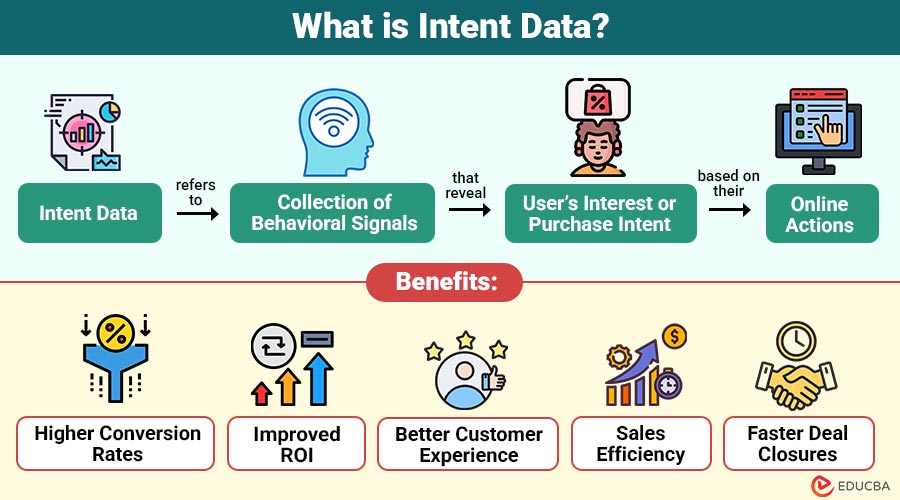
Intent Data refers to the collection of behavioral signals that reveal a user’s interest or purchase intent based on their online actions. These actions may include website visits, content downloads, keyword searches, ad interactions, or engagement with third-party platforms.
For example, if a user repeatedly searches for “best CRM software,” visits CRM product pages, and downloads a comparison guide, this behavior indicates high purchase intent for CRM solutions.
Table of Contents:
Key Takeaways:
- Intent data reveals real buyer interest by analyzing behavioral signals across multiple digital touchpoints.
- Using intent data improves lead quality, personalization, and sales efficiency by focusing on high-intent prospects.
- Integrating with CRM and analytics platforms enables predictive insights, smarter prioritization, and data-driven decision-making.
- When used responsibly with proper tools, it accelerates conversions while supporting compliance and privacy requirements.
Why Intent Data Matters?
Below are the key reasons that enhance lead targeting, personalization, and overall sales performance.
1. Early Prospect Detection
Identifies interested prospects early, enabling timely engagement and strategic interaction during their buying journey.
2. Better Lead Quality
Analyzing behavioral signals improves lead relevance, boosting conversion rates and ensuring higher-quality opportunities.
3. Personalized Outreach
Intent insights enable tailored messages that match prospects’ interests, increasing engagement and response likelihood.
4. Faster Sales
Understanding prospect intent accelerates decision-making, focuses on ready-to-buy leads, and shortens overall sales cycles.
5. Sales-Marketing Alignment
Shared intent data strengthens collaboration, ensuring sales and marketing teams prioritize high-value prospects effectively.
How Intent Data Works?
It works by tracking and analyzing user behavior across multiple digital touchpoints. Here is a step-by-step breakdown:
1. Data Collection
Websites, apps, and third-party platforms capture user actions, including page views, downloads, and clicks.
2. Behavior Analysis
Algorithms analyze the frequency, recency, and type of interactions to detect interest patterns.
3. Lead Scoring
Prospects are scored based on their behavior, indicating how likely they are to purchase.
4. Actionable Insights
Sales and marketing teams receive insights for targeted campaigns, outreach strategies, and engagement plans.
Types of Intent Data
It can be divided into three types:
1. First-Party
Data collected directly from your own digital channels, reflecting user behavior such as visits, downloads, or email interactions.
Examples:
- Website visits
- Form submissions
- Email engagement
2. Second-Party
Data obtained from a trusted partner, showing their users’ behavior, often shared through campaigns, events, or co-marketing activities.
Examples:
- Event registrations from partners
- Co-marketing campaign data
- Publisher data sharing
3. Third-Party
Data sourced externally from platforms tracking web activity, revealing content interests, competitor research, and industry-related browsing patterns.
Examples:
- Industry blog readership
- Review site activity
- Competitor research behavior
Difference Between Intent Data and Traditional Data
Here are the key differences between Intent Data and Traditional Data:
| Feature | Intent Data | Traditional Data |
| Focus | Behavior & interest | Demographics |
| Timing | Real-time or near real-time | Static |
| Actionability | High | Moderate |
| Personalization | Strong | Limited |
| Buying Signals | Yes | No |
Benefits of Intent Data
Here are the key benefits of improving marketing and sales outcomes.
1. Higher Conversion Rates
Identifies prospects actively considering purchases, enabling precise targeting and significantly increasing conversion likelihood.
2. Improved ROI
By focusing on high-intent prospects, marketing spend is optimized, reducing wasted resources and improving return on investment.
3. Better Customer Experience
Personalized outreach based on intent signals creates relevant interactions, consistently enhancing satisfaction and the overall customer experience.
4. Sales Efficiency
Sales teams focus on warm leads identified through intent data, streamlining efforts and substantially improving productivity.
5. Faster Deal Closures
Engaging buyers at moments of high intent accelerates decision-making, shortens sales cycles, and increases deal closure speed.
Challenges of Intent Data
Despite its benefits, it comes with challenges:
1. Data Accuracy and Noise
It can contain inaccurate or irrelevant signals, leading to misleading insights and poor decision-making.
2. Integration with CRM and Marketing Tools
Seamlessly connecting intent data with existing CRM and marketing platforms can be complex and time-consuming.
3. Privacy and Compliance Concerns
Collecting and using intent data must comply with applicable privacy regulations to avoid legal risks and reputational damage.
4. Over-Reliance on Third-Party Sources
Dependence on external intent data can significantly reduce the control, accuracy, and reliability of prospect insights.
5. Misinterpretation of Intent Signals
Incorrectly analyzing signals may lead to targeting the wrong audience or misinterpreting their actual purchase intent.
Use Cases of Intent Data
Here are the key use cases that show how businesses leverage buyer signals effectively.
1. Account-Based Marketing
It helps identify which target accounts are actively researching relevant topics, enabling personalized ABM campaigns.
2. Lead Scoring and Qualification
By combining intent signals with CRM data, businesses can prioritize high-intent leads over cold prospects.
3. Sales Outreach Optimization
Sales teams can tailor outreach messages based on specific interests, increasing response rates and engagement.
4. Content Marketing Strategy
Intent insights help marketers create content aligned with trending topics and buyer pain points.
5. Competitive Intelligence
Reveals when prospects are researching competitors, enabling proactive engagement.
Popular Intent Data Tools
Here are some widely used tools that help businesses identify, analyze, and engage high-intent prospects effectively.
1. Bombora
Provides B2B intent data by analyzing content consumption across websites, helping marketers efficiently identify high-intent prospects.
2. 6sense
Uses AI-driven insights to reveal buyer intent, enabling personalized engagement and improved sales and marketing alignment.
3. Demandbase
Offers account-based marketing solutions with intent data to identify prospects actively researching products or services for targeting.
4. ZoomInfo Intent
Monitors online activity to uncover potential buyers, supporting precise lead targeting and accelerating sales opportunities.
5. Clearbit
Enriches contact and company profiles with intent signals to enhance personalization and optimize marketing and sales efforts.
6. G2 Buyer Intent
Tracks product research and reviews to identify high-intent buyers, supporting informed outreach and conversion strategies.
Final Thoughts
Intent data has completely changed how companies interact with and comprehend potential clients. By focusing on buyer behavior rather than assumptions, organizations can create more meaningful interactions, improve conversions, and accelerate revenue growth. When combined with the right tools, strategy, and compliance practices, it becomes a powerful driver of modern marketing and sales success.
Frequently Asked Questions (FAQs)
Q1. Is intent data only for B2B marketing?
Answer: No. While widely used in B2B, intent data is also valuable in B2C for behavioral targeting.
Q2. How accurate is intent data?
Answer: Accuracy depends on data sources, signal quality, and interpretation methods.
Q3. How quickly can intent data show results?
Answer: When implemented correctly, results can be seen within weeks.
Recommended Articles
We hope that this EDUCBA information on “Intent Data” was beneficial to you. You can view EDUCBA’s recommended articles for more information.


