


Clean Air Solutions For Industries
Industrial air cleaning often goes unnoticed when discussing workplace safety. While most people focus on preventing falls or handling heavy machinery, invisible airborne contaminants can pose serious health risks. Factories, warehouses, and production facilities often contain dust, chemical fumes, and microscopic particles that can damage respiratory health.
The Occupational Safety and Health Administration (OSHA) emphasizes that controlling airborne contaminants is crucial to industrial hygiene. However, workplace air purification rarely gets the attention it deserves. This article explains why education on industrial air cleaning is vital, how it impacts employees and businesses, and what steps companies can take to ensure a healthier work environment.
The Hidden Dangers of Airborne Particles
At first glance, a warehouse or factory might seem safe if floors are dry, exits are marked, and workers follow protocols. However, airborne pollutants such as dust, chemical vapors, and microscopic fibers often go unnoticed until employees experience symptoms like:
- Chronic coughs
- Fatigue
- Respiratory issues
- Eye irritation
Many industrial processes release harmful substances, including:
- Volatile Organic Compounds (VOCs) from paints, solvents, and adhesives
- Asbestos fibers in older buildings
- Metal fumes from welding and soldering
Unfortunately, many managers misinterpret these symptoms as common allergies rather than signs of poor air quality. These invisible hazards can significantly impact worker health.
Why Education on Industrial Air Cleaning Matters
A common misconception is that opening windows or using standard ventilation is enough to solve air quality issues. However, industrial processes release pollutants in high concentrations, requiring air-cleaning solutions.
Key Issues Due to Lack of Awareness
- Misuse of Protective Equipment: Employees may believe that masks alone are sufficient, but they provide limited protection without proper selection and fitting.
- Ineffective Filtration Systems: Managers unfamiliar with air cleaning technologies may choose the wrong filters, leading to wasted resources.
- Delayed Response to Air Quality Issues: Workers who do not understand the risks of air contamination might ignore early warning signs, such as unusual odors or mild breathing discomfort.
How Educating Employees Will Help
- Prevention: Workers who understand air quality risks can report issues earlier.
- Proper Equipment Use: Training ensures proper use of masks and respirators.
- Informed Management: Educated managers invest in the right filtration systems, avoiding costly mistakes.
- Better Workplace Culture: A proactive approach reduces absenteeism, boosts morale, and increases productivity.
Educating employees about workplace air quality encourages them to report unusual odors or mild breathing discomfort, leading to faster intervention. For businesses, an informed workforce helps reduce absenteeism, lower healthcare costs, and improve productivity.
Common Air Contaminants in Industrial Settings
Below is a short overview of common pollutants that industrial environments may harbor:
- Dust and Particulates: Generated by cutting, grinding, or handling powders
- Chemical Vapors: Emitted from paints, solvents, or adhesives
- Gases: Carbon monoxide and nitrogen dioxide from combustion processes.
- Biological Agents: Mold spores or bacteria in damp or poorly maintained systems
- Metal Fumes: Released during welding or soldering operations
By identifying hazards in your facility, you can better target air cleaning measures—like choosing filters explicitly designed for fine dust vs. broader chemical absorption. The process starts with an industrial hygiene assessment to gauge what circulates in the air.
How Clean Air Improves Productivity and Business Performance
Investing in industrial air cleaning fosters a ripple effect: from direct health benefits to intangible credibility gains. When workers breathe clean air, they experience fewer headaches, respiratory issues, and fatigue, leading to:
- Higher energy levels and focus.
- Reduced sick days and healthcare costs.
- Less dust buildup on machinery, lowering maintenance expenses.
- Creates positive impression on clients, visitors, and potential employees.
Many companies have discovered that investing in air cleaning systems pays off in the long run. A healthier workforce means a more stable and productive work environment.
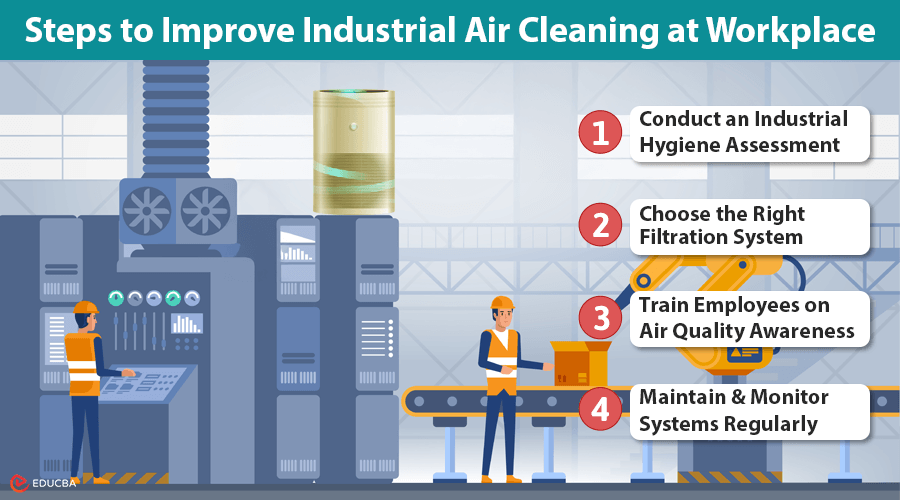
Steps to Improve Industrial Air Cleaning at Workplace
Improving workplace air quality requires a proactive approach. Below are key steps businesses should take:
- Conduct an Industrial Hygiene Assessment: Facilities should conduct an air quality test before installing equipment to identify specific environmental pollutants.
- Choose the Right Filtration System: Different workplaces require different air cleaning solutions.
- HEPA Filters: Capture fine dust and airborne particles.
- Activated Carbon Filters: Absorb chemical vapors and odors.
- Electrostatic Precipitators: Remove smoke, fumes, and metal particles.
- UVGI Systems: Kill bacteria and mold spores.
- Train Employees on Air Quality Awareness: Educating staff on clean air solutions ensures they recognize early symptoms of poor air quality and take necessary precautions.
- Maintain and Monitor Systems Regularly: Even the best air cleaning systems lose effectiveness without proper maintenance. Facilities should schedule regular inspections and filter replacements.
The Role of Proper Contract Management for Installations
Installing or upgrading air purification equipment—such as filtration units, extraction hoods, or advanced ventilation systems—requires effective contract management. Poor oversight can lead to missed maintenance, unclear warranty terms, or neglected filter replacements. Key contract management aspects include:
- Clarifying maintenance responsibilities.
- Scheduling regular filter replacements.
- Defining emergency repair procedures.
- Ensuring vendor accountability for system performance.
A structured contract ensures that air cleaning systems function effectively over time, protecting employees and business operations.
Penalties and Liability Implications
While ensuring employee health is a priority, neglecting air cleaning can also lead to regulatory fines or lawsuits. OSHA can levy substantial penalties on businesses violating air quality standards or failing to protect workers from known hazards. The firm might face legal repercussions or workers’ compensation claims if an employee develops a chronic respiratory condition tied to the workplace.
In some industries, authorities may force shutdowns for repeated non-compliance until businesses resolve the issues. Beyond regulatory scrutiny, negative publicity from poor air conditions could tarnish a company’s reputation, making recruiting skilled staff or retaining clients harder. Essentially, the cost of ignoring airborne pollutants—financially and morally—dwarfs any short-term savings from skipping advanced filtration.
Real-World Examples
Several businesses have successfully improved workplace conditions through industrial air cleaning investments:
Case Study 1: Metal Fabrication Plant
A mid-sized metal fabrication company struggled with high employee absenteeism due to respiratory issues. After an internal air quality audit, they discovered excessive metal particulates. The solution:
- Installed high-grade welding fume extractors
- Provided employees with wearable air quality monitors
Respiratory complaints dropped significantly within six months, and the company avoided potential OSHA fines.
Case Study 2: Food Processing Facility
A food production plant faced mold contamination, affecting both workers and product quality. The company invested in ultraviolet germicidal irradiation (UVGI) technology to purify the air. The results:
- Reduced mold spores in production areas
- Fewer employee sick days
- Improved product shelf life
These cases demonstrate how targeted industrial air cleaning solutions improve health, productivity, and compliance.
Role Of OSHA
For comprehensive guidance on the technical aspects of ventilation and air cleaning, refer to documents from OSHA’s official website at OSHA.gov. Their publications detail recommended airflow rates, filtration media specifics, and compliance strategies for different industrial activities. The National Institute for Occupational Safety and Health (NIOSH) also offers research on controlling airborne exposures in various manufacturing sectors. Whether you are a plant manager or a small factory owner, tapping into these resources clarifies the “why” and “how” of implementing robust systems, from specifying fan horsepower to verifying filter certification standards.
Final Thoughts
Education on industrial air cleaning is essential for workplace safety and efficiency. While visible hazards like machinery accidents often take priority, airborne contaminants pose equally serious risks. Businesses that invest in proper air filtration systems protect employee health, reduce absenteeism, and ensure compliance with safety regulations. Companies can create safer, healthier, and more productive work environments by taking proactive steps—such as conducting air quality assessments, educating staff, and using proper filtration. Investing in air quality is not just about meeting regulations; it is about prioritizing the well-being of employees and securing long-term business success.
Recommended Articles
We hope this guide on industrial air cleaning helps you understand its importance in maintaining a safe and efficient workspace. Check out these recommended articles for more air quality and workplace safety insights.

