


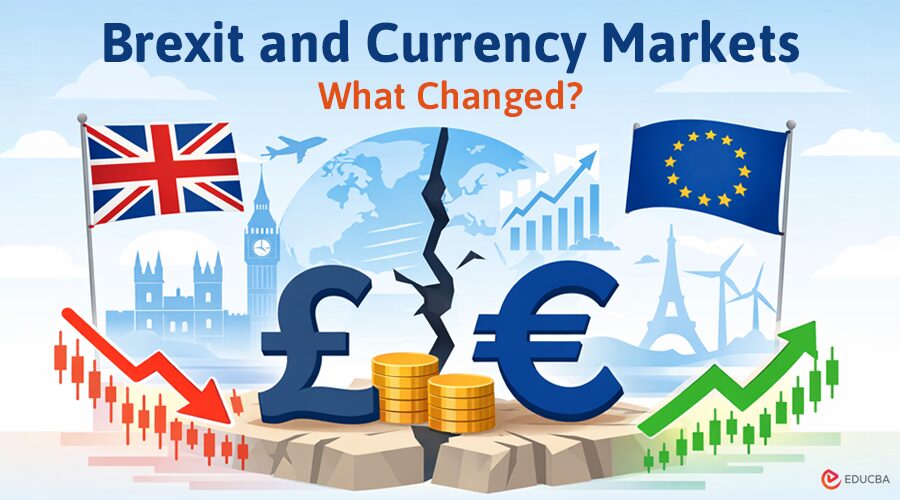
Impact of Brexit on Currency Markets: Overview
The impact of Brexit on currency markets has been one of the most closely watched developments in global finance since the UK’s 2016 referendum. When the United Kingdom voted to leave the European Union, markets reacted swiftly and with significant volatility. In the years since, currency traders, multinational corporations, and policy makers have all grappled with the ongoing implications for exchange rates, cross-border trade, and financial stability.
In this article, we explore how Brexit has reshaped currency markets, the key drivers behind exchange rate movements, and what traders and investors should watch next.
Initial Market Shock After the Brexit Vote
When officials announced the result of the Brexit referendum on June 23, 2016, the news triggered an immediate and dramatic decline in the British Pound.
The unexpected vote surprised investors, prompting them to move their money into safer assets. Safe-haven currencies such as the US Dollar and the Japanese Yen strengthened sharply. The British Pound plunged to historic lows against major currencies, illustrating how political events can trigger rapid currency adjustments.
The impact of Brexit on currency markets in this initial phase was characterized by:
- Heightened volatility
- Large bid-ask spreads
- Significant intraday swings.
These conditions created both risk and opportunity for currency traders.
Long-Term Trends in GBP Exchange Rates
Over the years following the referendum, the British Pound has experienced prolonged periods of weakness relative to many major currencies. These trends have reflected ongoing uncertainty about trade negotiations, economic growth prospects, and diverging monetary policies.
For example, in the G10 forex space, pairs such as the euro and the US dollar often outperformed the British Pound.
A key pair that traders frequently monitor for sentiment and technical cues is GBP/USD, which reflects the relationship between the Pound and the US Dollar.
Key Drivers of Brexit’s Currency Effects
1. Trade Policy Uncertainty
The UK and the EU have had long and difficult trade talks. Currency markets hate uncertainty because it makes economic forecasting harder. Unclear trade outcomes raise concerns about tariffs, cross-border supply chain disruptions, and changes in trade volumes, all of which influence currency valuations.
2. Diverging Monetary Policies
The Bank of England’s policy decisions, including interest rate changes and quantitative easing, have at times diverged from those of the US Federal Reserve and European Central Bank. These differences have shaped interest rate differentials, which are a core driver of currency flows.
A country with higher interest rates tends to see capital inflows, which can strengthen its currency. Conversely, lower rates often weaken a currency.
Brexit and Market Sentiment
Market sentiment influences currency markets just as much as economic fundamentals.
Following the referendum, bearish sentiment toward the Pound persisted because many investors viewed Brexit as a drag on the UK economy. Various political and economic developments reinforced this sentiment at different points, including:
- During political impasses over trade agreements
- When inflation surged due to import-related price increases
- Amid fears of a slowdown in financial services activity.
Sentiment analysis, often derived from positioning data, surveys, and economic news, became a tool for forex traders seeking to anticipate turns in currency trends.
The Role of Economic Data Releases
Economic indicators have taken on added importance in the post-Brexit era. Data such as GDP growth, employment figures, and consumer confidence now have an outsized influence on the British Pound because they provide clues about the UK’s economic health outside the EU framework.
Strong data tends to lift Sterling, while weak numbers can push it lower. Additionally, traders closely watch inflation reports and wage growth, as these factors directly inform expectations of future interest rate decisions.
Corporate Hedging and Cross-Border Investment
Beyond traders, multinational corporations have had to rethink their currency risk management strategies due to the impact of Brexit on currency markets. Companies engaged in international trade use hedging tools, such as forwards, options, and swaps, to manage exchange rate fluctuations.
For example:
- An exporter receiving payments in Euros may use hedges to protect against a weaker Pound.
- Foreign investors evaluating UK assets must factor potential currency gains or losses into their investment decisions.
These corporate actions can, in aggregate, influence currency flows and market liquidity.
Brexit and Emerging Market Currencies
While the direct impact of Brexit on emerging market (EM) currencies has been more subtle than on major G10 currencies, there are indirect effects.
Global risk appetite, influenced by major events like Brexit, often determines how investors treat EM assets. When risk aversion rises (as it did immediately after the referendum), capital tends to flow out of EM currencies and into safe havens. Conversely, renewed confidence can bring inflows back into emerging-market assets.
Thus, the impact of Brexit on currency markets extends beyond the UK and EU.
The Future of Currency Markets After Brexit
1. Continued Negotiations and Policy Changes
The long-term trajectory of the British Pound, the Euro, and other currencies connected to the UK’s trade network will continue to be influenced by policy developments. Trade agreements with non-EU partners, immigration policy, and regulatory changes all matter.
2. Global Economic Conditions
Macroeconomic factors such as global growth prospects, commodity prices, and geopolitical tensions will also shape currency markets. For instance, if global growth slows, safe-haven demand may rise, affecting a wide range of currencies.
3. Technological Advances and Market Structure
Algorithmic trading, high-frequency strategies, and the growing participation of retail forex traders add layers of complexity to how markets price events like Brexit.
Final Thoughts
The impact of Brexit on currency markets has been profound and multifaceted. From the dramatic depreciation of the British Pound in 2016 to the ongoing recalibration of global currency relationships, Brexit has reshaped how traders, investors, and corporations approach risk and value in the forex space.
Understanding the drivers, including policy shifts, economic data, market sentiment, and risk appetite, is essential for anyone participating in currency markets today. While the full effects of Brexit will continue to unfold over years or even decades, its imprint on global exchange rates is already undeniable.
Recommended Articles
We hope this guide on the impact of Brexit on currency markets helps you understand how political events shape exchange rates and global forex trends. Explore our recommended articles for deeper insights into forex strategies, economic indicators, and currency market analysis.

