
Updated October 23, 2025
What is Hyper-Personalization?
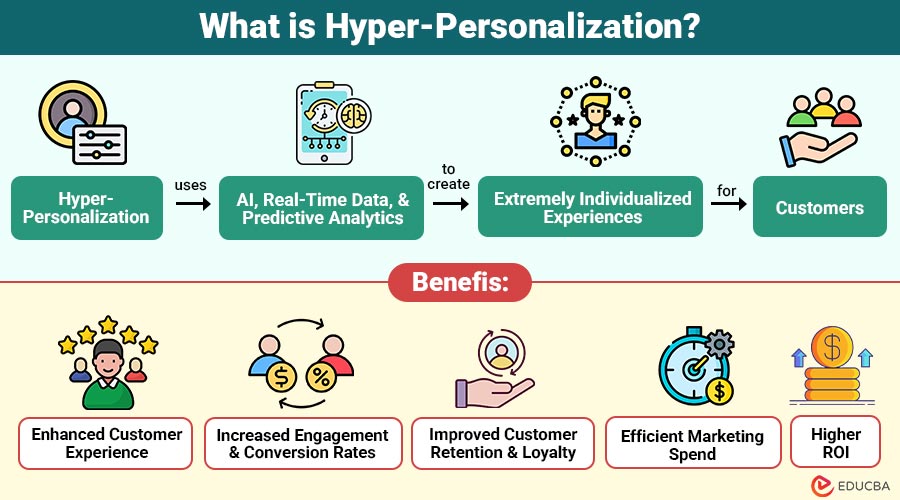
Hyper-Personalization refers to the use of AI, real-time data, and predictive analytics to create extremely individualized experiences for customers. It extends beyond traditional personalization methods by integrating behavioral, contextual, and transactional data to understand the complete customer journey.
For example, instead of merely addressing a user by name, a hyper-personalized approach might analyze browsing patterns, recent purchases, and location data to recommend the most relevant product or service at the right moment.
Table of Contents:
- Meaning
- Working
- Key Technologies
- Examples
- Benefits
- Challenges
- Use Cases
- Personalization vs Hyper-Personalization
- Future
Key Takeaways:
- Hyper-personalization uses AI, real-time data, and analytics to create individualized, highly relevant customer experiences.
- It enhances engagement, loyalty, and conversions by delivering contextually timely, one-to-one personalized messages and offers.
- Implementation requires unified data platforms, machine learning, and ethical handling of sensitive customer information.
- Successful hyper-personalization consistently balances advanced technology with transparency, trust, and the ethical use of customer data.
How Hyper-Personalization Works?
Hyper-personalization operates through a combination of data collection, intelligent analysis, and dynamic content delivery. Below is the step-by-step process:
1. Data Collection
2. Data Integration and Analysis
The collected data is stored in one main system (like a Customer Data Platform) and studied using machine learning to find patterns and understand customer behavior.
3. Segmentation and Profiling
Customers are grouped based on what they do, like, and might need, so marketers can send very targeted messages.
4. Real-Time Decision-Making
AI algorithms determine the right message, product, or offer for each customer at the perfect time through the right channel.
5. Omnichannel Delivery
6. Feedback Loop and Optimization
Every interaction generates new data that feeds back into the system, allowing continuous learning and improved personalization accuracy.
Key Technologies Behind Hyper-Personalization
Here are some of the key technologies that make hyper-personalization possible:
1. Artificial Intelligence
AI helps process massive amounts of customer data, identifying hidden patterns and insights that humans can not easily detect.
2. Machine Learning
ML algorithms predict customer preferences and behavior, improving the accuracy of personalization over time.
3. Real-Time Analytics
This system lets decisions be made instantly by looking at what users do in real time, ensuring interactions are quick and relevant.
4. Customer Data Platforms
Centralize and unify data from various channels to provide a 360-degree view of the customer.
5. Natural Language Processing
Helps interpret and respond to user intent in conversational interfaces like chatbots and voice assistants.
Examples of Hyper-Personalization
Here are some real-world examples of hyper-personalization across various industries:
1. E-commerce
Amazon uses AI-driven recommendations to suggest products based on previous purchases, search behavior, and browsing history.
2. Streaming Platforms
Netflix personalizes content recommendations, thumbnails, and viewing suggestions based on user watch history and engagement time.
3. Banking
Banks use predictive analytics to suggest financial products, credit card offers, or savings plans suited to individual spending habits.
4. Healthcare
Health apps provide tailored wellness plans and medication reminders based on medical history and lifestyle data.
5. Retail
Dynamic pricing and personalized in-store promotions based on a customer’s shopping history and location data.
Benefits of Hyper-Personalization
Here are some benefits of implementing hyper-personalization:
1. Enhanced Customer Experience
By delivering tailored content that matches individual preferences, customers feel recognized, valued, and understood, strengthening overall satisfaction levels.
2. Increased Engagement and Conversion Rates
Providing relevant, timely product recommendations and offers encourages customer interaction, leading to improved engagement, click-throughs, and higher conversion rates.
3. Improved Customer Retention and Loyalty
Personalized experiences build emotional connections, encouraging repeat purchases, stronger brand loyalty, and long-term customer relationships.
4. Efficient Marketing Spend
Precise audience targeting minimizes wasted marketing efforts, ensuring resources are used effectively to reach high-value, conversion-ready customers.
5. Higher ROI
Hyper-personalized campaigns drive measurable improvements in revenue, customer satisfaction, and marketing efficiency, resulting in significantly increased overall return on investment.
Challenges in Implementing Hyper-Personalization
While hyper-personalization offers significant benefits, it also presents notable challenges:
1. Data Privacy Concerns
Responsible collection, processing, and use of sensitive consumer data requires adherence to privacy laws such as the CCPA and GDPR.
2. Integration Complexity
Merging diverse data sources into a unified customer view requires advanced infrastructure, technical expertise, and seamless system interoperability.
3. High Implementation Costs
Establishing AI, analytics platforms, and customer data systems demands significant financial investment, technical resources, and long-term maintenance efforts.
4. Data Accuracy and Quality
Low-quality, messy, or old data can make personalization ineffective, lowering accuracy, trust, and the success of campaigns.
5. Customer Skepticism
Use Cases of Hyper-Personalization
Here are some practical use cases of how hyper-personalization is applied across different channels:
1. Email Marketing
Deliver personalized product suggestions and dynamic subject lines using real-time behavioral data to increase open rates, engagement, and conversions.
2. Website Experience
3. Mobile Marketing
Send timely push notifications triggered by user behavior or location to encourage engagement, purchases, and immediate customer interaction.
4. Customer Support
Use AI chatbots that give personalized answers based on past conversations and user history to make users happier.
5. Retail In-store Personalization
Offer real-time promotions or product suggestions to customers’ smartphones as they move through stores, enhancing engagement and purchase likelihood.
Personalization vs Hyper-Personalization
Here is a clear comparison highlighting the differences between personalization and hyper-personalization:
| Aspect | Personalization | Hyper-Personalization |
| Data Type | Basic demographic and transactional data | Real-time behavioral and contextual data |
| Technology Used | CRM systems and rule-based logic | AI, ML, and predictive analytics |
| Level of Customization | Generic (group-level) | Highly individualized (one-to-one) |
| Timing | Static, pre-defined | Dynamic, real-time |
| Customer Experience | Personalized but limited | Deeply engaging and predictive |
Future of Hyper-Personalization
As technology evolves, hyper-personalization will become even more predictive, immersive, and automated. Future trends include:
1. AI-driven Predictive Engagement
Advanced AI systems will anticipate customer needs, enabling brands to deliver personalized offers and interactions before users even express intent.
2. Voice and Conversational Personalization
Chatbots and smart assistants will modify recommendations, content, and tone according to user preferences, resulting in more engaging and organic conversations.
3. Augmented and Virtual Reality Experiences
AR and VR technologies will provide immersive, personalized shopping and entertainment experiences tailored to each user’s unique behavior and interests.
4. Ethical Personalization
5. Cross-Channel Consistency
Personalized experiences will stay smooth across digital devices, mobile apps, IoT devices, and in-person interactions, giving customers a connected experience throughout their journey.
Best Practices for Implementing Hyper-Personalization
Here are some best practices to ensure successful hyper-personalization:
1. Start with Data Transparency
Customers should be given a clear explanation of the collection, storage, and use of their data to promote long-term involvement, compliance, and confidence.
2. Adopt a Unified Data Strategy
Combine all customer data sources into a single platform, enabling a complete, 360-degree view for accurate and effective personalization.
3. Leverage AI and Automation
Use AI-driven tools to automate personalization workflows, enabling scalable, dynamic, and highly relevant customer experiences across multiple channels.
4. Focus on Real-Time Relevance
Deliver timely content, recommendations, and offers based on immediate user actions, behaviors, and context to maximize engagement and conversions.
5. Test, Measure, and Optimize
Continuously analyze personalization results, iterate strategies, and optimize campaigns to improve effectiveness, relevance, and overall customer satisfaction.
Final Thoughts
Hyper-personalization is the future of customer engagement, delivering timely, relevant, and emotionally resonant experiences. By leveraging AI, real-time data, and advanced analytics, brands can anticipate needs, foster loyalty, and drive growth. Success requires balancing deep personalization with ethical data use. Companies mastering it will stand out and build meaningful, long-term customer relationships.
Frequently Asked Questions (FAQs)
Q1. What are the key tools used for hyper-personalization?
Answer: AI, machine learning, customer data platforms, and real-time analytics tools.
Q2. Why is hyper-personalization important?
Answer: It helps enhance customer satisfaction, increase conversions, and strengthen brand loyalty.
Q3. What industries benefit most from hyper-personalization?
Answer: Retail, e-commerce, banking, healthcare, entertainment, and travel.
Recommended Articles
We hope that this EDUCBA information on “Hyper-Personalization” was beneficial to you. You can view EDUCBA’s recommended articles for more information.


