


Curious to Know How to Write a Poem from Scratch?
Poetry is an art that allows you to express emotions, thoughts, and experiences creatively. But have you ever wondered what makes a poet different from a common person? For example, when a common person sees a flower, they may admire its fragrance. However, poets see it differently—they imagine the flower as a symbol of beauty, fragility, or even lost dreams. Poets have a unique way of looking at the world. Would you like to become a poet who turns ordinary things into extraordinary expressions? If so, this guide will help you learn how to write a poem step by step. And if you prefer a quick solution, we will also introduce an AI poem generator that can transform your thoughts into poetry within seconds!
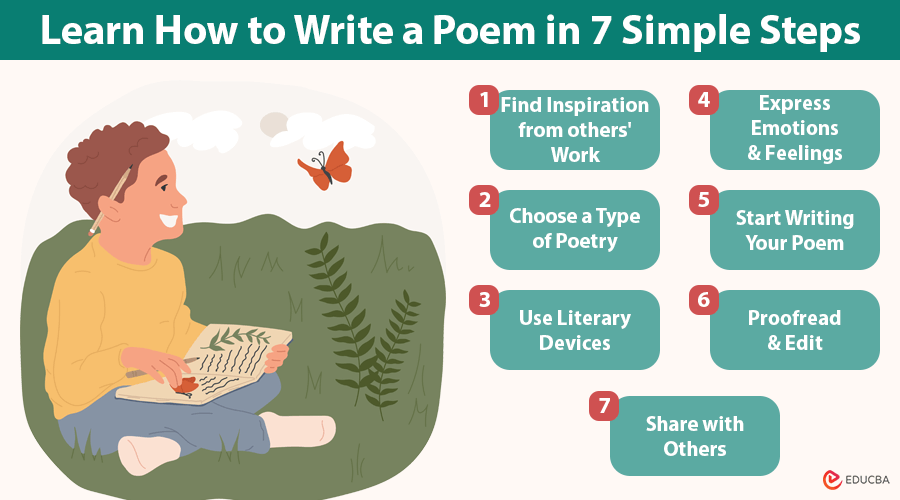
Learn How to Write a Poem in 7 Simple Steps
To learn how to write a poem, follow these seven simple steps to create a meaningful and engaging poem.
#1. Find Inspiration from others’ Work
Inspiration rests at the foundation of a poem. Some say that becoming a poet is impossible without inspiration in your life. Here are some ways to find inspiration:
- Observe nature—look at the colors, patterns, and beauty around you.
- Think about personal experiences of joy, sadness, or love.
- Listen to music or read other poets’ works to spark creativity.
- Use photographs or paintings to inspire imaginative storytelling.
#2. Choose a Type of Poetry
Before writing, decide what type of poem you want to create. Some popular types of poetry include:
- Free Verse: No set structure, rhythm, or rhyme (great for beginners).
- Sonnet: A poem consisting of 14 lines following a specific rhyme pattern.
- Haiku: A short, three-line poem (5-7-5 syllable structure).
- Ballad: A storytelling poem that narrates a sequence of events.
Pro Tip:
“Start your poem-writing skill with free verse (a type of poem having no structure and rules of writing). Adopting others’ approaches can restrict you to a specific structure. It would be your first experience, so baby steps are advised.”
#3. Use Literary Devices
Poetry becomes more expressive when you use literary devices. These techniques make poems more vivid and engaging. Some common literary devices include:
- Simile: Compares two things using “like” or “as.” (Example: Her smile shone like the sun).
- Metaphor: Makes an indirect comparison. (Example: Time is a thief.)
- Personification: Giving human qualities to non-human things. (Example: The wind whispered through the trees).
- Imagery: Creating vivid mental pictures. (Example: The golden sun sank beneath the shimmering ocean).
- Rhyme: Using words with similar sounds. (Example: Night so bright, filled with light). If you’re struggling to find words that rhyme, an online rhyme generator can instantly suggest creative rhyming options to strengthen your poem’s rhythm.
#4. Express Emotions and Feelings
Poetry is about conveying emotions and feelings through carefully chosen words. Analyze and ask yourself, What do you want to convey?
- Do you want your poem to be sad or joyful?
- Should it express love, hope, or loss?
- How do you want your readers to feel?
Once you decide whether to make your poem sad, happy, or express inner thoughts, convey it with full power and nuance. Capture emotions naturally without over-explaining so readers can interpret and connect with your words.
#5. Start Writing Your Poem
Now, it is time to start writing! Follow these tips to make the process easier:
- Find a quiet place where you can focus.
- Write freely—do not worry about perfection at first.
- Use your emotions and imagination to bring words to life.
- Experiment with line breaks and stanza lengths to create rhythm.
Self-composure and a composed and dedicated mind are essential to any writing, poetry included. Writing poetry is an art, and like all arts, practice makes perfect!
#6. Proofread and Edit
After finishing your writing, check for errors and missing components to ensure completeness.
- Read it aloud 3-4 times to check the flow and rhythm.
- Fix any grammatical errors.
- Ensure that your literary devices enhance the meaning.
- Get feedback from a friend or a professional poet.
A fresh perspective helps! Take a break before editing so you can review your poem clearly.
#7. Share with Others
The final step is to share your work! You can:
- Show it to friends, family, or teachers.
- Post it on social media or poetry forums.
- Submit it to poetry contests or magazines.
Professional poets can also give valuable feedback to help you improve. Do not fear criticism—it enables you to grow as a poet!
Example of a Free Verse Poem
Here is an example of a free verse poem written using these steps:
Let us gaze upon each other, hearts awash with grace,
And step into a realm where time finds its place.
Where sorrow’s leaves gently drift, then fade,
And the monsoon of joy in its splendor is laid.
In this realm, where butterflies whisper and soar,
You are the rarest bloom, forever adored.
I, a delicate petal, at your side shall stay,
A cherished flower, never to stray.
Through the lens of your eyes, we glide, and we roam,
In a world where the moon finds its home.
Where your laughter sends blossoms to rise,
And your tears stir the clouds in the skies.
Together, let us traverse this enchanted sphere,
A haven where only we appear.
Where, for me, the stars ignite in your gaze,
And in your heart, I shall forever blaze.
Let us wander where fairies caress your hair,
Where zephyrs serenade us, a love beyond compare.
Where lovers, lost in your captivating grace,
Find solace in the warmth of your embrace.
I would offer my soul to shield you from strife,
To guard your spirit, to protect your life.
This poem follows no strict rules yet beautifully expresses emotions and imagery.
A Quick Way to Write a Poem—AI Poem Generator
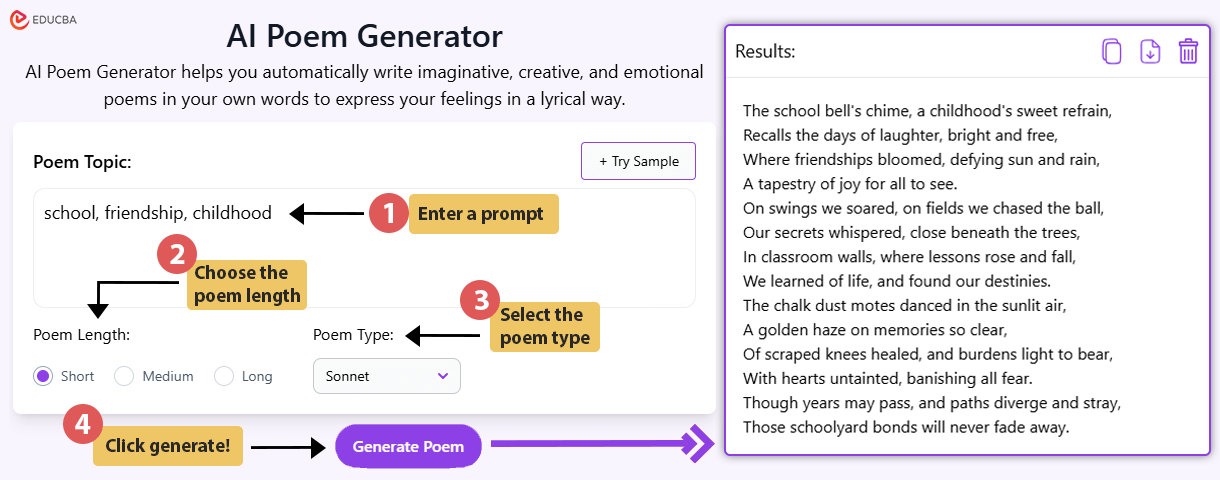
If you love poetry but struggle to write, an AI Poem Generator can help! It instantly transforms your thoughts into a beautifully structured poem.
How to write a poem using AI:
- Enter a word, phrase, or theme as a prompt. (e.g., “love,” “nature,” “memories”).
- Choose the poem length (short, medium, or long).
- Select the poem type (e.g., free verse, sonnet, haiku).
- Click generate and get an instant poem!
This is a great option for those who want to experiment with poetry but need a little help getting started.
Below is a practical demonstration of using an online website to help you find how to generate a large poem by simply giving a prompt, as you can see in the images below:
Final Thoughts
Learning how to write a poem is a beautiful journey of self-expression. Poetry transforms thoughts into art, drawing inspiration from nature, emotions, and life experiences. This guide covered seven essential steps, from finding inspiration to using literary devices and editing your poem. And if you ever need a quick poetry fix, an AI poem generator can help you create stunning poems effortlessly! So, grab a pen, let your imagination flow, and start writing your masterpiece.
Recommended Articles
We hope this guide on How to Write a Poem inspires you to craft meaningful and expressive poetry. Check out these recommended articles for more tips and techniques to enhance your writing skills.

