

Updated March 18, 2023
Beginning of the Home Rule Movement
The Home Rule Movement was an event that took place in India from 1916 to 1918 when national resentment towards the British empire was rising. As World War I was on the rise in Europe, Indian nationalist leaders were not impressed by the British government’s attempts at appeasing the Indian movement for independence through the Government of India Act (1909).
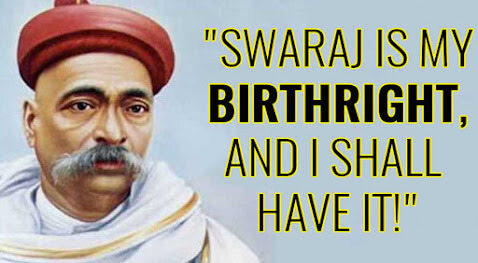
( Image credit: IAS Notes )
One of these leaders was the fiery Bal Gangadhar Tilak, who, along with British-Irish socialist Annie Besant, led the Home Rule Movement in the country. Earlier in 1907, the Indian National Congress experienced a split, and in the following year (1908), Tilak was exiled to Mandalay in Myanmar (then Burma) for a term that would last until 1914. These events catalyzed the Home Rule Movement as the war swept through Europe.
The Rise
- The suppression of the Ghadar Mutiny led to oppressive war-time measures such as the Foreigners Ordinance of 1914, the Ingress into India Ordinance of 1914, and the Defence of India Act of 1915.
- Indecision on the part of Indian authorities on whether or not to back Britain in World War I.
- Growing solidarity with other Home Rule Movements, such as the one in Ireland supported by socialist firebrand Annie Besant.
Goals of the Home Rule Movement
Annie Besant was a staunch believer in human freedom and autonomy and had previously backed a similar movement in Ireland. This movement was known as the Irish Home Rule Movement and inspired the name of the Indian movement. Besant’s influence reunited the Congress party under Tilak at the December 1915 Congress session.
Tilak and Besant could not persuade the Congress party to back their plans of creating a Home Rule League to resist British oppression. As a result, the two of them broke away and formed their own leagues, Tilak in April of 1916 in Belgaum and Besant in September of 1916 in Chennai (then Madras).
Tilak’s league operated primarily in Maharashtra, Karnataka, Central Province, and Berar (except Bombay), while Besant’s league expanded to the remaining country, including Bombay. While they mostly kept their activities separate, both leagues did have the same goals.
Goals of the movement:
- Transform India into a self-governing state.
- Politically educate the masses to agitate for self-rule.
- Inspire Indians to raise their voices against the government’s oppression.
- Demand more Indian representation in Politics from the British Raj
- The revival of politics in India following the disciplines of the Congress Party.
The decline of the Home Rule Movement
Post-1918, however, the Home Rule Movement began to decline. As with the movement’s formation, many factors led to this decline. Most notable were the communal riots of 1917-18, the exit of Tilak, who traveled to England to pursue a libel case against a British author, and division among the nationalists over the Montagu-Chelmsford reforms. Reasons behind the decline.
- Ineffective organization after Tilak’s departure.
- The arrest and release of Annie Besant ultimately satisfied the moderates in Congress.
- Mahatma Gandhi’s arrival on the scene, whose radical new approach captured hearts and minds across the country.
- His leadership and ultimate reunification of the All India Home League with the Indian National Congress.
Conclusion
While the Home Rule Movement catered primarily to the English-speaking educated class that mainly consisted of moderates, it did succeed in uniting the moderates, extremists, and the Muslim League, if only for a short time. In 1917, by the end of its brief existence, the movement had around 40,000 members across the country. The movement officially ended in 1920 when the Home Rule League merged with the Congress Party, ushering in Gandhi’s era of Satyagraha, which would eventually oust the British empire for good.
Recommended Articles
We hope that this EDUCBA information on the “Home Rule Movement” was beneficial to you. You can view EDUCBA’s recommended articles for more information,


