


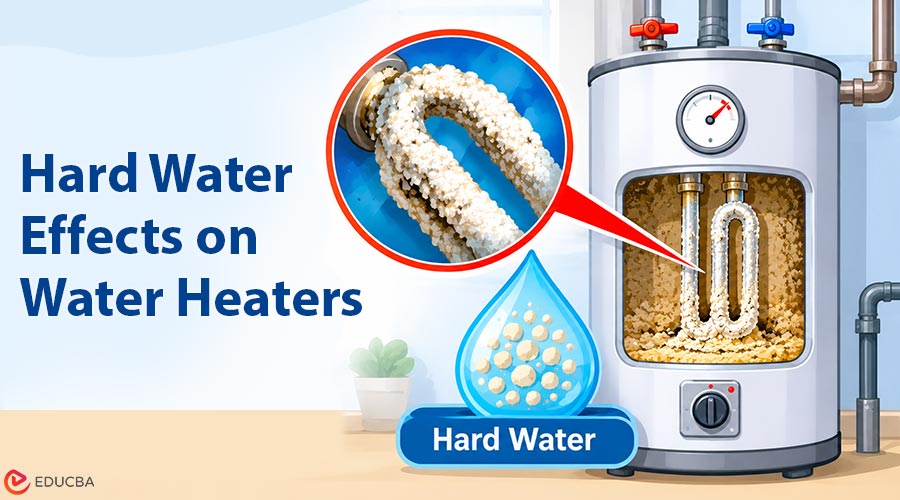
A water heater with a 10-year warranty might seem like a reliable investment, but its actual lifespan depends on more than the manufacturer. Water quality can play a major role in how efficiently the appliance operates and how long it lasts. Understanding the hard water effects on water heaters is essential because hard water contains minerals that gradually accumulate inside the tank, increasing energy consumption and potentially contributing to premature failure.
For homeowners, the real cost is not just the purchase price. It is how much they spend on installation, maintenance, energy, and eventual replacement.
The Problem Hiding Inside the Tank
Hard water contains dissolved calcium and magnesium that can form mineral deposits when heated. Over time, these deposits collect along heating elements and the bottom of the tank.
Sediment and scale buildup can reduce heating efficiency, increase energy costs, and contribute to equipment failure. The problem develops gradually. A water heater may continue producing hot water while using more energy or experiencing additional wear.
Companies like Hanson’s Quality Water can help homeowners evaluate their water quality and explore treatment options that may reduce mineral buildup.
Why Routine Maintenance Is Not Always Enough?
Flushing a water heater helps remove loose sediment and maintain performance. Inspecting the anode rod and following the manufacturer’s maintenance recommendations can also help protect the tank.
However, flushing may not remove hardened scale attached to heating surfaces. Without addressing the mineral content of the incoming water, deposits can continue accumulating. These hard water effects on water heaters can persist even with regular maintenance. Warranty coverage introduces another consideration. A 10-year limited warranty does not necessarily guarantee 10 years of operation or cover every type of failure.
Before purchasing a replacement, homeowners should review:
- Registration requirements: Some manufacturers require product registration for extended coverage or additional warranty benefits.
- Maintenance expectations: Warranty terms may specify proper installation, routine maintenance, or other responsibilities.
- Water quality exclusions: Certain warranties exclude damage caused by excessive mineral buildup, sediment, or water conditions outside recommended specifications.
These provisions vary by manufacturer, so reviewing the actual warranty is more useful than relying on the advertised coverage period.
How Water Treatment Can Reduce Hard Water Effects on Water Heaters?
Reducing mineral buildup at the source can help protect water heaters and other household appliances. Traditional water softeners remove calcium and magnesium through ion exchange, while some scale-control systems reduce deposits without removing those minerals.
Research supports the potential benefits. A study conducted by Battelle Memorial Institute for the Water Quality Research Foundation found that water heaters operating with softened water maintained better efficiency than comparable units exposed to hard water under the study conditions.
The study’s executive summary also documented increased energy consumption associated with mineral buildup in untreated water. Although treatment wo not guarantee a longer appliance lifespan, it can reduce scale-related problems and maintenance needs.
Run the Numbers Before Replacing Your Water Heater
Before investing in a new water heater or water treatment system, compare the long-term costs rather than focusing only on the initial price. Understanding the hard water effects on water heaters can help homeowners make more informed decisions about maintenance, treatment, and replacement.
- Test your water: Measure hardness in grains per gallon to understand how much mineral buildup may be occurring.
- Review warranty coverage: Check registration requirements, maintenance recommendations, and exclusions before selecting a new unit.
- Compare lifetime costs: Consider installation, expected service life, energy consumption, maintenance, and water-treatment costs.
- Keep maintenance records: Save installation documents, service invoices, and warranty information in case problems develop later.
Protecting Your Investment
A water heater’s lifespan depends on several factors, including installation quality, maintenance, usage, and water conditions.
In homes with significant hardness, mineral buildup can increase operating costs and contribute to earlier repairs or replacement. Regular maintenance helps, but treating the incoming water may provide additional protection.
Understanding the hard water effects on water heaters before the next installation can help homeowners make a more informed investment and avoid unnecessary expenses.
Recommended Articles
Explore our recommended articles to learn more about water heater maintenance, energy efficiency, and preventing mineral buildup. Discover practical tips to reduce hard water damage, extend appliance lifespan, and avoid costly repairs.

