
What is a Group Purchasing Organization (GPO)?
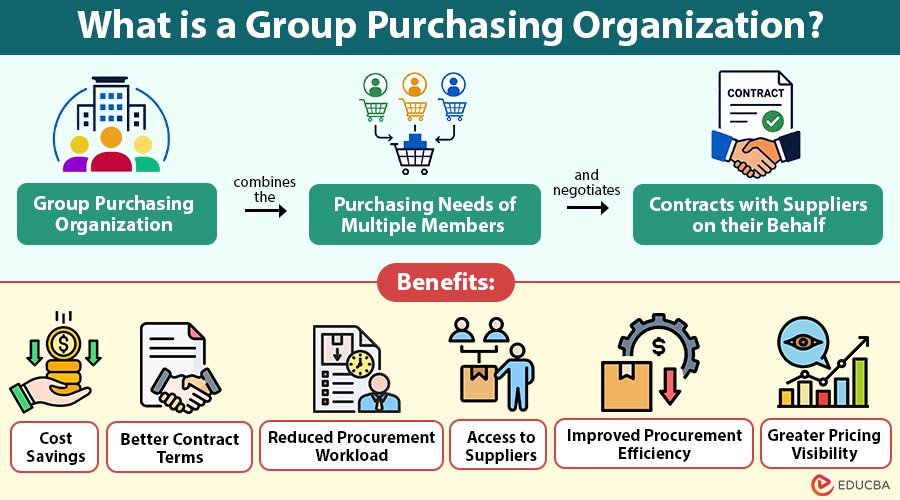
A group purchasing organization, commonly called a GPO, combines the purchasing needs of multiple members and negotiates contracts with suppliers on their behalf.
Instead of each company negotiating separately with manufacturers, distributors, or service providers, the GPO uses its members’ combined purchasing volume to secure favorable pricing and contract terms.
For example, imagine 100 businesses buying office supplies independently. Each business may have limited bargaining power because its individual order volume is relatively small. A GPO can combine its expected purchases and approach suppliers with much greater collective demand. This can help members access volume-based pricing, standardized contracts, and other purchasing benefits.
A GPO generally negotiates supplier agreements rather than purchasing and distributing the products itself. Members then use the negotiated contracts when making their purchases.
Table of Contents:
- Meaning
- Working
- Types
- Benefits
- Disadvantages
- Industries that Use Group Purchasing Organizations
- How Do Group Purchasing Organizations Make Money?
- When Should a Business Join a Group Purchasing Organization?
- How to Choose the Right Group Purchasing Organization?
Key Takeaways:
- Group purchasing organizations combine purchasing power to help organizations negotiate better prices and contract terms.
- GPOs can reduce procurement workload, improve efficiency, and expand supplier access.
- Businesses should evaluate fees, supplier choices, flexibility, and contract terms before joining.
- Comparing GPO pricing with existing suppliers helps identify actual potential savings.
How Does a Group Purchasing Organization Work?
The GPO process generally involves several steps:
1. Member Organizations Join
Businesses, hospitals, institutions, or other organizations join a GPO based on their purchasing requirements and industry.
2. Purchasing Demand Is Aggregated
The GPO analyzes members’ purchasing requirements and spending patterns. Combining this demand creates greater purchasing volume.
3. Suppliers Are Evaluated
The GPO identifies potential suppliers and evaluates factors such as pricing, product quality, reliability, service capabilities, and contract terms.
4. Contracts Are Negotiated
The GPO negotiates agreements with selected suppliers. These agreements can cover pricing, delivery terms, payment conditions, product specifications, service levels, and other requirements.
5. Members Access Contracts
Once contracts are established, members can purchase eligible products or services under the negotiated terms.
6. Performance Is Monitored
The GPO may monitor supplier performance, contract utilization, pricing, and member feedback to ensure that agreements continue to provide value.
Types of Group Purchasing Organizations
GPOs can be classified by industry, geographic coverage, ownership structure, and purchasing model.
1. Vertical GPO
A vertical GPO serves one specific industry, such as healthcare. It negotiates contracts for industry-specific products and services while addressing specialized purchasing needs, regulations, and requirements.
2. Horizontal GPO
A horizontal GPO serves organizations across different industries. It negotiates contracts for common business needs, including office supplies, technology, facilities management, telecommunications, and other indirect purchases.
3. Regional GPO
A regional GPO serves organizations within a specific geographic area. It focuses on local suppliers, regional purchasing needs, distribution networks, and opportunities for better pricing and availability.
4. Government-Based GPO
A government-based GPO supports public-sector organizations with purchasing activities. It follows public procurement requirements and emphasizes transparency, standardized processes, compliance, and efficient purchasing across participating organizations.
5. For-Profit and Non-Profit GPOs
GPOs may operate as for-profit or non-profit organizations. For-profit GPOs generate commercial revenue, while non-profit GPOs generally prioritize member benefits and reinvest revenue into services.
Benefits of a Group Purchasing Organization
GPOs can provide several financial and operational benefits.
1. Cost Savings
The primary advantage of a GPO is increased purchasing power. By aggregating demand, a GPO may negotiate lower prices than individual organizations could get on their own. Actual savings vary by category, supplier, member volume, and contract terms.
2. Better Contract Terms
GPOs may negotiate more favorable payment conditions, delivery arrangements, warranties, service levels, and other commercial terms.
3. Reduced Procurement Workload
Organizations do not need to conduct every supplier search, bidding exercise, and negotiation themselves. Pre-negotiated agreements can reduce the administrative work associated with purchasing.
4. Access to Suppliers
GPO members can gain access to a network of contracted and evaluated suppliers. This can simplify supplier discovery and reduce the time required to identify potential vendors.
5. Improved Procurement Efficiency
Standardized contracts and purchasing processes can make procurement more consistent. Employees can spend less time handling routine purchasing activities and more time focusing on strategic procurement.
6. Greater Pricing Visibility
Some GPOs provide market information and pricing benchmarks that help members understand whether they are receiving competitive rates.
Disadvantages of a Group Purchasing Organization
Although GPOs can reduce purchasing costs, they also have limitations.
1. Limited Supplier Choice
A GPO generally provides access to a selected group of contracted suppliers. If an organization prefers a supplier outside the GPO’s contracts, it may not receive the negotiated benefits for that purchase.
2. Less Flexibility
GPO contracts are designed to meet the needs of many members. As a result, they may not accommodate highly specialized products, customized specifications, or unusual delivery requirements.
3. Membership Fees
Some GPOs charge membership or participation fees. Organizations should compare these costs with the savings and other benefits the GPO provides.
4. Minimum Order Requirements
Certain contracts may include minimum order quantities or purchasing commitments. These requirements may create inventory or storage challenges for smaller organizations.
5. Reduced Independent Negotiating Power
Organizations may become dependent on GPO contracts in certain categories. This can reduce their ability to negotiate independently or pursue alternative suppliers.
6. Potential Conflicts of Interest
Some GPOs generate revenue through supplier-paid administrative fees. Organizations should therefore understand how the GPO selects suppliers and how its fee structure works before joining. Transparency around supplier relationships and contract awards is important.
Industries that Use Group Purchasing Organizations
GPOs are used across several industries.
1. Healthcare
Hospitals, clinics, surgery centers, and nursing facilities use GPOs to purchase medical supplies, equipment, pharmaceuticals, and essential healthcare services.
2. Manufacturing
Manufacturers use GPOs to purchase maintenance supplies, industrial equipment, packaging materials, office products, and other indirect business requirements at competitive prices.
3. Hospitality and Food Service
Hotels, restaurants, and food-service businesses use GPOs to combine purchasing demand for food products, cleaning supplies, equipment, and operating materials.
4. Education
Schools, colleges, and universities use GPO contracts to purchase technology, office supplies, facilities management services, and other institutional requirements efficiently.
5. Government
Government organizations use cooperative purchasing arrangements to obtain supplies and services while following applicable procurement rules, transparency requirements, and standardized purchasing procedures.
How Do Group Purchasing Organizations Make Money?
GPOs can generate revenue through different models depending on their structure and contracts. One common approach is an administrative fee paid by contracted suppliers based on purchases made through GPO agreements.
Some GPOs may also charge membership or service fees, while non-profit or member-owned organizations can have different financial structures.
Businesses should examine the GPO’s fee model, supplier relationships, contract terms, and any additional costs before joining. Understanding these details helps organizations calculate the actual return from GPO participation.
When Should a Business Join a Group Purchasing Organization?
A GPO can be particularly useful when an organization:
1. Significant Spending
Businesses with significant spending on common products or services can join a GPO to combine purchasing demand and potentially achieve better pricing.
2. Limited Purchasing Volume
Businesses with limited purchasing volume may benefit from a GPO because collective buying power can provide stronger prices than negotiating independently.
3. Small Procurement Team
Organizations with small procurement teams can use GPOs to simplify supplier selection, contract management, and purchasing activities while reducing workload and administrative effort.
4. Pre-Negotiated Contracts
Businesses seeking pre-negotiated supplier contracts can join GPOs to access established agreements, pricing terms, and supplier relationships without lengthy individual negotiations.
5. Reduced Procurement Administration
Organizations wanting to reduce procurement administration can use GPOs to simplify sourcing, supplier management, contract processes, and routine purchasing activities across business operations.
6. Standardized Products
Businesses purchasing standardized products across multiple locations can use GPO contracts to maintain consistent suppliers, products, pricing, and purchasing processes throughout operations.
7. Supplier and Pricing Benchmarks
Businesses seeking supplier and pricing benchmarks can use GPOs to compare purchasing terms, supplier performance, and market prices for better procurement decisions.
How to Choose the Right Group Purchasing Organization?
Organizations should evaluate a GPO carefully before signing an agreement. Important factors include:
1. Contract Coverage
Check whether the GPO covers products and services that account for a significant portion of your organization’s overall spending.
2. Savings Potential
Compare your current supplier prices with GPO contract prices to confirm potential savings, rather than assuming every contract offers lower costs.
3. Fees
Review membership fees, administrative charges, supplier rebates, and other costs to understand the total financial impact of joining the GPO.
4. Supplier Network
Evaluate contracted suppliers based on quality, reliability, geographic coverage, product availability, and diversity to ensure they meet your business requirements.
5. Flexibility
Check whether your organization can continue using existing suppliers when GPO contracts do not meet specific product, service, quality, or delivery requirements.
6. Contract Terms
Review minimum purchasing requirements, contract duration, termination conditions, renewal provisions, payment terms, and delivery arrangements before signing any GPO agreement.
7. Transparency
Understand how suppliers are selected, how contracts are negotiated, and how the GPO receives compensation from suppliers or participating member organizations.
8. Technology and Reporting
Consider whether the GPO provides useful purchasing data, spend analysis, reporting capabilities, supplier insights, and digital procurement tools to support better decisions.
Final Thoughts
A group purchasing organization combines purchasing power of multiple organizations to negotiate better prices and contract terms. GPOs can reduce costs, simplify procurement, and improve efficiency. However, businesses should evaluate supplier choice, fees, contract terms, and requirements. Comparing GPO agreements with existing suppliers helps determine whether group purchasing delivers meaningful savings.
Frequently Asked Questions (FAQs)
Q1. Can a small business participate in a GPO?
Answer: Yes. Small businesses can participate in GPOs and may benefit from collective purchasing power even when their individual order volumes are limited.
Q2. Does joining a GPO require a long-term commitment?
Answer: Not always. The commitment depends on the GPO agreement. Businesses should check the contract duration, renewal terms, and cancellation conditions before joining.
Q3. Can a company use multiple GPOs at the same time?
Answer: In some cases, yes. A company may participate in multiple GPOs when they cover different purchasing categories or provide complementary supplier options.
Q4. Are GPO prices always lower than market prices?
Answer: No. GPO pricing is not automatically the lowest available price. Businesses should compare GPO rates with direct supplier quotes and other purchasing options.
Recommended Articles
We hope that this EDUCBA information on “Group Purchasing Organization” was beneficial to you. You can view EDUCBA’s recommended articles for more information.


