


Grocery Store POS System: Overview
Grocery stores operate in a fast-paced, high-volume environment where efficiency and accuracy are critical. A well-designed Point of Sale (POS) system for grocery stores does more than handle transactions—it streamlines operations, improves customer service, and supports compliance with payment standards like EBT. By integrating inventory tracking, payment processing, and detailed reporting, these systems help grocery businesses stay efficient and competitive. In this article, we will explore how a modern grocery store POS system can make it easier to manage inventory and EBT payments.
The Role Of POS Systems In Grocery Stores
Modern POS systems are the backbone of grocery store operations, handling everything from sales to inventory tracking. Unlike generic retail POS systems, those designed for grocery stores must accommodate high transaction volumes, diverse product catalogs, and specific payment methods like EBT. They provide real-time data, reduce human error, and improve customer service by speeding up checkout processes. For grocery stores, a POS system must balance flexibility with reliability to meet the demands of both small independent markets and large chains.
Key Features Of Grocery Store POS Systems
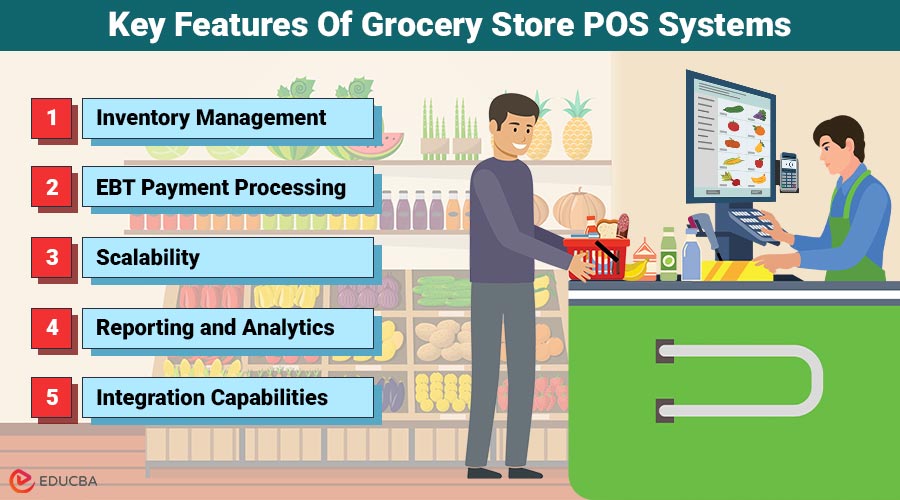
Grocery stores require specialized POS features to manage their unique operational challenges. These systems include tools that streamline workflows and ensure regulatory compliance. Key features include:
- Inventory Management: Monitors inventory in real time, instantly updating stock levels after each transaction to help avoid overstocking or running out of items.
- EBT Payment Processing: Supports seamless EBT transactions, ensuring compliance with USDA regulations for SNAP and WIC programs.
- Scalability: Adapts to the needs of small corner stores or supermarkets with multiple registers.
- Reporting and Analytics: Delivers valuable insights into sales patterns, inventory movement, and customer behavior to support smarter business decisions.
- Integration Capabilities: Connects with accounting software, loyalty programs, and e-commerce platforms for a cohesive operation.
For grocery store owners seeking a tailored solution, POS System Software For Grocery offers specialized tools to handle the complexities of inventory and payment processing, ensuring compliance and efficiency.
Inventory Management With POS Systems
Effective inventory management is critical for grocery stores, where perishable goods and high turnover rates demand precision. A POS system simplifies this by automating stock tracking and providing real-time updates. For example, when a cashier scans a product, the system instantly deducts it from inventory, alerting managers when stock is low. This reduces waste, especially for perishables like produce or dairy, and helps avoid lost sales due to out-of-stock items. Moreover, grocery stores can use POS systems as an effective tool to promote their businesses. Advanced POS systems also support features like:
- Automated Reordering: Sets thresholds for reordering products when stock levels fall below a certain point.
- Batch Tracking: Monitors expiration dates and lot numbers for perishable or recalled items.
- Multi-Store Management: Synchronizes inventory across multiple locations for chains, ensuring consistent stock levels.
A Statista report projects significant growth in the global market for retail inventory management software, highlighting the rising dependence on technology to optimize stock control. These tools help grocery stores maintain profitability by minimizing overstock and spoilage.
EBT Payment Processing: Compliance And Efficiency
EBT payments, such as those from Supplemental Nutrition Assistance Program (SNAP) and Women, Infants, and Children (WIC), are a vital revenue stream for many grocery stores. A POS system designed for EBT must comply with strict USDA regulations while ensuring a smooth customer experience. These systems verify eligible items, process transactions securely, and generate reports for compliance audits. Key considerations for EBT-compatible POS systems include:
- Item Eligibility: Automatically identifies SNAP-eligible products, preventing errors during checkout.
- Secure Transactions: Encrypts payment data to protect customer information and comply with federal standards.
- Split Tender Support: Allows customers to combine EBT with other payment methods, such as cash or credit, for non-eligible items.
A Forbes article highlights how modern POS systems are evolving to handle diverse payment methods, including EBT, to meet the needs of inclusive customer bases. This ensures grocery stores can serve all customers efficiently while adhering to regulatory requirements.
Benefits of Integrating Inventory and EBT in a Grocery Store POS System
Integrating inventory management and EBT processing within a single POS system offers significant advantages. By consolidating these functions, grocery stores can reduce operational silos, improve accuracy, and enhance customer satisfaction. For instance, a cashier can process an EBT transaction while the system simultaneously updates inventory, eliminating the need for separate software or manual reconciliations. Additional benefits include:
- Streamlined Operations: Reduces the time spent on manual inventory checks or payment reconciliations.
- Cost Savings: Minimizes losses from overstocking, spoilage, or non-compliant EBT transactions.
- Enhanced Customer Experience: Speeds up checkout by integrating payment and inventory functions, reducing wait times.
Challenges In Implementing POS Systems
While POS systems offer numerous benefits, implementation can present challenges. Grocery store owners must consider factors like cost, staff training, and system compatibility. Smaller stores, in particular, may face budget constraints when investing in advanced systems. Additionally, transitioning to a new POS requires staff to adapt to new workflows, which can temporarily disrupt operations. Common challenges include:
- Initial Costs: The high initial expenses for hardware, software, and installation can pose a challenge for small businesses.
- Training Needs: Employees require training on advanced features such as inventory tracking and EBT processing.
- System Integration: Ensuring compatibility with existing software, such as accounting or loyalty programs, can be complex.
To address these challenges, many POS providers offer scalable solutions that allow stores to start with basic features and upgrade as needed.
Choosing The Right Grocery Store POS System
Choosing the right POS system involves thoroughly assessing your store’s unique requirements. Key factors include store size, number of daily transactions, and available budget. For small grocery stores, cloud-based POS systems offer affordability and flexibility, while larger chains may require robust systems with multi-store capabilities. When choosing a POS system, consider:
- Ease of Use: Intuitive interfaces reduce training time and improve cashier efficiency.
- Customer Support: Reliable support ensures quick resolution of technical issues.
- Customization Options: Systems that retailers can tailor to specific grocery store needs, such as EBT processing or tracking perishable inventory.
Future Trends In Grocery Store POS Systems
The POS industry is evolving rapidly, driven by advancements in technology and changing consumer expectations. Emerging trends include:
- Mobile POS: Allows staff to process transactions anywhere in the store, improving flexibility.
- AI-Powered Analytics: Uses artificial intelligence to predict inventory needs and optimize stock levels.
- Contactless Payments: Supports growing demand for touchless transactions, including mobile wallets and EBT.
These innovations are transforming how grocery stores operate, making it essential for owners to stay informed about new developments.
Final Thoughts
A modern grocery store POS system is essential for running an efficient and customer-focused business. It helps manage inventory, process EBT payments, and simplify daily tasks all while improving accuracy and reducing costs. As technology continues to evolve, grocery stores that adopt powerful, all-in-one POS systems will stay ahead in the fast-paced retail world.
Recommended Articles
We hope this detailed guide to the grocery store POS system helps you streamline operations and better serve your customers. Explore these recommended articles for additional tips and tools to enhance your store’s performance and efficiency.


