
What is a Go-Shop Period?
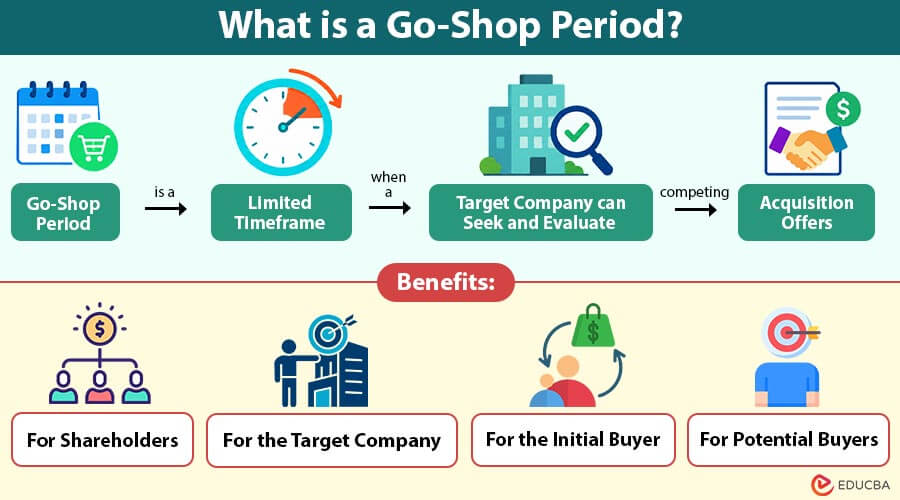
A go-shop period is a limited timeframe when a target company can seek and evaluate competing acquisition offers. It usually begins after signing an agreement with an initial buyer and provides more flexibility than a no-shop provision.
For example, suppose Company A agrees to be acquired by Company B for ₹500 crore. The agreement provides Company A with a 30-day go-shop period. During these 30 days, Company A can approach other potential buyers and determine whether another buyer is willing to offer a higher price or better terms.
If the target company receives a superior proposal, it may have options to negotiate with the competing bidder, subject to the terms of the original agreement.
Table of Contents:
Key Takeaways:
- A go-shop period allows target companies to seek competing acquisition offers after signing an initial agreement.
- It can increase shareholder value by encouraging higher purchase prices or more favorable transaction terms.
- The target company evaluates competing offers based on price, financing, regulatory risks, conditions, and closing certainty.
- After the go-shop period, contractual restrictions may limit active solicitation or negotiation with competing buyers.
Why is a Go-Shop Period Important?
Below are the key reasons why a go-shop period is important:
1. Promotes Competitive Bidding
A go-shop period encourages potential buyers to submit competing offers, which may help the target company secure a higher price or better transaction terms.
2. Supports Shareholder Value
It gives the board an opportunity to identify better acquisition proposals, helping them pursue transaction terms that may deliver greater value to shareholders.
3. Provides Market Validation
Market testing helps determine whether the original acquisition price fairly reflects the company’s value and provides confidence when no competing offers emerge.
4. Creates Negotiating Leverage
Potential competing offers can strengthen the target company’s negotiating position, encouraging the original buyer to improve the purchase price, conditions, or other transaction terms.
How Does a Go-Shop Period Work?
A go-shop period generally follows a structured process:
1. Initial Acquisition Agreement
The target company negotiates with an initial buyer and signs an acquisition agreement covering price, conditions, closing requirements, termination rights, and other terms.
2. Go-Shop Period Begins
After signing the agreement, the go-shop period begins, allowing the target company to contact potential alternative buyers and explore competing acquisition opportunities.
3. Search for Alternative Offers
The target company, often supported by financial advisers, identifies potential buyers, shares relevant transaction information, and invites them to submit alternative offers.
4. Competing Offers Are Evaluated
When another buyer submits an offer, the board evaluates whether it is superior by considering price, financing certainty, regulatory risks, conditions, timing, and closing likelihood.
5. Decision by the Board
The board decides whether to proceed with the original transaction or pursue a competing proposal while considering legal duties and acquisition agreement requirements.
Difference Between Go-Shop Period and No-Shop Period
The table below highlights the key differences between the two:
| Feature | Go-Shop Period | No-Shop Period |
| Purpose | Allows limited solicitation of alternatives | Restricts active solicitation |
| Timing | Usually immediately after signing | Often applies after the go-shop period |
| Competing offers | May be actively sought | Generally cannot be actively solicited |
| Duration | Limited | Usually longer |
| Flexibility | Higher | Lower |
| Buyer protection | Lower during the go-shop period | Stronger |
Example of a Go-Shop Period
Consider a fictional company, PQR Industries, that agrees to be acquired by LMN Corporation for ₹750 crore.
The acquisition agreement includes a 30-day go-shop period.
During this period, PQR Industries approaches other potential buyers to determine whether a better offer is available. Another company, RST Group, submits an offer of ₹825 crore, which is higher than LMN Corporation’s proposal.
PQR Industries’ board reviews the competing offer, including its price, financing arrangements, regulatory requirements, and likelihood of completing the transaction. If the offer meets the agreement’s requirements for a superior proposal, PQR Industries may be able to negotiate with RST Group and potentially terminate the original agreement, subject to applicable termination fees and other contractual conditions.
What Happens After the Go-Shop Period?
Once the go-shop period ends, the target company’s ability to actively seek competing offers is usually restricted.
The acquisition agreement may then include a no-shop or no-talk provision. These provisions can prevent the target company from soliciting or negotiating with other potential buyers, although exceptions may apply.
For example, the agreement may permit the board to consider an unsolicited proposal if failing to do so would conflict with its legal or fiduciary duties.
Therefore, the end of the go-shop period does not necessarily mean that every competing proposal becomes irrelevant. The exact rights and restrictions depend on the transaction documents and applicable law.
Benefits of a Go-Shop Period
A go-shop period can benefit different parties involved in an acquisition.
1. For Shareholders
Shareholders may benefit when competing buyers increase the purchase price or offer more favorable transaction terms, potentially improving their overall financial returns.
2. For the Target Company
The target company gets a defined opportunity to test the market, attract competing offers, and assess alternatives before becoming more restricted.
3. For the Initial Buyer
The initial buyer faces competition but retains a contractual framework for completing the transaction if no superior proposal emerges during the period.
4. For Potential Buyers
Potential buyers receive a limited opportunity to evaluate the target company, conduct initial due diligence, and potentially submit a competing acquisition offer.
Risks of a Go-Shop Period
Despite its advantages, a go-shop period has several risks.
1. Short Timeframe
Potential buyers may have limited time to conduct due diligence, arrange financing, evaluate risks, and prepare a competitive acquisition proposal.
2. Limited Buyer Interest
Competing buyers may hesitate to spend significant resources evaluating a company that already has a signed acquisition agreement.
3. Termination Fees
If the target company accepts a competing offer, it may need to pay a termination fee to the original buyer.
4. Deal Restrictions
The acquisition agreement may limit how the target communicates with potential buyers and negotiates competing proposals during the go-shop period.
5. Execution Risk
A higher competing offer may not represent a better transaction if the new buyer faces financing, regulatory, approval, or closing risks.
Final Thoughts
A go-shop period gives a target company a valuable opportunity to test the market after signing an acquisition agreement. By encouraging competing offers, it can improve transaction value and terms for shareholders. However, short deadlines, termination fees, and contractual restrictions can limit its effectiveness and require careful evaluation.
Frequently Asked Questions (FAQs)
Q1. How long does a typical go-shop period last?
Answer: A go-shop period typically lasts 15 to 60 days, depending on the transaction and terms negotiated by the parties.
Q2. Who decides the length of a go-shop period?
Answer: The target company and initial buyer negotiate the duration and include the agreed period in the acquisition agreement.
Q3. Can a go-shop period affect the original acquisition deal?
Answer: Yes. If a more attractive proposal emerges, the target may have rights to pursue it, subject to the original agreement.
Q4. Can the original buyer match a competing offer?
Answer: Some acquisition agreements give the original buyer a matching or topping right, allowing it to improve its offer after a competing proposal appears.
Recommended Articles
We hope that this EDUCBA information on “Go-Shop Period” was beneficial to you. You can view EDUCBA’s recommended articles for more information.

