


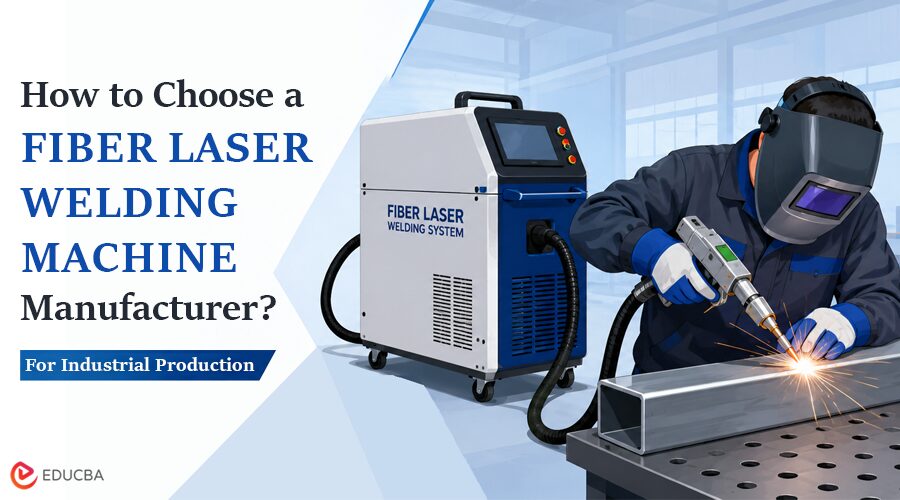
Buying a laser welder is easy. Choosing the right fiber laser welding machine manufacturer is harder. Many machines look similar in photos. The power number may also look impressive. But once the machine enters a real workshop, small details begin to matter: welding stability, cooling, gun weight, training, spare parts, and whether the supplier can help when the first test weld does not look right. For industrial buyers, the goal is not to buy the strongest machine on paper. The goal is to buy a system that fits daily production and helps operators weld better with less rework.
Why Manufacturer Selection Matters in Fiber Laser Welding?
One common mistake is choosing only by power. Power is important, but it does not solve everything. Thin stainless steel, aluminum frames, carbon steel structures, brass parts, and precision sheet metal all behave differently. If the machine is too strong for the job, it may cause burn-through, distortion, or a rough weld appearance. If it is too weak, weld penetration may not be enough. Material thickness is another issue. A shop welding 1–3 mm sheet metal needs a different setup from a factory welding heavier structural parts. This is why a serious buyer should discuss materials and applications before price. Support also matters more than many buyers expect. Laser welding depends on more than the machine itself.
Results are affected by:
- Joint fit-up
- Shielding gas
- Wire feeding
- Focus position
- Welding speed
- Operator movement
- Parameter settings
Good laser welding machine suppliers help buyers work through these details. Poor suppliers only ship a box.
Before choosing a manufacturer, ask these questions:
- What materials do we weld most often?
- What is our normal thickness range?
- Do we need welding only, or welding plus cutting and cleaning?
- Will the machine stay in one area or move around the shop?
- Can the supplier provide sample testing?
- What training and warranty are included?
- Are spare parts easy to get?
The answers will usually point you toward the right type of machine.
Key Factors When Comparing Laser Welding Equipment Manufacturers
When comparing laser welding equipment manufacturers, do not judge by one specification. Look at the complete system.
| Factor | What to Check | Why It Matters |
| Power range | 700–1800W or higher | Helps match the machine to material thickness |
| Cooling design | Air, phase-change, or water cooling | Affects stability, maintenance, and mobility |
| Welding gun | Weight, grip, and cable design | Affects operator comfort during daily work |
| Material support | Steel, stainless steel, aluminum, brass, copper | Shows whether the system fits your real jobs |
| Training | Parameters, safety, operation, maintenance | Reduces trial and error |
| Warranty | Service period and spare parts | Protects long-term use |
Cooling design is worth a closer look. Water cooling can be suitable for some high-duty work, but it adds more setup and maintenance. Air-cooled or phase-change cooling can be easier for workshops that need mobility and simple daily operation. The welding gun is another detail that should not be ignored. A heavy gun may feel fine during a short demo. After several hours of welding, it becomes a real problem. A lighter gun helps with control, comfort, and weld consistency. The best suppliers offer real fiber laser welding solutions, not just a product list. That means model selection, process advice, parameter support, and after-sales service.
Why Dynalasers is a Practical Fiber Laser Welding Machine Manufacturer?
Dynalasers is a practical manufacturer of fiber laser welding machines for workshops, repair teams, OEM users, and industrial buyers who need handheld laser welding systems. The company focuses on machines that are portable, stable, and useful in real working conditions. The M, D, and S Series cover different levels of demand, so buyers do not have to force one machine into every application.
Key strengths include:
- Self-developed fiber laser source
- Air-cooled and phase-change cooling designs
- Lightweight welding gun around 0.48 kg
- Two-year warranty
- Parameter guidance and technical support
- Spare parts support
- Remote assistance
- Multi-function options for welding, cutting, cleaning, spot welding, and rust removal
This is useful for buyers comparing laser welding system manufacturers. A good machine should not only weld a sample in a demo. It should also help operators repeat good results in daily production. Dynalasers’ systems can work with stainless steel, carbon steel, aluminum, brass, copper, and other common industrial metals, depending on model, thickness, joint design, and settings.
Dynalasers Welding Machine Series
The Dynalasers offers three main handheld welding series. Each one has a different role.
M Series: Multi-Function Welding for Workshops
The M Series is designed for workshops that handle changing jobs. Models include M30, M50, and M70, with power from 800W to 1800W. It supports continuous, pulse, spot, and turbo modes. Depending on the configuration, it can support welding, cutting, and cleaning.
Best For:
- General fabrication shops
- Medium-thickness sheet metal
- Repair and maintenance work
- Mixed workshop tasks
- Buyers looking for practical handheld laser welding equipment
The M Series is a good fit when a workshop needs flexibility. One day, the team may weld a stainless steel sheet. The next day, it may repair carbon steel parts or clean a surface before joining.
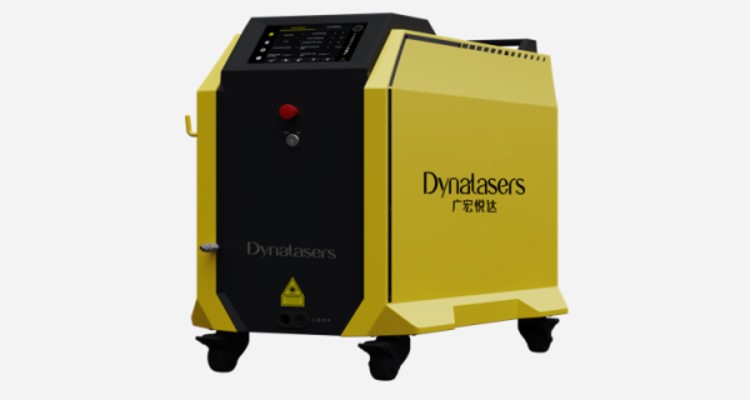
Image Source: Dynalasers
D Series: High-Performance Welding for Industrial Users
The D Series is built for users who need stronger welding capability. Models include D50P and D70P, with 1200W and 1800W power options. It supports 5-in-1 use: welding, cutting, cleaning, spot welding, and rust removal.
Best For:
- Industrial repair
- Structural components
- Batch production
- Mixed metal fabrication
- Buyers needing stronger industrial fiber laser welding machines
The D Series is suitable for thicker stainless steel and carbon steel structures, aluminum parts, and workshops that require greater process coverage. It gives users more capability while still keeping the system easier to move than a large fixed workstation.
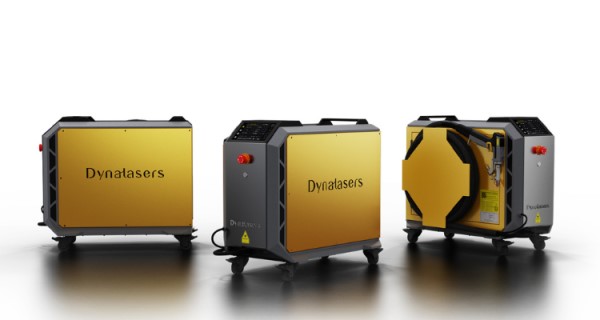
Image Source: Dynalasers
S Series: Lightweight Welding for Mobile Work
The S Series is for users who prioritize portability. It is suitable for field repair, mobile service, small workshops, custom parts, and small-batch production. The S30 weighs less than 21 kg. The S40 weighs less than 22 kg. The welding gun weighs less than 0.48 kg.
Best For:
- Field maintenance
- Mobile repair
- Small workshops
- Light production work
- Jobs that need a compact welding setup
The S Series is not meant to replace higher-power systems for thick industrial parts. Its value is mobility, simple handling, and easier movement between work areas.
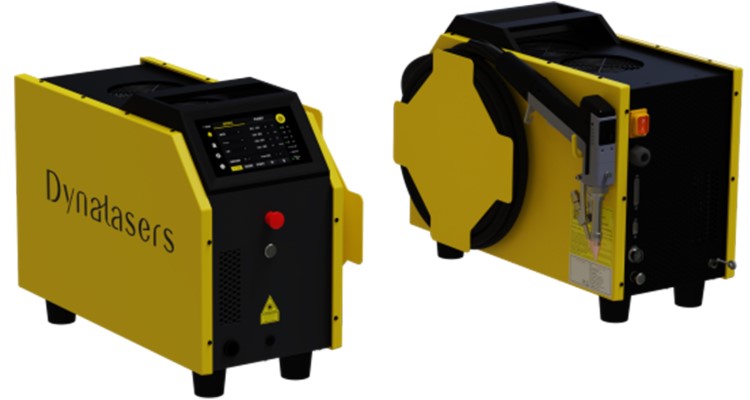
Image Source: Dynalasers
Dynalasers Series Comparison
| Series | Positioning | Power Range | Best Match |
| M Series | Flexible workshop welding | 800–1800W | Fabrication shops, repair teams, mixed tasks |
| D Series | High-performance industrial welding | 1200–1800W | Structural parts, batch production, industrial repair |
| S Series | Lightweight portable welding | 700–900W | Field repair, mobile service, small-batch work |
Final Thoughts
Choosing a fiber laser welding machine manufacturer should start with real production needs. Power matters, but so do cooling, portability, material range, operator comfort, training, and service. Dynalasers is a practical option for buyers who need handheld systems with clear series choices. The M Series is well-suited to flexible workshop jobs, the D Series supports stronger industrial welding, and the S Series is designed for portable work. For factories, repair teams, and fabrication shops, that makes selection easier and less risky.
Frequently Asked Questions (FAQs)
Q1. What should I check in a fiber laser welding machine manufacturer?
Answer: Check the power range, cooling design, welding gun weight, material compatibility, training, warranty, spare parts, and technical support. Also ask whether the supplier can test your sample parts and provide guidance on parameters.
Q2. What materials can fiber laser welding machines weld?
Answer: They can weld stainless steel, carbon steel, aluminum, brass, copper, galvanized steel, and other metals. Actual performance depends on power, material type, thickness, joint fit-up, shielding gas, wire feeding, focus position, and operator technique.
Q3. Is handheld laser welding suitable for factories?
Answer: Yes, when the application matches the machine. Handheld laser welding is useful for sheet metal fabrication, repair work, small-batch production, visible welds, and flexible production areas. Fully automated high-volume lines may need a different setup.
Q4. How does Dynalasers support industrial buyers?
Answer: Dynalasers helps with model selection, parameter guidance, spare parts, remote assistance, and warranty support. Its M, D, and S Series give buyers clear options for workshop welding, stronger industrial welding, and mobile work.
Recommended Articles
We hope this guide helps you choose the right fiber laser welding machine manufacturer for your production needs. Check out these recommended articles for more industry insights and solutions.

