
What is an Escalation Clause?
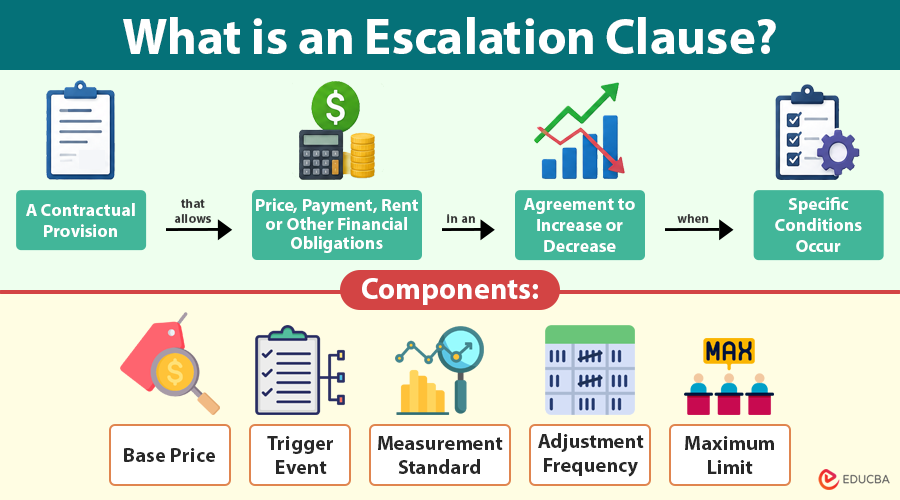
An escalation clause is contractual provision that allows the price, payment, rent, or other financial obligations in an agreement to increase or decrease when specific conditions occur.
The clause is commonly used in long-term contracts where costs may fluctuate over time. It ensures that neither party bears the entire burden of unexpected economic changes.
For example, a construction company entering into a three-year building contract may include an escalation clause that allows project costs to be adjusted if steel prices increase beyond a specified percentage.
Table of Contents:
Key Takeaways:
- Escalation clauses adjust contract prices when predefined economic conditions significantly change costs.
- They protect parties from inflation, market volatility, and unexpected increases in expenses.
- Clear triggers, formulas, and limits help reduce disputes and improve transparency.
- Commonly used in construction, leases, employment, and long-term supply agreements worldwide.
Why is an Escalation Clause Important?
Business environments are dynamic, and fixed-price contracts may become financially challenging when costs rise unexpectedly. An escalation clause is important because it:
1. Protects Against Inflation and Rising Costs
Ensures contract prices adjust with inflation, preventing financial losses from increasing operational expenses.
2. Reduces Financial Risk for Both Parties
Shares cost fluctuations fairly between parties, minimizing unexpected financial burdens and contract instability.
3. Maintains Contract Fairness Over Time
Keeps pricing aligned with changing market conditions, ensuring equitable treatment throughout the contract duration.
4. Encourages Long-Term Agreements
Provides pricing flexibility, making parties more comfortable entering into extended contractual relationships.
5. Prevents Disputes Related to Pricing Changes
Establishes clear adjustment rules, reducing disagreements and misunderstandings regarding future price increases.
6. Improves Predictability and Transparency
Defines adjustment mechanisms upfront, helping parties forecast costs and maintain transparent business dealings.
How Does an Escalation Clause Work?
An escalation clause specifies the conditions under which adjustments may occur and how they will be calculated.
Step 1: Establish Base Terms
The parties agree on an initial contract price or payment amount.
Step 2: Define Trigger Events
Specific circumstances that activate the clause are identified, such as:
- Inflation exceeding a certain rate
- Increase in material costs
- Labor wage changes
- Fuel price fluctuations
- Government tax increases
Step 3: Determine Adjustment Method
The contract specifies the formula or benchmark used to calculate adjustments.
Examples include:
- Consumer Price Index (CPI)
- Wholesale Price Index (WPI)
- Commodity price indices
- Industry-specific benchmarks
Step 4: Implement Adjustment
When the trigger condition occurs, the contract value is revised according to the agreed formula.
Components of an Escalation Clause
An effective escalation clause typically contains the following components:
1. Base Price
The initial contract value is established at signing and serves as the reference point for future pricing adjustments.
2. Trigger Event
A specific condition or occurrence that activates the escalation clause and initiates contract price modifications.
3. Measurement Standard
An agreed benchmark, index, or metric used to measure cost changes and determine adjustments accurately.
4. Adjustment Frequency
Specifies how often contract prices are reviewed and adjusted, including monthly, quarterly, or annual intervals.
5. Maximum Limit
Sets a cap on allowable increases, preventing excessive price escalation and protecting both contracting parties.
Types of Escalation Clauses
Different industries use escalation clauses in various ways.
1. Price Escalation Clause
A contractual provision that permits price adjustments when the costs of goods, materials, or services increase beyond agreed thresholds during the contract period.
2. Rent Escalation Clause
A lease provision allowing periodic rent increases based on predetermined percentages, inflation indexes, or prevailing market rental rates throughout occupancy.
3. Construction Escalation Clause
A contract provision enabling project cost adjustments when material prices, labor charges, fuel expenses, or other construction-related costs increase significantly.
4. Salary Escalation Clause
An employment agreement provision that increases employee compensation based on inflation rates, living costs, performance factors, or industry wage standards.
5. Commodity-Based Escalation Clause
A pricing mechanism linking contract payments to fluctuations in commodity markets, ensuring costs reflect changes in essential raw material prices.
Examples of Escalation Clauses
Below are some common examples that demonstrate the practical application of escalation clauses across various agreements.
1. Construction Contract
A contractor signs a ₹50 million project agreement.
The contract includes an escalation clause stating:
- If steel prices increase by more than 8%, the contract value will be adjusted proportionately.
- If steel costs rise by 15%, the contractor can request a price revision.
2. Commercial Lease
A company leases office space for ten years.
The lease agreement states:
- Rent will increase annually based on the Consumer Price Index (CPI).
- If inflation rises by 6%, the rent adjusts accordingly.
3. Home Purchase Offer
In real estate transactions, buyers sometimes use escalation clauses to remain competitive.
For instance:
- Initial offer: ₹80 lakh
- Escalation amount: ₹2 lakh
- Maximum limit: ₹90 lakh
If another buyer offers ₹84 lakh, the first buyer’s offer automatically increases to ₹86 lakh.
Advantages of Escalation Clauses
Escalation clauses offer several advantages by helping parties manage financial uncertainty, maintain fairness, and ensure contract continuity over time.
1. Risk Management
Protects businesses from unexpected cost increases, reducing financial exposure and helping maintain profitability.
2. Long-Term Stability
Supports sustainable long-term contracts by accommodating changing economic conditions and cost structures.
3. Fairness
Ensures both parties share market-driven cost changes equitably throughout the contract duration.
4. Reduced Renegotiation
Minimizes frequent contract renegotiations through predefined pricing adjustment methods and clear guidelines.
5. Better Supplier Relationships
Encourages supplier commitment by providing protection against unpredictable cost fluctuations and risks.
6. Increased Transparency
Establishes clear benchmarks and formulas, significantly reducing confusion and improving contractual understanding.
Disadvantages of Escalation Clauses
While escalation clauses provide flexibility and protection against changing market conditions, they can also introduce certain disadvantages.
1. Increased Complexity
Makes contracts more complex, requiring careful drafting, interpretation, and ongoing management efforts.
2. Budget Uncertainty
Creates uncertainty in future expenses, making financial planning and budgeting more challenging.
3. Potential Disputes
May cause disagreements over trigger events, calculation methods, or selected adjustment indices.
4. Administrative Burden
Requires continuous monitoring of economic indicators and regular contract price recalculations.
5. Possibility of Overpayment
Poorly structured clauses may result in excessive increases, causing buyers to overpay.
Difference Between Escalation Clause and Price Adjustment Clause
While both clauses allow changes to contract pricing, they differ in scope, purpose, and the factors that trigger adjustments. The table below highlights the key differences:
| Basis | Escalation Clause | Price Adjustment Clause |
| Purpose | Adjusts contract terms due to changing conditions | Broad mechanism for changing prices |
| Scope | Usually focuses on cost increases or decreases | Can include quality, quantity, or market changes |
| Usage | Long-term contracts | Various contract types |
| Trigger | Inflation, labor, materials, market indices | Multiple predefined factors |
| Flexibility | Moderate | Generally broader |
Final Thoughts
An escalation clause helps manage financial uncertainty in long-term contracts by allowing price adjustments based on predefined conditions. It protects against inflation, rising costs, and market volatility while ensuring fairness and stability. When clearly structured, it reduces risk, improves transparency, minimizes disputes, and supports sustainable contractual relationships over time.
Frequently Asked Questions (FAQs)
Q1. What is an escalation clause in a contract?
Answer: An escalation clause is a provision that allows contract prices or obligations to be adjusted when specified conditions, such as inflation or increased costs, occur.
Q2. Can an escalation clause decrease prices?
Answer: Yes. Some clauses allow both upward and downward adjustments depending on market conditions.
Q3. What triggers an escalation clause?
Answer: Common triggers include inflation, rising labor costs, increases in raw material prices, fuel price changes, and government-imposed taxes.
Q4. Are escalation clauses legally enforceable?
Answer: Yes, provided they are clearly drafted, mutually agreed upon, and comply with applicable laws.
Recommended Articles
We hope that this EDUCBA information on “Escalation Clause” was beneficial to you. You can view EDUCBA’s recommended articles for more information.


