
What is Email Segmentation?
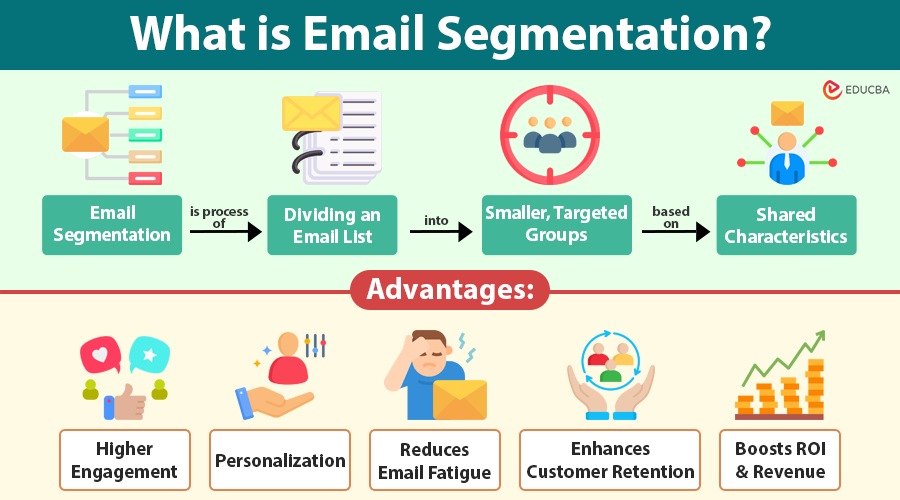
Email segmentation is process of dividing an email list into smaller, targeted groups based on shared characteristics. Instead of sending a single general message to everyone, segmentation enables marketers to deliver content that matches each audience’s interests, behaviors, and purchase journey.
Common segmentation criteria include demographics, past purchases, engagement levels, website behavior, geographic location, and customer lifecycle stage.
Table of Contents:
- Meaning
- Why does Email Segmentation Matter?
- Working
- Types
- Use Cases
- Advantages
- Disadvantages
- Real-World Examples
Key Takeaways:
- Email segmentation delivers personalized content to subscribers, increasing engagement, open rates, clicks, conversions, and overall campaign effectiveness.
- Audiences can be segmented by demographics, location, behavior, psychographics, purchase history, or engagement level for precision targeting.
- Effective segmentation needs accurate data, clear criteria, tailored messages, automated workflows, and ongoing performance optimization.
- Segmentation boosts ROI and retention but requires careful management to avoid over-segmentation, data issues, and dependence on automation.
Why Does Email Segmentation Matter?
Segmentation transforms generic email blasts into high-precision communication. Key benefits include:
1. Higher Open Rates
Segmented emails feel more relevant to subscribers, increasing the likelihood they open and read messages.
2. Enhanced Click-Through Rates
When email content matches subscriber interests, users click more frequently, driving stronger engagement and meaningful interactions.
3. Increased Conversions
Personalized messaging effectively encourages targeted subscriber actions, boosting purchases, sign-ups, and overall campaign conversion rates.
4. Lower Unsubscribes and Spam Complaints
Sending relevant, timely emails reduces user annoyance, lowers unsubscribe rates, and significantly reduces harmful spam complaints.
5. Stronger Customer Relationships
Segmentation enables brands to deliver personalized value, build trust, and foster lasting, meaningful customer relationships.
6. Improved ROI
By focusing on high-value segments, email campaigns perform better, maximizing returns and reducing unnecessary marketing spend.
How Does Email Segmentation Work?
Email segmentation follows a systematic process:
Step 1: Data Collection
Gather information from signup forms, purchase behavior, browsing history, CRM systems, and user interactions.
Step 2: Define Segmentation Criteria
Choose characteristics that matter for your business goals—demographics, engagement, lifecycle stage, or intent signals.
Step 3: Create Segments
Divide subscribers into meaningful groups (e.g., “high-engagement users,” “cart abandoners,” and “new subscribers”).
Step 4: Personalize Content for Each Segment
Craft specific messages, offers, and CTAs tailored to each group.
Step 5: Automate Workflows
Use email automation systems triggered by user actions and other criteria to send customized emails at the right time.
Step 6: Analyze and Optimize
Track performance metrics, run A/B tests, and continuously refine segmentation strategies.
Types of Email Segmentation
Here are the main types of email segmentation commonly used by marketers
1. Demographic Segmentation
Uses demographic data such as age, gender, income, education, and job roles to tailor messaging and promotions effectively.
2. Geographic Segmentation
Targets subscribers based on country, region, city, or weather conditions to deliver localized offers and relevant seasonal promotions.
3. Behavioral Segmentation
Groups users by browsing behavior, downloads, email interactions, and cart activity for highly personalized, action-driven email campaigns.
4. Psychographic Segmentation
Segment audiences using lifestyle choices, interests, values, and personality traits to craft emotionally aligned and compelling email content.
5. Purchase History Segmentation
Uses buying frequency, customer value, and recency patterns to design loyalty rewards, targeted promotions, and win-back campaigns.
6. Engagement Level Segmentation
Classifies subscribers as active, inactive, or dormant to create re-engagement strategies and maintain a healthier email list.
Use Cases of Email Segmentation
Here are some common use cases of email segmentation:
1. Welcome Series Segmentation
New subscribers receive personalized welcome emails based on how they signed up (website, social media, or landing page).
2. Abandoned Cart Emails
Target buyers who left items in their cart with personalized discounts.
3. Product Recommendation Emails
Use purchase history to recommend relevant products (e.g., accessories for a recent gadget purchase).
4. Re-Engagement Campaigns
Identify inactive users and send special offers or surveys to bring them back.
5. Loyalty and VIP Programs
Send reward updates, exclusive offers, and early access announcements to high-value customers.
Advantages of Email Segmentation
Here are some key advantages of email segmentation:
1. Higher Engagement
Segmentation delivers more relevant content, increasing subscriber interaction and ultimately improving conversions across campaigns significantly.
2. Personalization
Allows tailored messaging for each audience segment, creating highly personalized experiences that strengthen connections and brand loyalty.
3. Reduces Email Fatigue
Sends only relevant information to subscribers, minimizing overload and preventing unsubscribes caused by excessive or irrelevant emails.
4. Enhances Customer Retention
Targeted communication keeps subscribers engaged, helping maintain long-term relationships and effectively reducing churn across customer segments.
5. Boosts ROI and Revenue
Segmented campaigns drive higher engagement and conversions, resulting in measurable increases in overall revenue and marketing ROI.
Disadvantages of Email Segmentation
Here are some disadvantages of email segmentation:
1. Data Accuracy
Effective segmentation depends heavily on maintaining well-organized, accurate customer data, which requires continuous updating and monitoring.
2. Complex Setup
Implementing detailed segmentation strategies demands planning, ongoing optimization, and sometimes technical expertise to manage effectively.
3. Over-segmentation
Too many narrow segments limit scalability, making campaigns inefficient and reducing their impact due to a small audience.
4. Tool Dependence
Sophisticated segmentation often relies on automation platforms, creating dependency and potential challenges when tools malfunction or change.
Real-World Examples
Here are real-world examples that show how companies use email segmentation effectively:
1. Amazon
Amazon uses behavioral and purchase history segmentation to recommend highly relevant products, substantially increasing repeat purchases.
2. Netflix
Netflix sends personalized content suggestions based on a user’s viewing history and preferences.
3. SaaS Providers
SaaS companies segment users by lifecycle stage, sending onboarding tutorials to new users and premium upgrade offers to highly active users.
Final Thoughts
Email segmentation is a strategic approach that transforms traditional email marketing into a powerful, personalized communication channel. By grouping subscribers based on their interests, behaviors, and lifecycle stage, businesses can deliver compelling content that drives engagement, conversions, and long-term loyalty. Implementing segmentation requires consistent data management, thoughtful planning, and continuous optimization—but the results are well worth the effort.
Frequently Asked Questions (FAQs)
Q1. What is the main purpose of email segmentation?
Answer: To send relevant, personalized emails that improve engagement and conversion rates.
Q2. How many segments should we create?
Answer: Start with 3–5 essential segments and expand based on performance insights.
Q3. Does email segmentation increase ROI?
Answer: Yes. Segmented campaigns typically yield much higher ROI than blanket email blasts.
Q4. Do I need expensive tools to implement segmentation?
Answer: Not necessarily. Many email platforms offer segmentation features even in free or basic plans.
Recommended Articles
We hope that this EDUCBA information on “Email Segmentation” was beneficial to you. You can view EDUCBA’s recommended articles for more information.


