


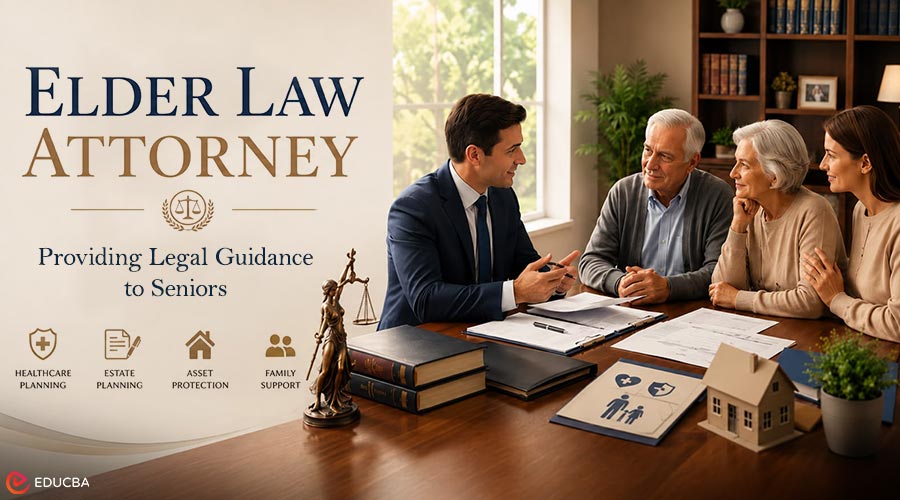
An Elder Law Attorney provides legal guidance to seniors and their families on matters related to aging, including long-term care arrangements, guardianship matters, estate concerns, and cases involving elder abuse or neglect. These attorneys focus on protecting the rights, finances, and healthcare interests of aging individuals.
Becoming one requires a Juris Doctor degree, passing the state bar exam, and developing subject-matter depth in areas such as Medicaid planning, estate administration, and elder rights litigation. Many practitioners pursue additional certification through the National Elder Law Foundation to formally distinguish themselves in the field.
What Does an Elder Law Attorney Actually Do?
An Elder Law Attorney handles legal matters specific to aging clients, which often means working across several practice areas at once rather than staying in a single lane. On any given day, that might include drafting powers of attorney, structuring Medicaid-compliant asset transfers, contesting a guardianship petition, or helping families pursue legal action when a loved one has suffered harm in a long-term care facility.
The specialty overlaps estate planning and healthcare law, then layers in civil litigation on top. Attorneys in this field, such as those at firms like Henson Fuerst Attorneys, often describe the work as equal parts legal advocacy and client support, walking families through a process most have never navigated before.
What Education Is Required to Become an Elder Law Attorney?
The path starts like any other legal career: a bachelor’s degree, the Law School Admission Test, and three years at an American Bar Association-accredited law school.
There’s no undergraduate major requirement, though political science, public health, and social work backgrounds are common among students who later gravitate toward elder law.
Law school itself doesn’t typically require an elder law concentration to enter the field. Still, many programs now offer clinics or coursework in health law, trusts and estates, or disability law.
Students interested in the specialty use elective credits and clinical placements to gain early exposure to Medicaid rules, guardianship procedures, and long-term care regulations before graduation.
Aspiring professionals who want to become Elder Law Attorneys can also gain early experience through internships, legal clinics, and coursework in healthcare law, estate planning, and disability rights.
How Do You Get Licensed?
After law school, the next step is passing the bar exam in the state where you intend to practice, either the Uniform Bar Exam, which is portable across most states, or a state-specific exam.
After obtaining a license, attorneys can develop expertise as an Elder Law Attorney by gaining practical experience in areas such as Medicaid planning, guardianship, and elder rights advocacy.
Passing the bar and meeting character and fitness requirements leads to formal admission by the relevant state bar association.
Licensing alone qualifies an attorney to practice law broadly, not elder law specifically. No separate license is required to call yourself an elder law attorney. What distinguishes practitioners in this space is usually a combination of experience, continuing education, and, for many, formal certification.
What Certifications Matter in Elder Law?
The most recognized credential in the field is Certified Elder Law Attorney status, awarded by the National Elder Law Foundation. To qualify, an attorney generally needs several years of practice with a substantial portion of that time spent on elder law matters, along with completing a certification exam and fulfilling continuing education requirements.
Certification isn’t mandatory to practice in this area, but it signals a documented depth of experience to clients and referring attorneys. Many law firms also join the National Academy of Elder Law Attorneys, which offers professional development, legal resources, and opportunities to connect with elder law professionals nationwide.
What Skills Does the Work Require?
Beyond core legal skills, an Elder Law Attorney needs a specific mix of technical knowledge and interpersonal judgment to support older adults and their families effectively.
- Regulatory fluency. Medicaid and Medicare rules change frequently and vary by state, so attorneys need to track policy shifts that directly affect eligibility and benefits planning.
- Litigation capability. Cases involving nursing home abuse, neglect, or financial exploitation of older adults often require courtroom experience and comfort, building a case based on medical records and expert testimony.
- Client communication. Clients are frequently under emotional strain (managing a parent’s declining health, a contested guardianship, or a suspected abuse situation), which makes plain-language explanation and patience as important as legal precision.
- Cross-disciplinary coordination. Elder law attorneys regularly work alongside social workers, geriatric care managers, and medical professionals, so the ability to translate legal strategy for non-legal collaborators matters.
Firms like Henson Fuerst Attorneys, whose nursing home abuse and neglect practice combines regulatory knowledge with courtroom experience, illustrate how elder law attorneys build cases based on medical records, facility staffing violations, and expert testimony regarding standards of care.
What Does Day-to-Day Work Look Like?
Elder law practice tends to alternate between planning-focused work and dispute-focused work, sometimes within the same week. Planning-related responsibilities include preparing and revising key legal documents, including wills, trusts, powers of attorney, and healthcare directives, while helping clients organize their assets and finances to support future long-term care needs.
Dispute-focused work includes investigating suspected nursing home abuse or neglect, filing guardianship petitions or contesting existing ones, and litigating financial exploitation claims. Attorneys handling these matters coordinate closely with state regulatory agencies and, in litigation, with expert witnesses in geriatric medicine or nursing standards of care.
Elder Law Attorney Career Outlook and Salary Range
The demand for an Elder Law Attorney is expected to increase as more families seek legal guidance for aging-related concerns, including healthcare planning, long-term care, and asset protection.
Demand for elder law services is expected to grow alongside the aging U.S. population, particularly as more adults require long-term care planning and oversight of care quality.
The U.S. Bureau of Labor Statistics projects steady growth in lawyer employment over the next decade. Many legal experts also view elder law as an expanding practice area. The rising demand for legal services for older adults is driving the growth of elder law.
Salaries vary widely. Region, firm size, and case type all influence the number, whether the practice leans toward litigation or planning. Attorneys in solo or small-firm elder law practices typically earn less initially than those at large corporate firms. Still, many report strong long-term client retention given the recurring nature of estate and care planning needs.
Frequently Asked Questions (FAQ’s)
Q1. Do I need a specific law school concentration to become an elder law attorney?
Answer: No. Most elder law attorneys build their expertise through electives, clinical experience, and post-graduation practice rather than through a formal concentration, since few law schools offer a standalone concentration.
Q2. Is Certified Elder Law Attorney status required to practice elder law?
Answer: No. CELA certification through the National Elder Law Foundation is optional and signals advanced experience, but any licensed attorney can practice in this area without it.
Q3. How does elder law differ from estate planning?
Answer: Estate planning focuses mainly on managing and distributing a person’s assets through tools such as wills, trusts, and asset transfer plans. Elder law covers a broader range of legal concerns for older adults, including Medicaid planning, guardianship matters, healthcare directives, long-term care decisions, and legal matters involving cases of nursing home abuse, neglect, or mistreatment.
Q4. How long does it take to become an Elder Law Attorney?
Answer: Typically, seven years of full-time study after high school (four years of undergraduate education plus three years of law school), followed by bar exam passage before practicing independently.
Q5. Can elder law attorneys handle nursing home abuse cases?
Answer: Yes. Many elder law practices, including firms with a personal injury focus, represent residents and families in nursing home abuse and neglect litigation as a core part of their practice.
Q6. Do elder law attorneys need to be licensed in multiple states?
Answer: Only if they plan to practice in more than one state are attorneys licensed by individual state bars. However, the Uniform Bar Exam allows score portability between many participating states.
Final Thoughts
Building a career as an Elder Law Attorney requires a strong legal education and professional licensure. It also demands a thorough understanding of the legal and personal concerns of older adults and their families. Although this practice area does not require a separate license, attorneys develop their expertise through practical experience. They also strengthen their knowledge through continuing education and professional certifications that demonstrate their commitment to elder law.
This area of law allows professionals to make a meaningful difference. They help clients with complex legal matters such as long-term care planning, guardianship, estate administration, and protecting the rights of older adults. As the number of older adults continues to increase, the demand for experienced elder law professionals is expected to grow. This makes it a rewarding career for those who want to combine legal expertise with client support and advocacy.
Recommended Articles
We hope this guide on becoming an Elder Law Attorney helps you understand the education, skills, and career steps required to build a successful path in this legal specialty. Explore these recommended articles for additional insights into legal careers, professional development, and specialized areas of law.

