


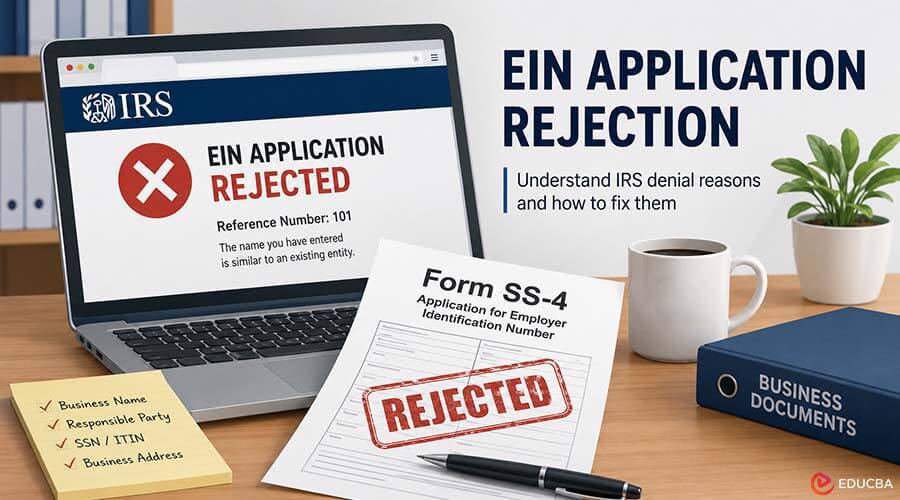
Launching a new business is an exciting milestone, but the administrative hurdles can occasionally bring that momentum to a grinding halt. One of the very first steps on your checklist is to apply for an EIN number (Employer Identification Number) issued by the IRS (Internal Revenue Service). An EIN acts as your business’s social security number, and you need it to open a corporate bank account, hire employees, and file your business taxes. Although the IRS online EIN application system is designed to issue an EIN instantly in most cases, some applicants experience an EIN application rejection due to errors, mismatched information, or conflicts in IRS records.
These rejections often appear with reference numbers that may not clearly explain the problem. Understanding the most common IRS EIN rejection reasons can help business owners avoid unnecessary delays and resolve application issues quickly.
Common Reasons for EIN Application Rejection
Here are some of the most common reasons for EIN application rejections and how to address them.
1. Reference Number 101: Business Name Conflicts
By far the most common roadblock applicants face is EIN Reference Number 101. This error indicates that the IRS database has flagged your business name as too similar or identical to an existing entity. This catches many new business owners off guard. You might think, “But my state’s Secretary of State just approved my LLC name last week!” While your state only checks name availability within its own borders, the IRS database checks names at the national level. If a business in another state has registered a highly similar name with the federal government, the automated online system will block your application to prevent confusion.
2. Reference Number 102: Responsible Party Mismatch
To obtain an EIN, you must designate a “Responsible Party”, usually the principal owner or officer of the company, and provide their Social Security Number (SSN) or Individual Taxpayer Identification Number (ITIN). If you receive Reference Number 102, it means the name and SSN/ITIN combination you entered does not match the records on file with the Social Security Administration or the IRS. Even a simple typographical error, a misspelled last name, or using a nickname (e.g., “Mike” instead of “Michael”) can trigger this rejection. The details on your EIN application must exactly match your official identification records.
3. Reference Number 105: Too Many Attempts
If you run into an error and repeatedly try to submit the application with slight tweaks, you will likely encounter Reference Number 105. To prevent fraud and system abuse, the IRS limits the number of online application attempts associated with a single SSN, ITIN, or entity in a 24-hour window. If you trigger this block, the online system locks you out, and you must wait a full day before you can submit again.
4. Addressing and Location Discrepancies
The IRS is highly sensitive to mismatched address data. If your business is incorporated in one state but uses a physical or mailing address in another, the automated system may flag it for manual review. Additionally, using P.O. boxes when a physical street address is required can result in automatic rejection by the system.
How to Resolve an EIN Rejection?
If the online portal rejects your application with an error code like Reference 101, you cannot simply bypass it by trying again online. The online system is effectively closed to that specific entity name. Instead, you must pivot to a manual application process:
- File Form SS-4: You will need to download, fill out, and sign IRS Form SS-4 (the paper application for an EIN).
- Submit via Fax or Mail: Faxing is generally much faster than mailing. You can fax your completed Form SS-4 along with a copy of your state-approved formation documents to the IRS.
- Wait for Manual Review: Because an IRS agent must manually review your state formation documents to clear the name conflict or data mismatch, processing times can jump from “instant” to several business days or even weeks.
Prevent Delays Before They Start
An EIN application rejection can delay key business tasks, including opening accounts, signing contracts, hiring staff, and securing financing. The easiest way to deal with IRS rejection codes is to avoid triggering them in the first place. This is where professional filing support becomes invaluable. A service like MyCorporation minimizes administrative delays by acting as a manual quality-control buffer, checking business formation data for common errors and typos before submitting it to government databases. By ensuring your legal name, tax identifiers, and address formats are perfectly aligned with both state and federal requirements, you can skip the frustration of the dreaded IRS error screens and focus on what matters most: growing your brand.
Recommended Articles
We hope this comprehensive guide on EIN application rejection helps you understand the most common IRS denial reasons and how to resolve them efficiently. Check out these recommended articles for more insights and practical tips to simplify your business registration and tax compliance process.


