
What is Edutainment?
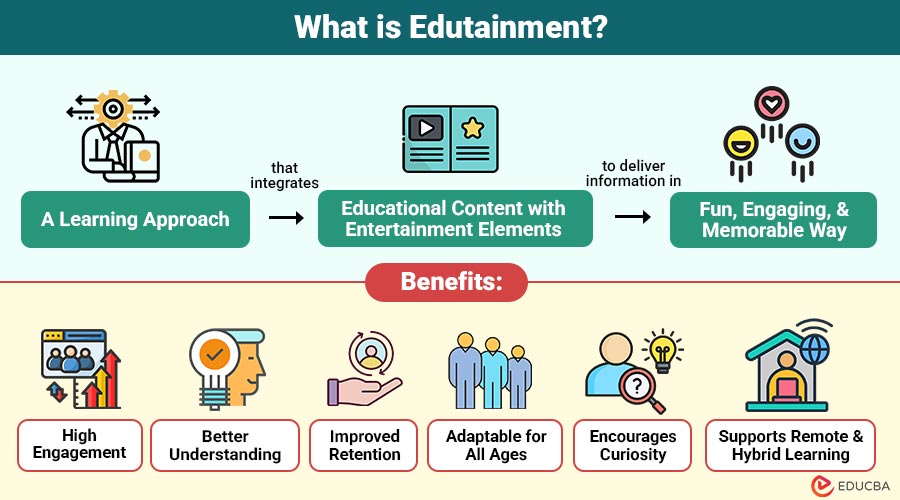
Edutainment is a learning approach that integrates educational content with entertainment elements to deliver information in a fun, engaging, and memorable way. It uses storytelling, visuals, games, simulations, videos, music, and interactive media to simplify difficult ideas and hold the learner’s attention longer.
Examples include:
- Animated science videos for kids
- Museum exhibits with AR/VR
- Educational games on mobile apps
- Corporate training simulations
- YouTube channels explaining topics with humor and visuals
Table of Contents:
- Meaning
- Why is Edutainment Becoming Essential?
- Working
- Where is Edutainment Used Today?
- Benefits
- Challenges
- Real-World Examples
Key Takeaways:
- Edutainment blends education with entertainment to create enjoyable, interactive learning experiences that enhance attention and understanding.
- It supports diverse learners by using storytelling, visuals, games, and technology to simplify complex concepts effectively.
- Edutainment boosts engagement, retention, and curiosity, making learning more impactful for children, students, and professionals alike.
- Despite challenges, edutainment transforms traditional education by offering immersive, accessible, and technology-driven learning opportunities globally.
Why is Edutainment Becoming Essential?
Edutainment is not just a fun alternative—it solves real challenges in today’s learning landscape:
1. Shorter Attention Spans
Traditional lectures struggle against distractions, especially for younger audiences. Edutainment keeps learners hooked using visuals, interactivity, and narrative techniques.
2. High Need for Practical Learning
Entertainment formats such as simulations and role-playing allow learners to “experience” concepts—especially valuable in skill-based learning.
3. Digital-Native Learners
Gen Z and Gen Alpha grew up with touchscreens, animations, and instant information. Edutainment aligns with their preferred learning style.
4. Better Knowledge Retention
Studies show that interactive and visual content improves understanding and memory. People remember stories far better than plain data.
5. Global Accessibility
Digital edutainment content—videos, podcasts, and games—reaches millions across geographical and language barriers.
How Does Edutainment Work?
Edutainment uses a mix of creative strategies to convert dry topics into enjoyable experiences. Some popular techniques include:
1. Storytelling
Transforming concepts into narratives makes learning emotional, relatable, and memorable.
2. Gamification
Utilizing game features like challenges, levels, badges, and points. transforms learning into advancement that is motivated by rewards.
3. Visual Learning
Animations, infographics, and explainer videos simplify complex topics like physics, finance, and biology.
4. Interactive Technologies
AR, VR, and simulations allow learning in immersive environments—for example, a virtual chemistry lab or a historical site tour.
5. Humor and Creative Expression
Cartoons, sketches, and funny storytelling reduce anxiety around tough subjects like math or coding.
Where is Edutainment Used Today?
Here are the major sectors where edutainment is widely applied to enhance learning and engagement:
1. Schools and Early Education
It uses interactive tools and playful digital content to make early learning engaging, memorable, and enjoyable.
- Animated learning apps
- Interactive smartboards
- Educational cartoons
- Virtual field trips
2. Higher Education & Universities
Professors now use simulations, gamified modules, and video-based learning to explain advanced topics like:
- Engineering
- Medicine
- Data science
- Psychology
3. Corporate Training
Edutainment transforms employee training through scenario-based games, interactive modules, and role-play, enabling effective skill development.
- Scenario-based learning
- Virtual role-playing
- Interactive compliance modules
- Game-based leadership training
4. Digital Platforms & Social Media
Edutainment thrives online with creators producing engaging educational videos, shorts, podcasts, and interactive digital content.
- SciShow
- Crash Course
- TED-Ed
- Khan Academy Kids
5. Healthcare & Social Awareness
Edutainment is widely used to convey important messages in a simple, impactful way. Hospitals, NGOs, and government programs use:
- Animated videos to explain health conditions and treatments
- Interactive games to teach kids about hygiene and nutrition
- VR/AR modules for emergency response training
Benefits of Edutainment
Here are the major benefits that make edutainment a powerful and modern approach to learning:
1. High Engagement
Edutainment’s fun, visually appealing content keeps learners highly engaged and actively participating throughout the learning process.
2. Better Understanding
Entertainment-based tools break down complex concepts into clear, manageable pieces, helping learners understand them more effectively.
3. Improved Retention
Learners remember interactive, enjoyable experiences longer than they do traditional lectures, resulting in significantly better overall knowledge retention.
4. Adaptable for All Ages
It suits preschoolers, teenagers, adults, and professionals, adjusting easily to diverse learning levels and needs.
5. Encourages Curiosity
Creative, engaging formats spark curiosity, motivating learners to explore deeply and pursue independent learning journeys.
6. Supports Remote & Hybrid Learning
Digital edutainment tools seamlessly support flexible remote and hybrid learning environments, maintaining engagement and accessibility wherever you are.
Challenges of Edutainment
Despite its success, it also faces challenges:
1. Entertainment Overpowering Learning
Too much entertainment can overshadow core educational goals, reducing actual learning effectiveness and depth.
2. High Production Cost
Creating quality edutainment content demands significant time, skilled professionals, advanced tools, and substantial financial investment.
3. Attention Dependency
Learners may rely on constant stimulation, struggling to focus during traditional learning without entertaining elements.
4. Digital Divide
Limited access to devices, the internet, and digital skills prevents equal participation in edutainment opportunities.
Real-World Examples
Here are some popular real-world examples that successfully use edutainment to enhance learning:
1. Duolingo
Uses gamification (streaks, badges, and rewards) to make language learning addictive.
2. National Geographic Kids
Blends fun facts, videos, and quizzes to teach science and environmental topics.
3. Minecraft Education Edition
Allows students to learn coding, architecture, and problem-solving in a fun virtual world.
4. Disney’s Science Shows
Popular programs combine storytelling with scientific explanations.
Final Thoughts
Edutainment is transforming learning by combining fun, interaction, and knowledge into meaningful experiences. Modern learners want dynamic, engaging methods and edutainment delivered through games, animations, simulations, and interactive exhibits. As technology advances and creativity grows, it will continue to evolve, offering smarter, more engaging, and globally accessible learning experiences that make education both effective and exciting for all ages.
Frequently Asked Questions (FAQs)
Q1. Is edutainment effective for adults, or is it only for kids?
Answer: Edutainment is effective for all age groups. Adults benefit from gamified corporate training, simulations, interactive videos, and micro-learning modules just as much as children benefit from cartoons and learning apps.
Q2. What technologies are most commonly used in edutainment?
Answer: Popular technologies include animations, mobile apps, AR/VR, interactive videos, simulations, learning games, and AI-powered adaptive learning platforms.
Q3. Does edutainment replace traditional learning methods?
Answer: No. Edutainment enhances traditional education but does not completely replace structured learning. It works best as a complementary approach to improve engagement and retention.
Q4. What skills can learners develop through edutainment?
Answer: Learners can develop a wide range of skills, including problem-solving, creativity, communication, digital literacy, decision-making, and subject-specific knowledge (science, math, languages, etc.).
Recommended Articles
We hope that this EDUCBA information on “Edutainment” was beneficial to you. You can view EDUCBA’s recommended articles for more information.

