


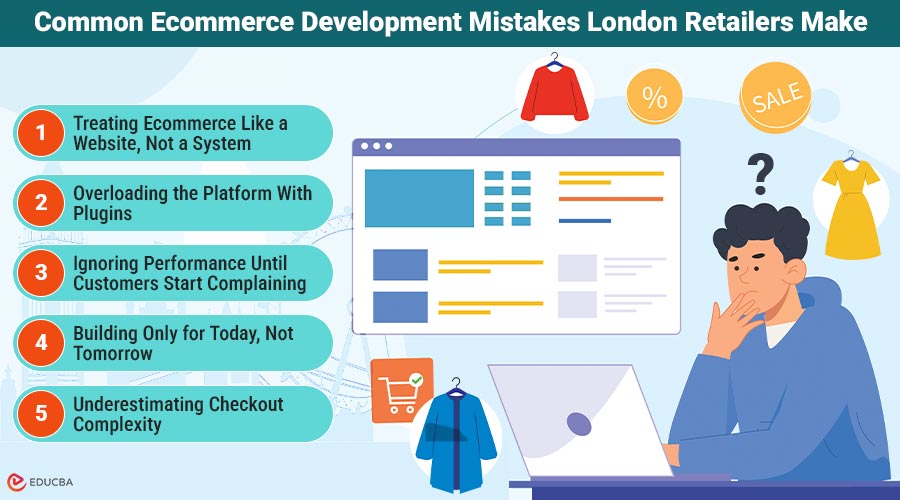
Ecommerce Development Mistakes London Retailers Make: Overview
London retailers are ambitious, innovative, and always chasing growth. They invest heavily in marketing, launch new campaigns, and continually seek ways to expand their reach. Yet when ecommerce platforms falter, the problems are often self-inflicted. These issues do not arise from a lack of effort or vision they result from repeating common technical mistakes. Understanding these ecommerce development mistakes London retailers make is essential to prevent costly setbacks and ensure long-term growth.
Common Ecommerce Development Mistakes London Retailers Make
Here is a breakdown of the most common mistakes and why they are costlier than they appear.
1. Treating Ecommerce Like a Website, Not a System
A common misconception is treating ecommerce as “just a website.” In reality, ecommerce is a comprehensive system that connects orders, inventory, payments, refunds, shipping, and reporting. When treated as a front-end project, the back end often becomes an afterthought. Initially, things may run smoothly, but as traffic and order volume increase, problems emerge:
- Manual fixes become frequent
- Data mismatches occur between systems
- Delays and errors frustrate teams and customers
At this stage, many retailers call an ecommerce development company in London to resolve issues that could have been prevented with proper system planning. Approaching ecommerce as an integrated system from the beginning ensures it remains scalable and reliable, delivering a smooth user experience.
2. Overloading the Platform With Plugins
Plugins can seem harmless and even helpful. London retailers often add plugins for:
- Payments
- Shipping
- Promotions
- To fix conflicts caused by the first plugins
While this approach appears fast and cheap, it often leads to major problems:
- Slower platform performance
- Breakages during updates
- Hidden dependencies between plugins
- Increased long-term maintenance costs
A plugin-heavy setup creates a fragile system where even minor updates feel risky. Over time, removing or replacing plugins becomes far harder than adding them. Strategic use of plugins and custom development avoids this pitfall.
3. Ignoring Performance Until Customers Start Complaining
Performance issues rarely appear during initial testing. Instead, they become evident during high-traffic events such as:
- Campaign launches
- Seasonal sales
- Payday traffic spikes
London customers notice slow load times immediately they would not retry checkout and often abandon their carts. Treating performance as a “later” concern results in lost conversions and revenue. Optimizing for speed, responsiveness, and server stability from day one is essential for sustained growth.
4. Building Only for Today, Not Tomorrow
Many retailers adopt the mindset: “We will handle scale when it comes.” In London’s competitive market, this approach is risky. Retailers expand unevenly with new sales channels, regions, subscription models, click-and-collect services, and wholesale alongside DTC operations.
Platforms designed only for the current setup resist change. Workarounds accumulate, slowing development and creating operational bottlenecks. Investing in scalable custom ecommerce development in the UK early prevents the need for expensive, time-consuming rebuilds later.
5. Underestimating Checkout Complexity
The checkout is where revenue lives, yet many businesses often neglect it. London retailers face multiple challenges:
- Supporting multiple payment methods
- Accurate address validation
- Mobile-first user expectations
- Fraud prevention measures
- International customer requirements
Default platform settings rarely meet these needs. Even minor friction slow load times, confusing steps, unexpected fees can drastically reduce conversions. Prioritizing checkout design, conducting extensive testing, and simplifying the user journey are critical to revenue optimization.
6. Choosing Agencies Based on Speed, Not Experience
Fast delivery can seem appealing, but speed without experience often causes long-term structural issues. Generalist teams can build stores, but struggle with:
- Scaling operations
- Integrating complex workflows
- Maintaining a clean codebase
Many retailers eventually switch to a London ecommerce development agency with expertise in growth-stage ecommerce, capable of anticipating issues that may arise months after launch. At scale, judgment and experience outweigh velocity.
7. Letting Integrations Become an Afterthought
As ecommerce grows, it touches inventory systems, accounting platforms, CRM tools, logistics providers, and marketing channels. Poorly planned integrations lead to manual processes like:
- Exporting and importing data
- Spreadsheet-based reconciliations
- Delayed reporting
Though it may initially appear to be an operational issue, the root cause is often in early ecommerce architecture decisions. Proper planning ensures smooth integrations and automated workflows.
8. Avoiding Custom Development for Too Long
Many retailers fear custom ecommerce development due to perceived cost, complexity, or risk. The result:
- Prolonged reliance on off-the-shelf platforms
- Patching instead of redesigning
- Compromises that limit growth
Custom development does not mean building everything from scratch it means removing system limitations before they become costly. London retailers that adopt custom solutions earlier enjoy fewer constraints and better scalability.
9. Losing Control of the Codebase
Multiple teams and agencies touching the same platform can cause:
- Inconsistent code
- Pile-up of customizations
- Poor documentation
- Reduced understanding of system workflows
These issues slow progress, complicate development, and increase future development costs. Maintaining structured code, documenting changes, and enforcing development standards ensures long-term maintainability.
10. Not Using the Right Platform Expertise
Some ecommerce platforms offer high flexibility, but only if managed correctly. For example, nopCommerce provides control but can easily become sprawling without discipline. This is where nopStation helps. By structuring and extending nopCommerce setups, retailers can maintain performance, integrations, and customizations as they grow. The focus is on intentional design rather than excessive feature additions, reducing the need for constant patching.
The Pattern Behind These Mistakes
Most ecommerce development mistakes London retailers make stem from prioritising short-term convenience over long-term clarity. In London’s competitive ecommerce market, those early decisions catch up quickly.
Final Thoughts
The most common ecommerce development mistakes London retailers make often stem from prioritizing short-term convenience over long-term clarity. Early technical decisions have lasting effects on growth, performance, and customer experience. By addressing these mistakes, planning integrations, focusing on performance, and working with experienced London ecommerce development agencies, retailers can build platforms designed to scale. Avoiding these pitfalls ensures that ecommerce becomes a growth engine, not a constant source of operational headaches.
Recommended Articles
We hope this guide on ecommerce development mistakes London retailers make helps you avoid common pitfalls and grow your online store. Check out these recommended articles for more tips and strategies to enhance your ecommerce success.

