
What is Dynamic Discounting?
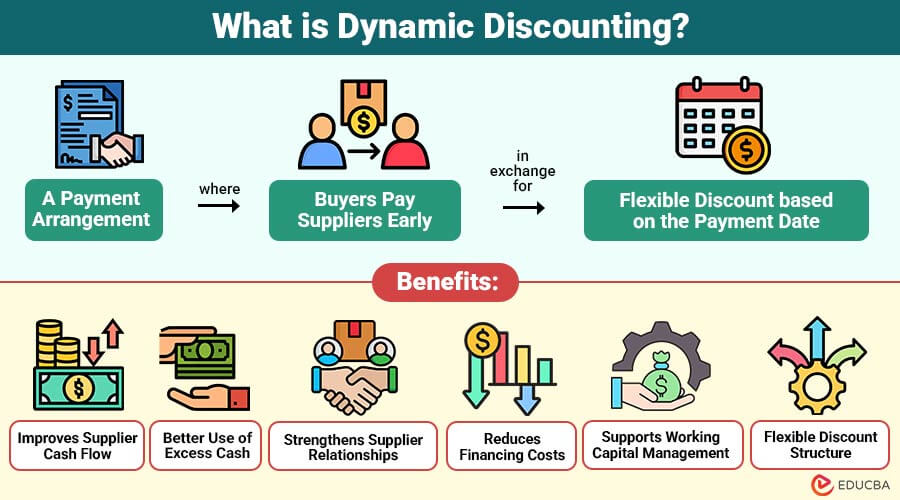
Dynamic Discounting is a payment arrangement where buyers pay suppliers early in exchange for a flexible discount based on the payment date. Unlike fixed early payment discounts, this discount varies with the number of days before the due date the payment is made.
This method creates a win-win situation:
- Buyers generate better returns on excess cash.
- Suppliers improve cash flow without taking loans.
- Both parties strengthen their business relationship.
Table of Contents:
- Meaning
- Working
- Types
- Benefits
- Example
- Industries that Use Dynamic Discounting
- Technologies Supporting Dynamic Discounting
- Challenges
- Common Metrics
Key Takeaways:
- Dynamic discounting helps buyers earn returns while suppliers improve cash flow through early payments.
- Flexible discount rates create mutually beneficial payment options based on the timing of invoice settlement.
- Automation technologies simplify invoice management, approvals, payments, and discount calculations for businesses.
- Dynamic discounting strengthens supplier relationships by reducing financing costs and improving working capital.
How Does Dynamic Discounting Work?
The dynamic discounting process is straightforward and usually supported by automation software.
Step 1: Invoice Submission
The supplier delivers products or services and submits an invoice to the buyer.
Step 2: Invoice Approval
The buyer reviews and approves the invoice for payment.
Step 3: Early Payment Offer
The buyer offers the supplier multiple early payment options, each with a different discount rate.
Step 4: Supplier Decision
The supplier decides whether to receive payment early or wait until the original due date.
Step 5: Early Payment Processing
If accepted, the buyer releases payment before the due date.
Step 6: Discount Applied
The agreed discount is deducted from the invoice, and both parties complete the transaction.
Types of Dynamic Discounting
Below are the different types of dynamic discounting models used by businesses to improve cash flow and optimize payment processes.
1. Buyer-Funded Dynamic Discounting
The buyer uses its own available cash to pay suppliers early and receives the negotiated discount.
Best suited for:
- Large enterprises
- Companies with excess cash reserves
- Organizations seeking higher returns on idle funds
2. Third-Party Funded Dynamic Discounting
A financial institution or funding partner provides early payment to suppliers, while the buyer pays on the original due date.
Best suited for:
- Businesses with limited cash
- Companies wanting flexible financing
- Organizations managing seasonal cash flow
3. Supplier-Initiated Dynamic Discounting
Suppliers request early payment whenever additional working capital is required. The buyer decides whether to accept the request based on available cash and agreed discount terms.
Best suited for:
- Suppliers needing flexible access to cash
- Businesses managing unpredictable cash flow needs
- Organizations looking to strengthen supplier relationships
Benefits of Dynamic Discounting
Below are the key benefits of dynamic discounting that help businesses improve cash flow, reduce costs, and build stronger supplier relationships.
1. Improves Supplier Cash Flow
Suppliers receive payments earlier, helping them manage operating expenses, payroll, inventory purchases, and business growth without relying heavily on bank financing.
2. Better Use of Excess Cash
Companies with available cash can earn higher returns by using invoice discounts rather than leaving funds idle in low-interest accounts.
3. Strengthens Supplier Relationships
Providing flexible payment options builds trust and encourages long-term partnerships between buyers and suppliers.
4. Reduces Financing Costs
Suppliers avoid expensive short-term loans, overdrafts, or invoice financing because they gain faster access to cash.
5. Supports Working Capital Management
Both buyers and suppliers improve their working capital by optimizing payment timing to meet their financial needs.
6. Flexible Discount Structure
Unlike fixed payment terms, discounts vary with the payment date, making negotiations more flexible.
Example of Dynamic Discounting
Below is an example illustrating how dynamic discounting enables suppliers to receive early payments, while buyers benefit from discounts based on payment timing.
Suppose a supplier issues an invoice worth ₹5,00,000 with payment due in 60 days.
The buyer offers the following options:
| Payment Time | Discount | Amount Paid |
| 15 Days | 3% | ₹4,85,000 |
| 30 Days | 2% | ₹4,90,000 |
| 45 Days | 1% | ₹4,95,000 |
| 60 Days | No Discount | ₹5,00,000 |
If the supplier needs immediate cash, they may accept payment after 15 days while giving a 3% discount.
Industries that Use Dynamic Discounting
Dynamic discounting is widely adopted across multiple industries.
1. Manufacturing
Manufacturers improve supplier cash flow, strengthen relationships, and maintain smooth production by optimizing early payment processes.
2. Retail
Retail companies manage supplier payments efficiently, improve inventory purchasing, and maintain better working capital management.
3. Healthcare
Hospitals and pharmaceutical companies accelerate supplier payments to ensure reliable access to essential medical products and services.
4. Construction
Construction firms simplify contractor payments, improve cash flow management, and support efficient project execution across vendors.
5. Technology
Technology companies enhance supplier collaboration, optimize cash management, and improve financial flexibility through early payments.
6. Automotive
Automotive manufacturers provide flexible payment options, supporting suppliers and strengthening supply chain stability.
Technologies Supporting Dynamic Discounting
Modern organizations rely on digital platforms to automate dynamic discounting. Common technologies include:
1. Accounts Payable Automation
Automates invoice processing, approvals, and payments, helping organizations manage early payment opportunities efficiently.
2. ERP Systems
Integrates financial data, supplier information, and payment processes to support effective discount management.
3. Invoice Management Software
Simplifies invoice tracking, validation, approval workflows, and payment scheduling for better efficiency.
4. Supplier Portals
Provides suppliers with visibility into invoices, payment options, and early payment requests.
5. AI-Based Cash Flow Forecasting
Uses artificial intelligence to predict cash availability and optimize payment decisions.
6. Electronic Invoice Processing
Digitizes invoice handling, reduces manual work, and improves payment accuracy and speed.
Challenges of Dynamic Discounting
Although highly beneficial, businesses should be aware of several implementation challenges.
1. Limited Cash Availability
Buyers need adequate working capital to make early payments and maintain consistent discounting programs.
2. Supplier Participation
Some suppliers may avoid discounts and prefer receiving full payments on standard due dates.
3. System Integration
Connecting ERP systems with payment platforms can require significant time, resources, and technical investment.
4. Invoice Approval Delays
Slow approval processes reduce suppliers’ opportunities to receive early payments and discounts.
5. Discount Calculation Complexity
Managing discount calculations manually becomes challenging when processing large volumes of invoices.
6. Cash Flow Planning
Organizations must carefully balance early payments against future operational expenses and liquidity requirements.
Common Dynamic Discounting Metrics
Businesses often monitor the following performance indicators:
1. Early Payment Participation Rate
Measures the percentage of suppliers accepting early payment options through dynamic discounting programs.
2. Average Payment Acceleration Days
Tracks the average number of days payments are made earlier than standard due dates.
3. Total Discount Savings
Calculates the overall cost savings generated through supplier early payment discounts.
4. Supplier Enrollment Rate
Measures the number of suppliers participating in dynamic discounting initiatives.
5. Invoice Approval Time
Monitors the time required to review, approve, and process supplier invoices.
6. Working Capital Improvement
Evaluates how dynamic discounting improves liquidity and optimizes available working capital.
Final Thoughts
Dynamic Discounting is a powerful working capital strategy that helps buyers optimize excess cash while enabling suppliers to receive faster payments. Through flexible discounts, automation, and real-time analytics, businesses can reduce financing costs, improve cash flow, strengthen supplier relationships, and enhance overall financial efficiency across modern supply chain operations.
Frequently Asked Questions (FAQs)
Q1. Does dynamic discounting require special software?
Answer: While it can be managed manually, most businesses use automation platforms or ERP systems to handle calculations, approvals, and payments efficiently.
Q2. Can dynamic discounting improve supplier loyalty?
Answer: Yes. Offering faster payment opportunities shows financial support for suppliers, which can increase trust, improve collaboration, and encourage stronger long-term partnerships.
Q3. Who decides the discount rate in dynamic discounting?
Answer: The buyer and supplier typically agree on discount rules based on payment timelines, business requirements, and market conditions. Some platforms also automatically calculate discounts based on predefined terms.
Q4. Can dynamic discounting reduce supply chain risks?
Answer: Yes. By providing suppliers with quicker access to funds, dynamic discounting improves financial stability and reduces the risk of supply chain disruptions.
Recommended Articles
We hope that this EDUCBA information on “Dynamic Discounting” was beneficial to you. You can view EDUCBA’s recommended articles for more information.


