


Digital Transformation Challenges: Overview
Digital transformation is no longer a concept of the future—it is a present-day necessity for businesses across all industries. Organizations can use technology to boost productivity, improve customer relationships, and unlock new business opportunities. Partnering with an experienced digital transformation company can help businesses navigate challenges and implement solutions effectively. Recognizing the common digital transformation challenges and knowing how to address them is crucial for companies to succeed in a competitive digital landscape.
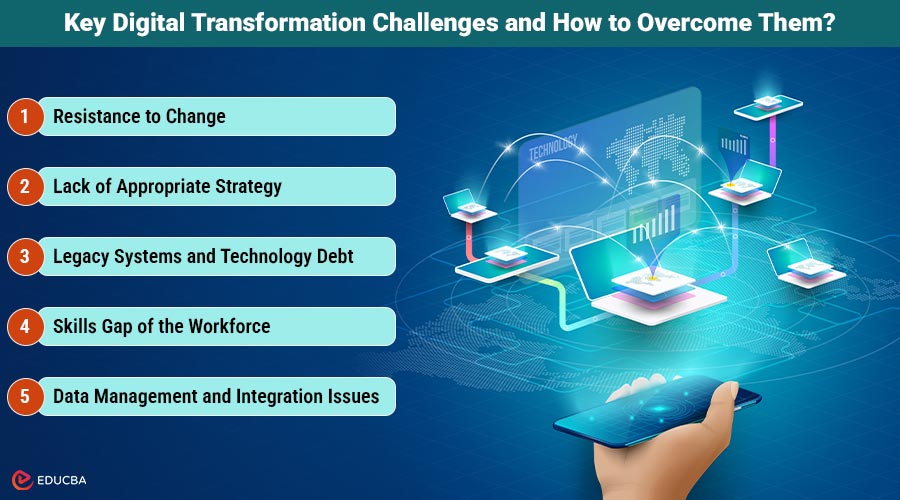
Key Digital Transformation Challenges and How to Overcome Them?
Here are the main challenges organizations face during digital transformation and practical ways to address each of them:
1. Resistance to Change
The most frequent digital change dilemma is resistance from the workers. Human nature is the servant of habit, and changes in the processes or systems make them apprehensive. The workers can be afraid of losing their jobs, change-resistant, or puzzled over being required to change. Resistance arises due to unfamiliarity with the way the new technology impacts standard working practices.
How to Overcome:
Management must clearly communicate the vision, how to achieve it, and the benefits for both the company and employees. Sharing success stories of firms that thrived during change can boost morale and inspire employees. Training, seminars, and work mentoring could aid in a smooth transition and improve the level of confidence among the employees.
2. Lack of Appropriate Strategy
Digital transformation without the right planning can lead to misplaced priorities and wasted funds. Without a plan, companies will use technologies that are not in favor of long-term objectives or are incompatible with one another.
How to Overcome:
Map an online goal map, schedule of pastures, money, measurable results, and objectives. Utilize a professional change team to monitor progress and make revisions as necessary, based on business cycles or work environment concerns. That gets everyone on the same train and moving in the same direction.
3. Legacy Systems and Technology Debt
Legacy systems often rely on outdated code, limiting their effectiveness in the digital era. The legacy platforms are an expense to maintain and may not integrate well with new technology, which presents an obstacle to change.
How to Overcome:
Phased step-down the need of current systems through phased phased-up phasing them into a phased sequence beginning with the performing best first. Cloud migration, modular platforms, and APIs can also help bridge the transition window between current and new systems. Hybrid systems can also be used as a temporary stopgap measure by businesses to maintain business flow through a changeover to new infrastructure.
4. Skills Gap of the Workforce
An inadequate number of staff with the necessary skilled human resources to handle digital assets is a limitation to transformational processes. New technologies, such as IoT,AI, and blockchain, require specialized technical skills and training, and the available teams may not possess them.
How to Overcome:
Invest in upskilling and reskilling training to transfer the required knowledge to the employees. Internal mentoring design, collaboration with technology schools, and online certification giving can ease knowledge gaps. Collaboration with Digital Transformation Service providers can also avail domain specialists on a call basis.
5. Data Management and Integration Issues
Digital transformation typically means the management of vast amounts of data from numerous sources. Silos of information, poor-quality information, and integration issues may weaken decision-making and analytics initiatives.
How to Overcome:
Use a single process to manage data that is secure, accessible, and reliable. Use integration products to bring together several systems to facilitate real-time transfers of data throughout the organisation.
6. Cybersecurity Threats
The more business enterprises undertake with digital technology, the more vulnerable they are to cyberattack. It can become costly, damage reputation, and lead to a penalty.
How to Overcome:
Incorporate cybersecurity in each phase of the change. Worker best practice training, routine security scanning, and multi-layered security controls, such as encryption, firewalls, and identity authentication, must be utilized.
7. Budget Friendly
Digital transformation calls for investments into redesigning processes, training employees, and technology. Even a 0% budget could result in deployments being of very poor quality, or even being pushed back. Partnering with an experienced MVP development company enables organizations to validate ideas at a minimal cost, generate early wins, and justify larger investments with proven results.
How to Overcome:
Implement the programs with the highest return on investment first. Program in phased spending in response to phased spending and create early wins to generate value. Seek government grants or industry partnerships to split the cost.
8. Cultural Misalignment
Cultural alignment is a high-priority effort in measuring digital transformation success. Without risk-taking or entrepreneurial spirit, technology adoption becomes threatened.
How to Overcome:
Create an experimentation and innovation culture. Encourage employees to deploy new tools and processes. Managers have to lead by example, demonstrating that change is valued and appreciated.
9. Ineffective Communication Between Departments
Remote departments can devise patchwork change initiatives. Underperforming groups that do not communicate with one another and share information can make the organisation miss out on synergy gains.
How to Overcome:
Communication should be put in place across departments, with regular meetings, shared tools for project management, and shared goals. Cross-functional task teams for change initiatives ensure coordination and shared accountability for actual success.
10. Lack of Leadership Support
Without strong leadership, digital transformation efforts often lose direction and stall. The leaders need to be committed to their hearts to motivate and lead people through the exercise.
How to Overcome:
Transformation goals should be led by leadership clearly and concisely, with resources assigned and progress tracked. Making transformation goals and executive performance objectives ensures executive-level leadership accountability.
11. Keeping Pace with Accelerating Technological Change
The growth of technology is unbelievable. Holding back for that long period to make a business decision may put the business behind and put it out of business.
How to Overcome:
Stay up-to-date with new technology by attending industry seminars, reading technical magazines, and participating in advisory trade groups. Cooperation with a web development company in Riyadh, preferring technology collaborators, keeps your web solutions up to date and competitive.
12. Measuring Transformation Success
Only a handful of organizations track whether their digital transformation projects have been successful. If there are no quantifiable outcomes to score the digital transformation, then it is impossible to say if it was worth the investment.
How to Overcome:
Have KPIs set before the transformation process, such as operational productivity, customer satisfaction measures, cost savings, or top-line growth. Track progress using advanced analytic solutions, and whenever needed, make data-based interventions.
13. Balancing Innovation with Stability
Restraint on impulsive innovation tends to disrupt procedures now and then, particularly in those organisations where conformance and reliability are highest on the agenda.
How to Overcome:
Use a balanced method—roll innovations slowly with a splash of business continuity. Perform rigorous testing before the organisation-wide roll-out of changes to minimise disruption.
Final Thoughts
While digital transformation challenges such as resistance to change, legacy systems, skills gaps, and budget constraints are inevitable, organizations can successfully manage them. Effective leadership, strategic planning, clear communication, and collaboration with the right partners enable organizations to navigate these obstacles. By proactively addressing these challenges, businesses can optimize operational efficiency, foster innovation, and secure long-term growth in an increasingly digital world.
Recommended Articles
We hope this guide on digital transformation challenges helps you navigate change effectively. Check out these recommended articles for more insights and strategies to drive successful digital initiatives.


