


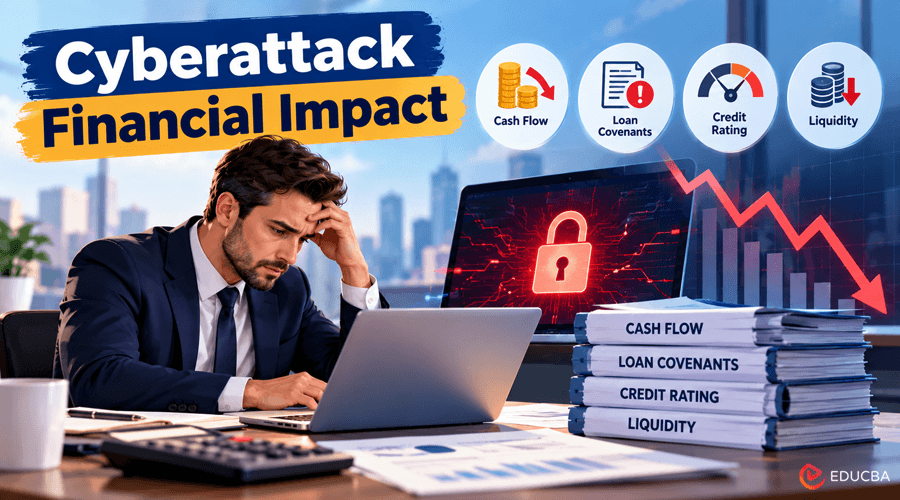
When Jaguar Land Rover (JLR) shut down its IT systems at the end of August 2025, its creditors were less concerned about stolen data than about how much cash the company was losing. Moody’s estimated that JLR was spending approximately £500 million a week on wages and supplier payments while production remained suspended.
Within a month, the carmaker had secured a £2 billion bridge facility, received a negative outlook from Moody’s, and been offered a government guarantee covering up to £1.5 billion in bank lending. This reportedly marked the first time the UK government had provided financial support to a company following a cyberattack.
Incidents involving Marks & Spencer, Change Healthcare, Asahi, and several smaller businesses reveal a similar pattern. A serious cyberattack can quickly become a concern for treasury teams, credit committees, and rating agencies.
The public statements companies release during these incidents, whether prepared internally or with the help of a cybersecurity PR agency, also matter to creditors. Banks, bondholders, and suppliers examine these statements to assess financial exposure and determine whether the company can meet its obligations.
Understanding the financial impact of a cyberattack requires looking beyond immediate operational disruption. Recent incidents and loan-market research show how cyberattacks affect liquidity, lending terms, and credit ratings. They also reveal how finance teams can prepare for these risks before an incident occurs.
How Cyberattacks Affect Revenue and Cash Flow?
A cyberattack that forces a business to shut down creates an immediate financial problem. Revenue can stop almost overnight, but payroll, supplier invoices, rent, and interest payments continue on schedule.
JLR’s financial results for the quarter ending September 2025 demonstrate the scale of this disruption. Revenue fell 24% to £4.9 billion, and the company reported a £485 million loss before tax and exceptional items, compared with a £398 million profit a year earlier. It also recorded £196 million in direct cyber-related costs.
US tariffs and the wind-down of older Jaguar models also affected the results. However, the timing of the cyberattack made the situation more difficult.
The outage occurred in September, one of JLR’s traditionally higher-volume months. The month also marked the introduction of a new UK vehicle registration plate and the beginning of the 2026 model year for the Range Rover. The disruption therefore affected the company during an important sales period.
How Cyberattacks Turn Large Companies Into Emergency Lenders?
Cyberattacks can disrupt entire supply chains and create liquidity problems for businesses that depend on affected companies. In some cases, large companies must provide emergency financial support to their partners.
Change Healthcare: Financing Disrupted Providers
The February 2024 ransomware attack on Change Healthcare disrupted payments to healthcare providers across the US. In response, UnitedHealth Group extended more than $9 billion in interest-free loans and advances.
Providers repaid $4.51 billion in 2024 and another $1.29 billion in the first half of 2025. However, repayment demands prompted protests from the American Medical Association.
This highlights the cyberattack financial impact beyond the affected company, as emergency loans create collection risks and can strain business relationships.
JLR: Financial Pressure Across the Supply Chain
JLR’s 2025 cyberattack affected more than 5,000 organizations and caused an estimated £1.9 billion in economic losses across the UK. To support suppliers during its recovery, JLR introduced a £500 million early-payment program.
Although the UK government offered a guarantee covering 80% of a commercial bank loan, smaller suppliers still faced cash shortages. One small manufacturer reported a loan offer with 16% interest and a personal guarantee.
The incident demonstrates how the cyberattack financial impact spreads through supply chains. While large companies may have access to financing, smaller suppliers often struggle to manage prolonged payment delays.
When a Cyberattack Disrupts Financial Reporting and Loan Covenants?
Cyberattacks can prevent companies from meeting financial reporting deadlines under their loan agreements. Even solvent businesses may face technical defaults or need lender waivers if they cannot submit required statements and compliance certificates.
Stoli Group: When Accounting Systems Fail
A ransomware attack in August 2024 disabled Stoli Group’s ERP system, disrupting accounting and preventing its US distribution company and Kentucky Owl brand from providing required financial reports.
Already facing weaker spirits demand and asset seizures, the businesses received default notices from Fifth Third Bank. The lender accelerated approximately $78 million in debt. The companies filed for Chapter 11 in November 2024, and the case converted to Chapter 7 liquidation in January 2026.
The cyberattack was not the sole cause, but the reporting disruption added pressure during an already difficult financial period.
How Loan Covenants Influence Cyberattack Financial Impact?
Stoli Group’s experience contrasts with Lee Enterprises, which had no financial performance covenants and a lender willing to defer payments.
This difference shows how loan terms can influence the cyberattack financial impact. Companies should review reporting deadlines, covenant requirements, notice obligations, and cure periods before an incident occurs.
Asahi Group: A Large Company’s Reporting Challenge
Asahi Group suffered a ransomware attack on September 29, 2025, which disrupted ordering, shipping, and access to accounting data.
The company postponed its financial results and published its 2025 full-year results on July 8, 2026, about five months later than usual. The results showed ¥17 billion in attack-related costs and a 36.7% decline in net profit.
Although Asahi could absorb the reporting delay, highly leveraged companies may face serious consequences when they miss financial reporting deadlines. They may need to negotiate extensions or waivers with lenders.
For such businesses, maintaining access to financial records and meeting loan requirements is essential to managing the financial consequences of a cyberattack.
How Cyberattacks Influence Credit Ratings and Lending Decisions?
Credit rating agencies assess how cyberattacks affect a company’s liquidity, financial stability, and recovery prospects rather than automatically downgrading its rating. Fitch noted in 2026 that cyber incidents rarely resulted in rating actions.
JLR’s experience illustrates this approach. Moody’s maintained its Ba1 rating but changed the outlook from positive to negative. It also reduced its annual EBITDA estimate from approximately $3 billion to $850 million, citing prolonged financial pressure.
Rating agencies consider factors such as incident response, business continuity planning, liquidity, and financial flexibility when assessing the cyberattack financial impact.
How Cyberattacks Affect Bank Lending Terms?
Cyberattacks can also increase borrowing costs and tighten loan conditions. A 2021 study by Henry Huang and Chong Wang, examining 1,081 bank loans, found that companies experiencing data breaches paid approximately 40 basis points more in loan spreads, faced 25% more covenants, and were more likely to provide collateral.
A 2026 study in the Journal of Corporate Finance found that companies with measurable cyber risk paid approximately 13 basis points more in borrowing costs. Commercial banks also priced cyber risk more strictly than non-bank lenders, while cyber insurance did not reduce loan spreads.
These findings highlight how cybersecurity preparedness can influence borrowing costs and access to credit. Lenders consider a company’s ability to manage and recover from cyber incidents, not just its insurance coverage.
How Finance Teams Can Prepare for the Financial Impact of a Cyberattack?
Companies cannot prevent every cyberattack, but they can reduce its financial consequences through effective planning. Finance teams should focus on the following steps.
1. Model Cyberattack Scenarios
Simulate two-, five-, and ten-week shutdowns to estimate lost revenue, payroll, supplier payments, debt obligations, and recovery costs. JLR’s five-week outage and £500 million in estimated weekly cash outflows highlight the importance of liquidity planning.
2. Review Loan Agreements
Examine reporting deadlines, covenant requirements, incident notification rules, cure periods, and waiver provisions. Negotiate flexibility before an incident occurs to reduce the risk of technical defaults.
3. Maintain Offline Financial Records
Keep secure, updated copies of general ledgers, vendor details, payroll records, bank mandates, and outstanding invoices. These records help finance teams process essential payments and maintain reporting capabilities if accounting systems become unavailable.
4. Secure Sufficient Liquidity
Assess whether available cash and committed credit facilities can cover prolonged disruptions. JLR secured an additional £2 billion bridge facility despite having an undrawn £1.7 billion revolving facility, highlighting the importance of financial reserves.
5. Plan for Delayed Insurance Payments
Review cyber insurance coverage, waiting periods, exclusions, and claim timelines. Treat insurance recoveries as future cash inflows, not as a source to meet immediate expenses.
6. Establish a Creditor Communication Plan
Assign responsibility for communicating with lenders, rating agencies, and suppliers. Provide consistent updates on operational disruptions, liquidity, covenant compliance, and recovery progress to reduce uncertainty during an incident.
Final Thoughts
Cyberattacks can disrupt revenue, drain cash reserves, delay supplier payments, and affect credit ratings. The experiences of JLR, M&S, Change Healthcare, and other companies show how the cyberattack financial impact extends beyond IT operations.
A company’s financial resilience depends on its liquidity, loan terms, and ability to maintain operations during disruptions. Finance teams can reduce these risks by preparing liquidity plans, reviewing loan agreements, maintaining offline records, and establishing clear communication with creditors.
Cyber risk is therefore not just an IT concern but a critical financial risk that requires attention from treasury teams and corporate leadership.
Recommended Articles
We hope this guide helps you understand the financial impact of cyberattacks, including cash flow disruption, loan covenants, credit ratings, and borrowing costs. Explore our recommended articles for more insights on cybersecurity, financial risk management, business continuity, liquidity planning, and corporate finance.


