


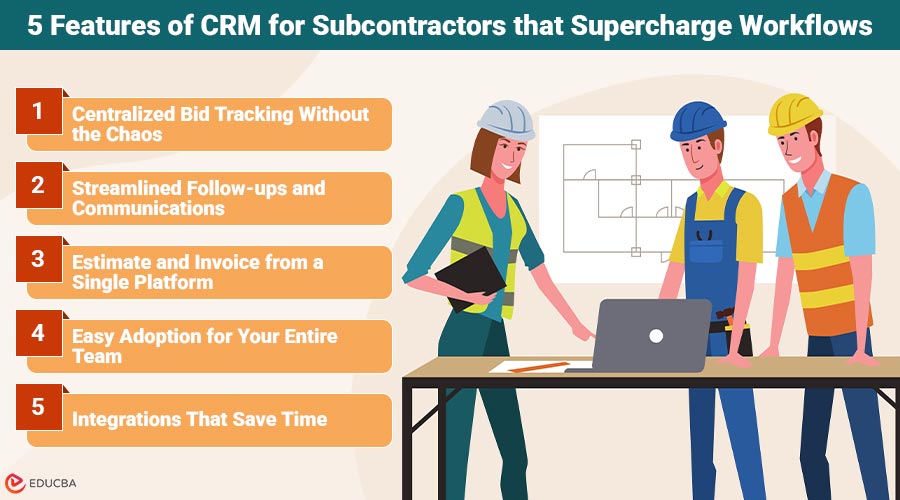
How a CRM for Subcontractors Boosts Efficiency?
In the fast-paced world of subcontracting, staying organized and efficient is critical. The consequences of not having the right CRM for subcontractors are steep: missed bid deadlines mean lost revenue, forgotten follow-ups damage general contractor (GC) relationships, double-booked site walks waste time, and delayed invoices hurt cash flow. A solid CRM centralizes bid invites, follow-ups, site walk schedules, and invoicing so nothing slips through the cracks. More importantly, it transforms your preconstruction process from reactive firefighting into a proactive strategy.
5 Features of CRM for Subcontractors that Supercharge Workflows
Here are the key features that help subcontractors streamline operations, improve communication, and boost overall efficiency.
1. Centralized Bid Tracking Without the Chaos
A quality CRM includes an AI-powered bid board that consolidates all invites, addenda, and updates into a single collaborative workspace. This keeps your team focused on winning the most important work. You gain instant visibility into every active opportunity—seeing which bids are due, which need estimates, and which require follow-ups. Color-coded status indicators and custom filters make prioritization easy.
Advanced CRMs automate routine tasks. The system automatically converts incoming bid invitations into project entries, assigning key details such as due dates and scope to the appropriate estimator. This eliminates time-consuming manual data entry. Collaboration flows smoothly: project managers instantly see estimators’ notes on material costs, and updates to site walk details automatically notify the team. This ensures bids are more competitive and accurate. By choosing a CRM geared specifically to subcontractor needs, you cut through the daily overwhelm.
2. Streamlined Follow-ups and Communications
Relationships drive revenue in subcontracting. GCs reward responsiveness and reliability, and missed follow-ups can quickly erode trust. The right CRM lets you schedule and track bid follow-ups and site walks in one place, preventing opportunities from slipping through. Automatic reminders for follow-ups or calls before project releases ensure timely communication. A complete history of past interactions ensures you have context for every conversation.
Integrated scheduling prevents double-bookings and no-shows. Team members receive automatic notifications with project details, directions, and contacts. Notes and photos from site walks are stored in the project record, accessible during estimating. This transforms business development from guesswork into strategy, which is part of a broader construction management approach that drives profitability. This centralized communication hub becomes essential as your business scales.
3. Estimate and Invoice from a Single Platform
Fragmented systems slow productivity. Estimating in one software, managing projects in another, and invoicing in a third require repeated data entry, which increases errors. CRMs that combine estimating and invoicing streamline the workflow, reduce mistakes, and speed up payments.
Estimates use real-time labor and material costs, convert directly into project budgets, and allow automatic invoice generation based on completion milestones. This unified approach eliminates costly transcription errors and ensures invoicing accuracy. Progressive billing, automatic invoice generation, and past-due reminders simplify financial management and keep cash flow steady.
4. Easy Adoption for Your Entire Team
Even the most advanced CRM provides no value if your team does not use it. Busy, tech-averse construction professionals need intuitive subcontractor software with quick onboarding. Platforms that mimic real-world subcontractor workflows encourage immediate adoption.
Short tutorial videos, interactive walkthroughs, and responsive support during the initial weeks accelerate learning. Mobile accessibility is essential—project managers and foremen must update statuses and communicate from the jobsite. Apps should offer full functionality, offline access, and seamless syncing for field efficiency.
5. Integrations That Save Time
A CRM works best when integrated with the tools your business already uses. Seamless connections with QuickBooks, email, and calendars reduce duplicate data entry and maintain synchronized project and financial information. Winning a bid should automatically create a project in QuickBooks with the correct contract value.
Email integration ensures bid invitations become project entries and all relevant conversations attach to the appropriate records, eliminating the need for copying and pasting. For ongoing jobs, project tracking software can complement the CRM to manage execution while the CRM focuses on preconstruction and bid management. Calendar integration keeps the team aligned, with automated workflows creating project budgets, scheduling kickoff meetings, assigning managers, and generating initial invoices.
Final Thoughts
By choosing a CRM for subcontractors tailored to your business, you cut through the daily overwhelm, keep bids and client relationships organized, and optimize your preconstruction strategy — all critical to boosting your win rate and growing your business. The transformation goes beyond simple organization. The right CRM helps you focus on key business opportunities, saves hours of administrative work, strengthens relationships through consistent communication, and protects your bottom line. In an increasingly competitive construction market, subcontractors need every advantage. Technology should be a force multiplier that lets your expertise shine through. The right CRM for subcontractors becomes your competitive edge, helping you win more work, execute it more profitably, and build a more sustainable business.
Recommended Articles
We hope this guide on CRM for subcontractors helps streamline your workflows. Check out these recommended articles for more tips and insights.

