


What Is Cringe Marketing?
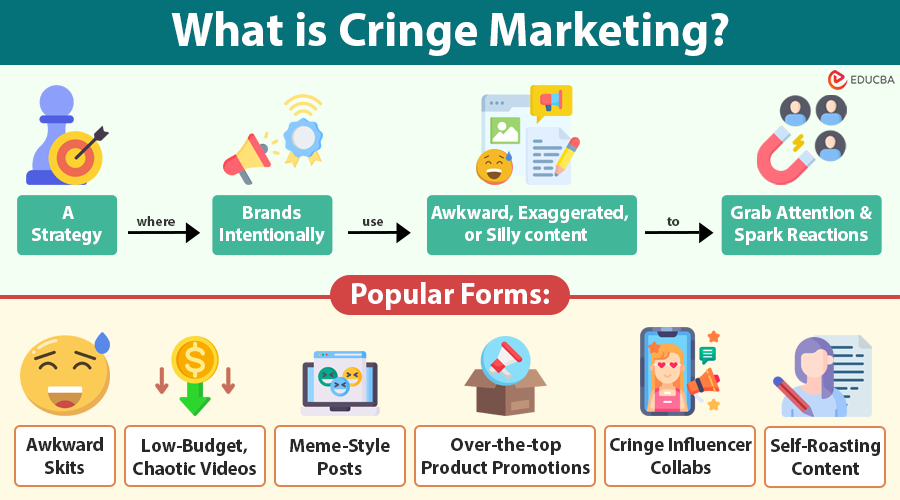
Cringe marketing is a strategy where brands intentionally use awkward, exaggerated, or silly content to grab attention and spark reactions. It relies on humor, low-budget style, and relatable awkward moments to stand out in crowded social media feeds.
For example, a food brand might post an overly dramatic, intentionally cheesy video about craving snacks at midnight. The content feels awkward on purpose—making people laugh, comment, and share it, which boosts visibility.
Table of Content:
- What Is Cringe Marketing?
- Why Cringe Marketing Works
- Popular Forms
- How to Create Effective Cringe Marketing Content
- Popular Examples
- Cringe Marketing vs. Traditional Marketing
- Risks and Challenges
- Future
Key Takeaways
- Cringe marketing uses awkward, exaggerated, or humorous content to capture attention and increase engagement on social media.
- It works best when content is relatable, self-aware, low-budget, and aligned with audience trends, especially for Gen Z and millennials.
- While highly shareable, cringe marketing carries risks like backlash, misalignment with brand identity, or short-lived trend reliance.
- Successful campaigns balance humor and authenticity, leveraging viral potential without compromising credibility, and are increasingly integrated with AI and cross-platform strategies for maximum reach.
Why Cringe Marketing Works?
Cringe marketing succeeds because it triggers strong emotions and encourages people to react, talk, and share.
- It grabs instant attention: Awkward or exaggerated content stands out in a feed full of polished ads. People pause because it feels unexpected and different.
- Creates emotional reactions: Whether viewers laugh, cringe, or feel embarrassed, strong emotions make the content memorable and more likely to be shared.
- It feels relatable and human: Imperfect, funny content reminds people of real-life awkward moments, helping brands appear more genuine and approachable.
- Boosts engagement on social platforms: Algorithms love reactions. Comments, duets, stitches, and shares push cringe content further.
- It appeals to younger audiences: Gen Z and millennials enjoy humor, memes, and self-aware content, making cringe an effective way to connect with them.
- It is easy and inexpensive to produce: Simple editing and low-budget setups often perform better than high-quality commercial-style videos.
Popular Forms of Cringe Marketing
These common forms show how brands use awkward humor to get attention and make their content memorable.
- Awkward skits: Brands create short, uncomfortable scenes with exaggerated reactions, making viewers laugh or cringe instantly.
- Low-budget, chaotic videos: Intentionally messy editing, sudden zoom-ins, and random sound effects add humor and make the content feel unpolished in a fun way.
- Meme-style posts: Using trending memes or outdated meme formats makes the content feel purposely silly and relatable to online audiences.
- Over-the-top product promotions: Brands exaggerate the benefits or reactions to a product, making the message funny instead of serious.
- Cringe influencer collabs: Working with creators known for awkward humor helps brands connect with younger audiences who enjoy this style.
- Self-roasting content: Brands make fun of themselves—like joking about slow service or boring packaging—to appear honest, human, and entertaining.
How to Create Effective Cringe Marketing Content?
Follow these steps to make cringe content that feels funny, engaging, and easy for people to share.
- Know what your audience finds cringe-worthy: Spend time observing memes, trends, and viral videos to understand the humor style your audience enjoys.
- Use simple and relatable ideas: Pick everyday awkward situations—like failing at a handshake or overreacting to small problems—to make the content instantly understandable.
- Keep the video short and quick: Cringe works best in short clips where the joke hits fast without long explanations.
- Use exaggerated expressions and reactions: Lean into dramatic acting, silly faces, or odd sound effects to make the awkwardness clear and entertaining.
- Make it look natural and unpolished: Avoid perfect lighting or heavy edits. A raw, casual style makes the cringe feel more authentic.
- Test different formats: Try memes, skits, or voiceovers, then track which versions get the most comments, shares, and engagement.
Popular Examples of Cringe Marketing
Here are a few real‑world campaigns where cringe content helped brands go viral and connect with audiences.
- Duolingo on TikTok: Their cheeky green‑owl mascot posts weird, chaotic videos instead of standard ads, grabbing attention and building a fan base of millions.
- Zepto’s “Soan Papdi Comeback” ad: For Diwali 2024, Zepto made a funny, self-aware video about an old sweet, which logged around 800 million impressions and drove a 74% jump in social engagement.
- Zomato’s witty posts & notifications: One quirky notification got nearly 100,000 user interactions, and humorous food memes helped boost overall engagement by over 50%.
- Crocs embracing their “ugly shoe” vibe: Instead of hiding their awkward image, Crocs leaned into it through bold, fun content — turning a weak point into a quirky strength.
- McDonald’s “Grimace Shake” trend on social media: The brand rolled with user-made creepy or funny videos about their shake, tapping into internet humour and sparking lots of shareable content.
Cringe Marketing vs. Traditional Marketing
Here’s how cringe marketing differs from traditional marketing in style, approach, and audience impact.
| Aspect | Cringe Marketing | Traditional Marketing |
| Tone & Style | Informal, awkward, humorous, over-the-top | Polished, professional, serious, and formal |
| Audience Engagement | Encourages reactions, shares, comments, and memes | Focuses on information, persuasion, and awareness |
| Production Quality | Low-budget, raw, unpolished | High-quality visuals, scripted, well-edited |
| Emotional Impact | Evokes laughter, embarrassment, or surprise | Evokes trust, desire, or reliability |
| Platform Suitability | Works best on TikTok, Instagram Reels, YouTube Shorts | Works across TV, print, websites, and social media |
| Target Audience | Gen Z, Millennials, meme-loving audiences | Broad audience, including older demographics |
| Brand Personality | Bold, relatable, self-aware | Professional, trustworthy, consistent |
Risks and Challenges of Cringe Marketing
While cringe marketing can boost engagement, it also carries several risks that brands must carefully consider.
- Backlash from the audience: If the content is too awkward or offensive, it can be mocked in a way that harms the brand’s image.
- Loss of credibility: Excessive cringe may make a brand seem unprofessional or desperate, especially for premium or serious products.
- Misalignment with brand identity: Luxury or corporate brands that use awkward humor may confuse customers or weaken brand trust.
- Short-lived trends: Cringe content often relies on viral trends that can fade quickly, making campaigns less sustainable.
- Difficult to execute correctly: Finding the right balance between funny and off-putting is tricky; too little cringe will not engage, too much can repel.
- Negative social media amplification: Content can go viral for the wrong reasons, leading to unintended ridicule or memes that damage reputation.
Future of Cringe Marketing
Cringe marketing is evolving, and brands are finding new ways to use awkward humor to engage audiences.
- More self-aware brand content: Brands will increasingly make fun of themselves, showing authenticity and relatability to engage audiences.
- Integration with AI tools: AI-generated videos, memes, and quirky characters will allow brands to create hyper-cringe content faster and at lower costs.
- Faster trend cycles: With platforms like TikTok and Instagram Reels, cringe content will evolve quickly, requiring brands to adapt to new memes and viral formats.
- Blending cringe with social causes: Brands can combine awkward humor with positive messages, making campaigns both entertaining and meaningful.
- Expansion beyond Gen Z: While initially popular with younger audiences, cringe marketing may appeal to broader demographics as humor and self-awareness become more mainstream.
- Greater focus on short-form content: Quick, punchy videos will continue to dominate, maximizing engagement and shareability.
Final Thoughts
Cringe marketing has transformed awkwardness into a powerful tool for engagement, virality, and brand personality. When used thoughtfully, it helps brands connect with younger audiences, spark conversations, and stand out in crowded feeds. Balancing humor, relatability, and self-awareness ensures cringe content entertains without damaging credibility, making it a valuable addition to modern marketing strategies.
Frequently Asked Questions
1. What platforms are most effective for cringe marketing?
Answer:- TikTok, Instagram Reels, and YouTube Shorts are ideal for cringe content due to high engagement and viral potential.
2. Can small businesses use cringe marketing successfully?
Answer:- Yes, low-budget and relatable cringe campaigns can help small brands gain attention and connect with audiences quickly.
3. How often should brands post cringe content?
Answer:- Occasionally, balancing it with other professional content to maintain credibility and avoid audience fatigue.
4. Is cringe marketing suitable for all industries?
Answer:- Not always; it works best for casual, youth-focused, or meme-friendly brands rather than formal or luxury sectors.
Recommended Articles
We hope this guide on Cringe Marketing helped you understand how awkward humor drives engagement. For more marketing tips, explore these articles:


