


Building Complete Creative Intelligence in Education
Creative education often gets overlooked in many school systems. Budget cuts usually target arts programs first, and standardized testing turns literature analysis into rigid formulas. Dance, theater, and music become optional extras instead of being seen as essential parts of learning. This narrow focus misses something vital — how humans develop intellectually, emotionally, and socially. The idea that “real learning” only happens in math, science, and traditional academics ignores how creative subjects shape the mind. Studies show that fostering creative intelligence in education helps students think critically, solve problems, and express ideas uniquely. Literature builds analytical and emotional understanding, while performing arts strengthen teamwork, coordination, and confidence. Together, they create a more complete learner.
The Importance of Creative Intelligence in Education
Parents and educators who value creative intelligence in education understand the power of combining different creative skills. A student who writes stories and performs on stage develops stronger imagination, empathy, and communication skills. These creative experiences do not compete with academics — they support them.
When schools intentionally connect literary learning with performing arts, students learn to think flexibly and approach problems from different angles. Understanding story structure helps in choreography, and rhythm in dance improves language skills. This balanced approach gives students lifelong tools to express themselves and understand the world.
The Hidden Power of Literary Analysis
Reading is just the start. The real learning happens when students analyze how stories work, exploring the techniques authors use to create meaning and emotion. Literary analysis strengthens critical thinking and improves problem-solving skills that transfer to other academic areas.
- Character Analysis: Students evaluate why characters act a certain way, considering personality, relationships, and circumstances. They learn to distinguish between intentions and actions, a skill valuable in history, science, and teamwork.
- Understanding Relationships: Stories involve networks of characters whose interactions drive the plot. Recognizing patterns in these relationships helps students understand real-life social dynamics.
- Foil Characters and the Principle of Contrast: Understanding what is a foil character opens up new ways of thinking about how writers create meaning through opposition and comparison. For example, Watson’s conventional thinking highlights Sherlock Holmes’ brilliance. Understanding foil characters helps students think analytically and apply this principle in other disciplines, including music, visual arts, and even science.
- Writing and Communication Skills: When students understand literary devices like contrast, their writing improves. They learn to develop memorable characters, create depth, and communicate ideas clearly. Discussion and debate in literature classes also enhance communication skills transferable to college, work, and life.
By fostering creative intelligence in education through literary analysis, students gain reasoning, interpretation, and communication skills that support broader learning.
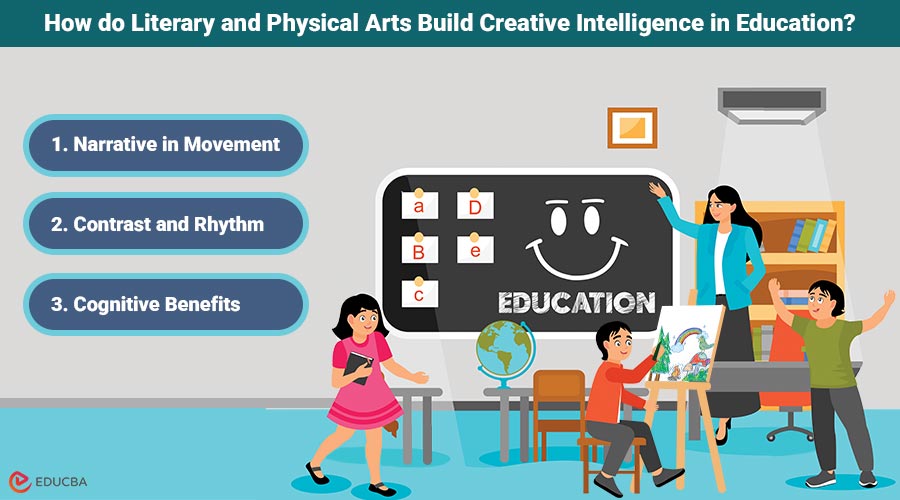
How do Literary and Physical Arts Build Creative Intelligence in Education?
Literature happens on pages; dance occurs on stage. Reading engages the mind, while movement engages the body. But these disciplines are deeply connected, and experiencing both strengthens creative intelligence.
- Narrative in Movement: Choreography tells stories through movement, much like novels do. Students who understand story structure in literature can bring that knowledge to dance, creating meaningful performances.
- Contrast and Rhythm: Just as foil characters create contrast in literature, dancers use opposing movements to add visual interest. Rhythm also connects the two arts—Poetry’s meter, prose’s cadence, and dance’s musicality reinforce each other, improving timing, coordination, and expression.
- Cognitive Benefits: Dance improves memory, focus, spatial awareness, and problem-solving skills. These physical and cognitive abilities support learning in math, science, and language, boosting overall creative intelligence in education.
The student who struggles to understand abstract concepts in a classroom often grasps them quickly when allowed to embody the ideas through physical movement.
Benefits of Structured Dance Education for Creative Intelligence
Dance education offers far more than the development of artistic skill—it nurtures cognitive, emotional, and physical growth, contributing significantly to creative intelligence.
- Discipline and Perseverance: Structured dance programs teach students to accept feedback gracefully, work toward long-term goals, and collaborate effectively with peers. These qualities extend beyond the dance studio, fostering habits and resilience that benefit academic and personal growth.
- Physical and Cognitive Development: Students develop strength, flexibility, coordination, and spatial awareness through dance. Learning and memorizing choreography exercises executive function, sequencing, and auditory processing. These cognitive skills transfer directly to subjects like math, science, and language learning, enhancing overall creative intelligence in education.
- Social and Emotional Growth: Dance encourages teamwork, collaboration, and social interaction. Performance opportunities build confidence, reduce anxiety, and improve public speaking abilities. By learning to perform in front of audiences, students cultivate emotional resilience that benefits other areas of life.
- Finding the Right Programs: Choosing the right dance education environment is crucial. Quality institutions, such as Dancepointe Academy, balance technical training with creative expression, adapt instruction to individual student needs, and maintain supportive, structured environments. These programs provide students with a comprehensive foundation, ensuring they develop both artistic skill and creative intelligence.
Creating Synergy Between Creative Disciplines
The true strength of arts education emerges when students engage in multiple disciplines that reinforce each other. Literature students who also dance often develop a stronger sense of rhythm and physical detail in their writing, while dancers who study literature create more emotionally nuanced performances. Parents and educators can support these connections by highlighting parallels between disciplines. For example, ask students how they might choreograph a novel’s climactic scene or write about the story behind a dance. Such exercises reveal universal principles across art forms.
Schools that integrate arts across the curriculum report higher student engagement and comprehension. Teaching history through drama, exploring science through movement, or illustrating math with visual arts creates richer, more memorable learning experiences. Artistic success in one area also builds confidence in others. Students who overcome stage anxiety or master complex choreography often approach literary analysis or academic challenges with greater self-assurance, fostering overall self-efficacy.
Final Thoughts
Complete creative education requires exposing students to multiple artistic disciplines. Literary analysis develops pattern recognition, critical thinking, and understanding of human behavior, while dance and performing arts build physical intelligence, discipline, and artistic expression.
Together, these experiences cultivate creative intelligence in education, preparing students to think flexibly, communicate effectively, and approach challenges with confidence. Prioritizing access to quality instruction in both literary and performing arts equips students with cognitive, emotional, and social tools that serve them throughout life. In a fast-changing world, nurturing creative intelligence is essential for innovation and adaptability.
Recommended Articles
We hope this guide on creative intelligence in education helps you understand the value of integrating the arts in learning. Check out these recommended articles for more tips and strategies to enhance creative development in students.

