
Updated May 18, 2026
What is Crawl Budget?
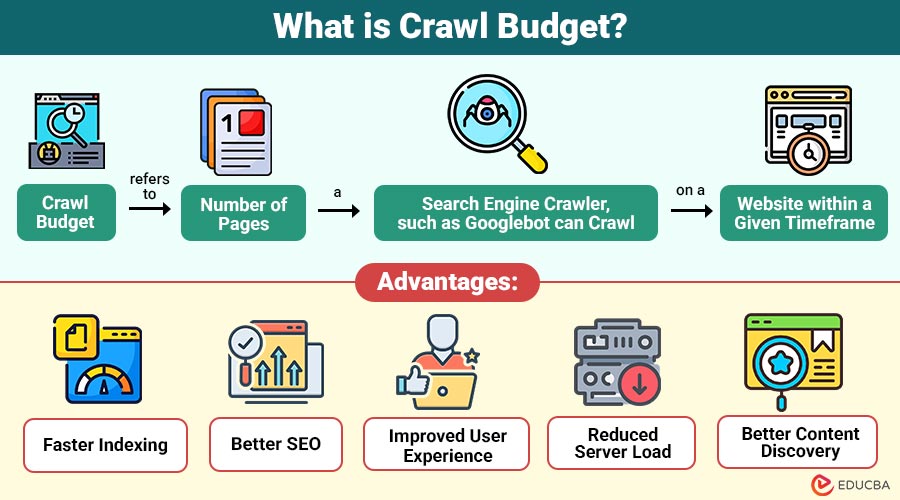
Crawl budget refers to number of pages a search engine crawler, such as Googlebot, can crawl on a website within a given timeframe.
It is influenced by several factors, including:
- Website speed
- Server performance
- Website structure
- Internal linking
- Duplicate content
- Number of URLs
- Crawl demand
In simple terms, the crawl budget determines how frequently and deeply search engines explore your website.
For example, if an eCommerce website has 100,000 pages but search engines only crawl 10,000 pages regularly, some important product pages may remain undiscovered or outdated in search engine indexes.
Table of Contents:
- Meaning
- Importance
- Working
- Factors
- Signs of Crawl Budget Problems
- How to Optimize Crawl Budget?
- Tools
- Common Mistakes
- Example
- Advantages
- Challenges
Key Takeaways:
- Crawl budget determines how efficiently search engines discover, crawl, and index important pages on a website.
- Faster websites, strong internal linking, and clean architecture significantly improve overall crawl efficiency performance.
- Duplicate content, broken links, and unnecessary URLs frequently waste valuable search engine crawl resources.
- Optimized crawl budgets improve indexing speed, SEO visibility, website performance, and content discovery efficiency.
Why is Crawl Budget Important?
Crawl budget directly impacts how quickly search engines discover new content and update existing pages.
1. Faster Indexing
Optimized crawl budgets help search engines quickly discover, crawl, and index newly published website pages efficiently.
2. Better SEO Performance
Efficient crawling improves the visibility of important pages, helping websites achieve stronger rankings in search engine results.
3. Improved Server Efficiency
Proper crawl management reduces unnecessary bot requests, preventing server overload and improving overall website performance.
4. Higher Ranking Opportunities
Technically optimized and more crawlable websites are more likely to appear higher in search results.
5. Updated Search Results
Frequent crawling ensures that updated content consistently appears accurately and quickly on search engine results pages.
How Does Crawl Budget Work?
A crawl budget mainly depends on two components:
1. Crawl Capacity Limit
This refers to the maximum number of URLs a search engine can crawl without overloading the website server. If a website responds slowly or generates errors, search engines reduce crawling activity.
Factors affecting crawl capacity include:
- Server response time
- Hosting quality
- Website speed
- Error rates
- Website stability
2. Crawl Demand
Crawl demand represents the level of interest search engines have in crawling specific pages. Pages with high traffic, frequent updates, or strong backlinks are crawled more often.
Factors affecting crawl demand include:
- Content freshness
- Popularity of pages
- Backlinks
- Search traffic
- Frequency of updates
Factors Affecting Crawl Budget
Here are the key factors that affect crawl budget and overall crawling performance:
1. Website Size
Large websites with millions of pages require higher crawl resources for effective search engine indexing.
2. Duplicate Content
Duplicate pages waste crawl budget by forcing search engines to repeatedly crawl similar content on the website.
3. Broken Links
Broken links and server errors reduce crawl efficiency and negatively impact overall website search engine performance.
4. Website Speed
Slow-loading websites decrease crawl frequency because search engines avoid overwhelming servers with excessive crawling requests.
5. Linking Structure
Strong internal linking helps search engines quickly discover important pages and significantly improves overall crawling efficiency.
6. XML Sitemaps
XML sitemaps guide search engines to essential pages, improving the accuracy of website crawling and indexing.
7. Low-Quality Pages
Thin or low-value pages consume crawl budget unnecessarily and reduce the overall effectiveness of website indexing for search engines.
Signs of Crawl Budget Problems
Websites experiencing crawl budget issues often show several technical symptoms.
1. Important Pages Not Indexed
Important website pages remain unindexed, preventing them from appearing on search engine results pages.
2. Delayed Content Updates
Search engines take longer to recognize updated website content, significantly reducing visibility and opportunities for ranking improvements.
3. High Crawl Errors
Frequent crawl errors reduce the efficiency of search engine crawling and significantly impact overall website SEO performance.
4. Excessive Crawling of Irrelevant Pages
Search engines waste crawl resources on unnecessary URLs rather than indexing valuable, important website content.
5. Server Performance Issues
Heavy bot traffic slows website performance, degrades user experience, and significantly reduces search engine crawling efficiency.
How to Optimize Crawl Budget?
Improving crawl budget efficiency helps search engines prioritize important pages.
1. Improve Website Speed
Search engines can efficiently crawl more pages on faster websites.
Optimization methods include:
- Image compression
- Browser caching
- Content Delivery Networks (CDNs)
- Optimized code
- Faster hosting
2. Fix Broken Links
Regularly identify and repair:
- 404 pages
- Redirect chains
- Server errors
This improves crawl efficiency and user experience.
3. Use Robots.txt Properly
The robots.txt file tells search engines which pages to crawl and which to exclude.
For example, websites often block:
- Admin pages
- Login pages
- Internal search results
- Duplicate filter URLs
However, incorrect robots.txt configurations can accidentally block important pages.
4. Optimize Internal Linking
Use logical internal links to guide crawlers toward valuable content.
Best practices include:
- Linking high-priority pages
- Using descriptive anchor text
- Reducing orphan pages
5. Remove Duplicate Content
Use canonical tags to indicate the preferred version of similar pages. This prevents crawl waste and indexing confusion.
6. Maintain XML Sitemaps
Update XML sitemaps regularly and include only indexable URLs.
Avoid including:
- Redirected pages
- Error pages
- Noindex pages
7. Use Noindex Tags for Low-Value Pages
Prevent search engines from indexing unnecessary pages, such as:
- Thank-you pages
- Internal search pages
- Temporary pages
8. Reduce URL Parameters
Excessive URL variations create unnecessary crawl paths.
Example:
- example.com/product?id=123
- example.com/product?id=123&color=blue
- example.com/product?id=123&sort=price
These variations may consume significant crawl resources.
Tools to Monitor Crawl Budget
Several SEO tools help analyze crawl activity and technical issues.
1. Google Search Console
Google Search Console provides crawl statistics, indexing reports, crawl errors, sitemap insights, and website performance data for SEO monitoring.
2. Screaming Frog SEO Spider
Screaming Frog SEO Spider identifies broken links, redirect chains, duplicate pages, crawl depth, and technical website crawling issues efficiently.
3. Ahrefs
Ahrefs regularly offers technical SEO audits, backlink analysis, crawl monitoring, keyword tracking, and detailed insights into website optimization performance.
4. SEMrush Site Audit
SEMrush Site Audit detects crawl-related SEO issues, website health problems, technical errors, and optimization opportunities for better indexing.
5. Log File Analysis Tools
Log file analysis tools accurately track actual search engine bot behavior, crawling patterns, server activity, and website resource usage.
Common Crawl Budgeting Mistakes
Many websites unintentionally waste crawl resources.
1. Allowing Infinite URL Spaces
Dynamic filters and calendar pages create endless URLs, unnecessarily wasting valuable search engine crawl resources.
2. Ignoring Broken Pages
Large numbers of broken pages and errors significantly reduce website crawl efficiency and overall SEO performance.
3. Poor Website Architecture
Deep website structures make important pages difficult for search engines to discover and crawl efficiently.
4. Publishing Thin Content
Low-quality or thin content pages dilute crawl priorities and considerably reduce overall website indexing effectiveness.
5. Incorrect Canonical Tags
Improper canonical tags confuse search engines and significantly affect the accuracy of website crawling and indexing.
Example of Crawl Budget
Here is a practical example showing how crawl budget issues affect a website and how optimization improves crawling and indexing efficiency.
Imagine an online shopping website with 500,000 product pages.
Problems:
- Thousands of duplicate filter URLs
- Slow server response
- Broken product pages
- Poor internal linking
As a result, search engines allocate most of their crawl resources to duplicate pages rather than to valuable product pages.
After Optimization:
- Duplicate URLs are blocked
- Broken links are fixed
- The XML sitemap is updated
- Website speed improves
Search engines can now crawl and index important product pages more efficiently.
Advantages of Crawl Budget Optimization
Here are some key advantages of crawl budget optimization that improve website indexing, SEO performance, and overall user experience.
1. Faster Indexing
Optimized crawl budgets help new pages appear quickly in search engine results and improve content visibility.
2. Better SEO
Important pages receive higher visibility, significantly improving rankings and overall website search engine optimization performance.
3. Improved User Experience
Faster website performance enhances usability, visitor satisfaction, engagement, and overall browsing experience across all devices.
4. Reduced Server Load
Efficient crawling reduces unnecessary server requests and significantly lowers overall website resource consumption.
5. Better Content Discovery
Search engines easily discover valuable pages, improving indexing efficiency and website content visibility in search results.
Challenges of Crawl Budget Management
Here are some common challenges of crawl budget management that can affect website indexing, search visibility, and overall SEO performance.
1. Large Websites
Websites with millions of URLs require careful crawl prioritization to ensure important pages receive proper indexing.
2. Dynamic URLs
URL parameters and dynamic pages create duplicate content, leading to unnecessary crawling and wasted crawl resources.
3. Technical Errors
Broken pages, server issues, and crawl errors reduce the efficiency of search engine crawling and the performance of website SEO.
4. Weak Site Structure
Poor website architecture prevents search engines from quickly discovering and indexing important pages.
5. Duplicate Content
Duplicate content wastes valuable crawl resources by forcing search engines to repeatedly crawl similar pages on the same website.
Final Thoughts
A crawl budget plays an important role in technical SEO by helping search engines efficiently crawl and index websites. Optimizing website speed, fixing crawl errors, improving internal linking, removing duplicate content, and maintaining XML sitemaps ensure better indexing, stronger search visibility, improved rankings, faster content discovery, enhanced user experience, and overall SEO performance.
Frequently Asked Questions (FAQs)
Q1. Does crawl budget affect rankings?
Answer: Indirectly, yes. Better crawling improves indexing and SEO visibility.
Q2. Which websites need the most crawl budget optimization?
Answer: Large websites such as e-commerce stores, news portals, and marketplaces benefit the most.
Q3. How can I check crawl activity?
Answer: You can monitor crawl statistics using tools like Google Search Console.
Q4. Can duplicate content waste crawl budget?
Answer: Yes, duplicate pages consume unnecessary crawl resources and reduce efficiency.
Recommended Articles
We hope that this EDUCBA information on “Crawl Budget” was beneficial to you. You can view EDUCBA’s recommended articles for more information.

