


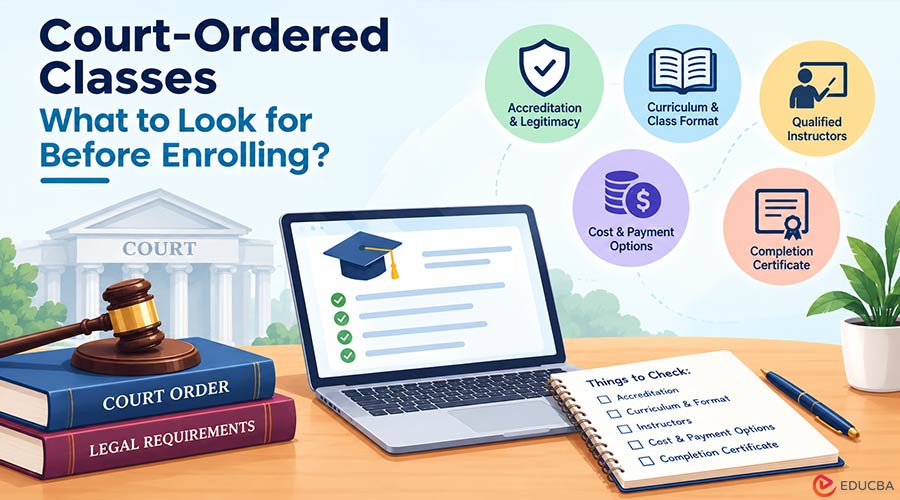
Getting told by a court you have to take a class can be stressful. Your main goal is simple: finish the class. But it is easy to make mistakes. If you pick the wrong class, the court might not accept your certificate. That means you will waste time and money on another class, and you could even face more legal trouble. This is about more than just sitting in a class for a few hours. Choosing court-ordered classes is about more than simply sitting in a class for a few hours.
You need to find a program the court will accept, and that teaches you something useful. You need to find a program the court will accept. It should also teach you something useful. You have to check whether the provider is legitimate and whether the court will accept their certificate. It can be confusing to find the right class for anger management, defensive driving, or parenting skills among all the available court classes.
Ignore the ads and check whether the program is good and whether courts have accepted it before. This guide will help you check out class providers. It shows you what to look for and what questions to ask before you sign up. The goal is to help you choose wisely so you get it right the first time.
Quick Answer:
To make sure a court-ordered class is valid, you must first check with the court or agency that ordered it. Good providers use proven teaching methods, give you a real certificate of completion, and can show that courts have accepted their classes before.
What Are the Real Costs of Choosing the Wrong Court-Ordered Classes?
The costs go beyond the class fee. You could face rejected certificates, more legal fees, and long delays in your case. Choosing a provider is not a small task. It is a choice with real legal and financial consequences. In many places, no one regulates these courses. That means good, proven programs sit alongside low-quality ones that sell certificates.
1. You Could Lose Money
The first risk is losing money. You might pay for a class, spend hours on it, and turn in your certificate, only for the court to say “no.” Many providers do not give refunds, so that money is often gone. Then you have to find and pay for another class, which doubles your cost and wastes your time. This is a common problem for people who search online and pick the cheapest or fastest option without checking it out first.
2. A Rejected Certificate Can Cause Delays
Beyond losing money, a rejected certificate can cause delays that complicate your legal situation. Court orders usually have a deadline. A delay could hold up getting a charge dismissed, getting your driver’s license back, or finalizing a child custody plan. What looks like a small problem can keep you stuck in the legal system for weeks or months. This adds a lot of stress.
*Before you pay a single dollar, get the provider’s name and the specific course in writing. Email that information to your attorney, probation officer, or the court clerk for pre-approval. An email confirmation is your best insurance policy against a rejected certificate.
3. Failing to Follow the Court Order Can Have Serious Consequences
The biggest risk is not following a court order. If you do not provide the court with a valid certificate by the deadline, a judge may see it as you ignoring the order. Depending on your case, this could lead to fines or even a probation violation, which is serious. You wanted to solve a legal problem, but picking the wrong class can create a new one.
How Do You Vet a Court Class Provider?
Vet a provider by reviewing what they teach, confirming courts have accepted them before, and checking the details on their certificate. A good program should be open about how it teaches and be able to show it has helped others meet their legal requirements. A good provider should be able to prove it is legitimate when you ask. First, ask about what the class teaches. Is it “evidence-based”? This means the class is based on real research, not just someone’s opinion. No single national group approves all these classes.
But programs that use proven methods are more likely to be accepted by the court. A good provider can tell you what teaching model their anger management or parenting class uses. Look for real signs that they are a professional company. Their website and emails should be clear and easy to understand. Be careful if they make vague promises or try to pressure you into buying. The table below shows the difference between a good program and one that sells a piece of paper.
| Signs of a Reputable Provider | Potential Red Flags |
| Uses a curriculum based on research. | Course details are unclear or missing. |
| Has a real address and phone number you can check. | Only has a P.O. box or contact form. |
| Has been in business for a long time (10+ years). | “Guarantees” court acceptance. |
| Gives a detailed certificate. | Offers “instant” completion or is very short. |
| Tells you to get the class approved by the court first. | Price is much lower than others. |
*Ask the provider for a course syllabus or a detailed curriculum outline before you enroll. This document shows you what topics are covered and demonstrates the structure of the program. If they cannot or will not provide one, consider it a warning sign.
Finally, check the details of the certificate you will get. Your certificate is the only proof the court will see. It must include your full name, the class name, the number of hours you completed, the date, and the provider’s name and contact info. Many courts also want to see a unique serial number on the certificate to prevent fraud.
What Does “Court-Approved” Actually Mean?
It means a court or judge has previously accepted a provider’s class. It is not a 100% guarantee for everyone. There is no single, national “court-approved” list. Approval is local. It can be different from one county to the next, or even from one judge to another in the same courthouse. Knowing this is the best way to avoid having your certificate rejected. Some courts have an official list of approved providers. If your court has a list, your job is easy: pick a class from that list. But many courts do not have a list. In that case, you or your lawyer must vet the provider.
Courts approve programs on a case-by-case basis, often through your probation officer or the judge. They look for programs that are well-structured, research-based, and have the right number of hours. Some types of classes are also state-controlled. For example, the state Department of Motor Vehicles (DMV) often approves all official defensive driving or traffic school classes. Similarly, a state’s family services department might approve parenting classes for custody cases.
In these cases, “court-approved” means the state also approves the provider. *The most reliable source of truth is not the provider’s website; it is the person who manages your case file. Ask your probation officer, caseworker, or attorney’s paralegal directly: “Is there an official list of providers? If not, can you review this specific program for pre-approval before I enroll?”
The class format is a common reason for rejection. A judge might order an “in-person” class. This would mean a self-paced online course would not work. Always ask whether a live video class is acceptable or whether you must attend in person. The details matter.
The Final Check: From Enrollment to Compliance
Choosing court-ordered classes is not like buying a regular product or service. It is part of a legal process. The court, not you, decides if the class is good enough. What the provider says about being “court-approved” matters less than getting written approval from your lawyer or probation officer. It is your responsibility to check.
The most important thing to remember is to talk to your case manager instead of just believing the provider’s ads. A quick phone call or email to verify the program can help you avoid the stress and expense of a rejected certificate. Your goal is to complete the court’s requirement without causing new problems. Carefully checking before you sign up is the only way to make sure your certificate will help you complete your legal case.
Frequently Asked Questions (FAQs)
Q1. Is an online course for court legitimate?
Answer: Yes, many courts accept online classes, but the type of class matters. You must ask if a self-paced online course is okay, or if you need a live class with an instructor on video (like on Zoom). A class is only “legit” if the court in charge of your case says it is.
Q2. What happens if I fail to complete my class on time?
Answer: Missing your deadline means you are not following a court order, which can cause serious problems. This could lead to a probation violation, a warrant for your arrest, a bad result in a custody case, or a rejected plea deal. If you think you will be late, tell your lawyer or probation officer right away. They might be able to ask the court for more time.
Q3. Do I need to send the certificate to the court myself?
Answer: Usually, yes. It is your job to make sure the certificate gets to the right person, like the court clerk or your probation officer. Always check how they want you to send it (email, mail, or in person) and send it long before the deadline. Keep a copy for your own records.
Q4. Can I take a class from a provider based in another state?
Answer: Yes, you often can, especially for online classes. The provider’s location does not matter. What matters is whether your local court will accept their program. You still need your case manager to approve an out-of-state provider, just like a local one.
Q5. Can I take a shorter class than the one my court ordered?
Answer: No. If the court orders a 24-hour class, you cannot take an 8-hour one instead. You must find a provider that offers a class with the correct number of hours. Some providers may let you combine smaller classes to meet the requirement, but you must get the court to approve the plan before you sign up.
Recommended Articles
We hope this comprehensive guide to court-ordered classes helps you make informed decisions and complete your legal requirements with confidence. Check out these recommended articles for more insights and practical guidance on navigating legal and educational requirements.


