


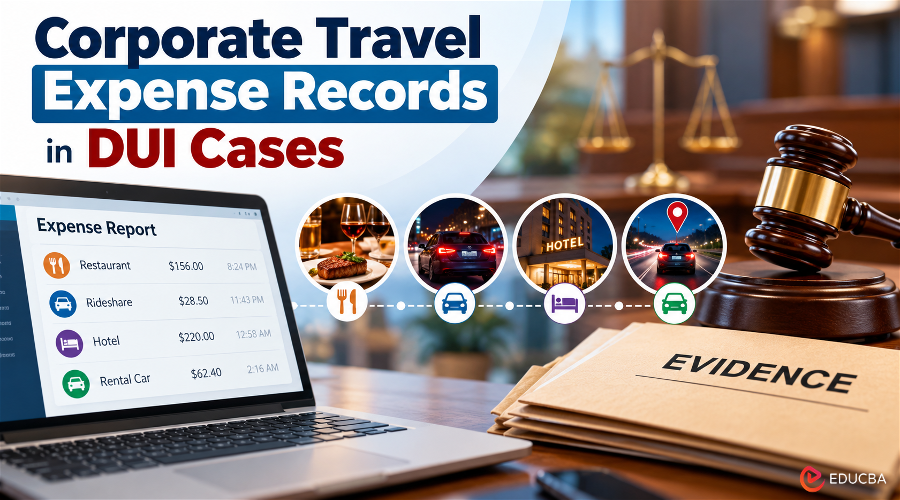
A steakhouse tab with four drinks itemized. A rideshare an hour after that. A hotel key swipe near one in the morning, and a rental-car GPS ping a little after two, crossing a county line. All of it lives in one corporate travel platform, tied to one employee ID, sitting on a vendor’s server long after the trip closes and the reimbursement is paid.
Six months later, that same bundle of corporate travel expense records shows up as an exhibit to a subpoena in a DUI case the company had nothing to do with filing.
This is happening more often, and the people it happens to rarely see it coming. The expense report was supposed to be an accounting document. It has become one of the most useful witnesses in the courthouse.
Why Do Prosecutors Care About Corporate Travel Expense Records?
A corporate expense record answers questions a police report cannot. An officer at the scene of a crash knows when the call came in and what the driver looked like at 1 in the morning. The officer does not know what the driver was doing at seven the evening before, who was at the table, how many drinks were ordered, or which card paid for them. Corporate systems know all of that, and they store it in a format that is easy to authenticate and hard to argue with.
Modern travel-and-expense platforms hold more than a receipt image. The record around a single swipe includes timestamps, GPS coordinates, merchant category codes, approver IDs, and the cost center the charge landed in. Line-item detail from the restaurant tells you it was three old-fashioneds and a beer, not a coffee. The approver ID shows a manager reviewed the charge and signed off on it.
These details make corporate travel expense records potentially valuable evidence when investigators need to reconstruct an employee’s activities before an incident.
How Do Corporate Travel Expense Records Leave the Company?
Usually through a subpoena, and usually to a third party rather than the employer. Criminal subpoenas can reach documents and other tangible items, and they can force production before trial rather than only at the hearing itself. The card issuer, travel platform vendor, hotel chain, and rideshare company each hold a piece of the timeline, and each can be served independently.
The employer often finds out last. By the time in-house counsel hears about it, the vendor has already responded to a facially valid subpoena and produced the records. When the target is an employee rather than the company, an experienced criminal defense firm’s forensic work on that vendor file often matters more than anything that happens in the courtroom later.
Understanding how employers collect, store, and disclose corporate travel expense records can help employers and employees recognize the legal implications of routine business travel documentation.
What Types of Cases Use Corporate Travel Expense Records?
DUI prosecutions are a clear example, especially when the drive home from a client dinner ends in a crash, and the state wants to reconstruct the hours before the incident. However, corporate travel expense records are used well beyond impaired-driving cases.
- Dram-shop and negligent-hosting suits. Plaintiffs’ lawyers use itemized bar tabs to show what a company-hosted event actually served, and to whom.
- Employer liability actions. Whether a company can be on the hook when a worker drinks and drives on a trip remains an open question, and SHRM guidance walks through the fact patterns that tend to expose the employer.
- Wrongful-death and personal-injury cases. Timelines built from card swipes, hotel key logs, and rideshare pickups place a defendant in a specific chair at a specific hour.
- Employment and misconduct disputes. Harassment claims and after-hours conduct investigations often rely on expense records to corroborate or contradict who was with whom.
- Regulatory and internal reviews. Kickback, conflict-of-interest, and anti-bribery investigations use the same data to map relationships the org chart does not show.
In each situation, corporate travel expense records can provide supporting evidence, but their significance depends on the circumstances, the data’s reliability, and applicable legal rules.
Can Corporate Travel Expense Records Be Used Against an Employee?
In most cases, yes. Employees generally have limited personal privacy rights over records their employer creates and stores on company systems. Most travel and expense platforms also rely on acknowledgments included in onboarding documents. The card statement belongs to the issuer. The GPS ping belongs to the rental company.
That does not mean the records are unchallengeable. Timestamps can be inaccurate, and merchant codes may be incorrect. A charge attributed to an employee could belong to a colleague’s round. GPS coordinates may show where the car was parked, not who was driving. A skilled defense lawyer reviews these details carefully before the first hearing, not after.
The evidentiary value of corporate travel expense records depends on what they actually establish. A restaurant receipt may document a purchase, but it does not necessarily prove who drank each drink or how impaired someone was later.
What Should a Company or an Employee Do Before Any of This Happens?
- Read the platform terms: Employees should know what their travel-and-expense vendor collects, how long it keeps it, and who inside the company can pull a report by name.
- Assume line-item detail is permanent: Once a charge is itemized down to the drink, that detail is queryable for years.
- Route subpoenas to counsel immediately: Third-party subpoena response is its own discipline, and practitioner guidance walks through how to intake, scope, and negotiate before the vendor produces.
- Keep personal spend off the corporate card: Mixing a personal bar tab into a business trip is the fastest way to hand a prosecutor a timeline the employee never intended to create.
- Get a lawyer involved early: Once records have been pulled, the window to challenge authenticity, chain of custody, or attribution is short.
The expense report is no longer just an accounting record. It has simply become something else: a timestamped trail of where someone went, what they spent, and sometimes what happened next. Long after the business trip is over, that trail may still be waiting for someone to ask for it.
Recommended Articles
We hope this guide helps you understand how corporate travel expense records can become legal evidence in DUI cases, workplace disputes, and other legal proceedings. Explore our recommended articles for more insights on corporate compliance, employee privacy, business travel management, workplace policies, and legal risk management.

