


Introduction to Copyright Infringement
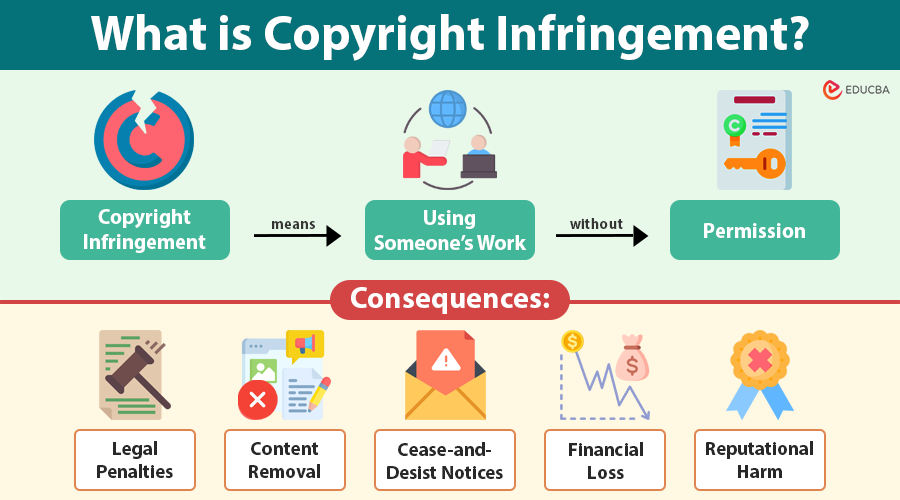
Copyright infringement happens when someone uses, reproduces, shares, shows, or performs a creator’s work without proper permission or legal rights. Doing so breaches the exclusive protections given to the original author.
Suppose someone downloads a copyrighted song and uploads it to their YouTube channel without permission. In that case, they are committing copyright infringement because the song is being reproduced and publicly shared without the copyright holder’s authorization.
Table of Contents
- Introduction
- What is Copyright?
- Infringement Explained
- Types
- Common Examples
- Consequences
- Prevention Tips
- Fair Use
- Digital Age Issues
What Is Copyright?
Copyright protects original creative works and gives the creator exclusive rights to use, distribute, and monetize their content. It safeguards a wide range of creations, including:
- Articles, books, and blogs
- Music, songs, and lyrics
- Photos, graphics, and illustrations
- Videos, films, and animations
- Software, code, and applications
- Architectural designs and plans
- Research papers and academic reports
Copyright protection applies automatically the moment a creator produces an original work in a tangible or recorded form.
Understanding Copyright Infringement
Copyright infringement occurs when a person uses someone else’s protected work without permission. A person may infringe when they:
- Copy any part of another creator’s content
- Republish the work without the owner’s approval
- Use copyrighted images, graphics, or music in any project
- Upload copyrighted movies, songs, or videos online
- Install or use software and applications without a valid license
In simple terms, if you use something you did not create and you do not have explicit permission to use it, you are infringing copyright.
Types of Copyright Infringement
Copyright infringement can occur in several ways, and each type defines how a person misuses someone else’s protected work.
1. Direct Infringement
Direct infringement occurs when a person directly copies, distributes, publicly displays, or uses copyrighted material without permission. This is the most straightforward and common form of violation.
Examples:
- Uploading someone else’s artwork, blog post, or video on your website
- Copying text from a book or article and publishing it as your own
- Using copyrighted music in a commercial without a license
Direct infringement focuses on the action itself, regardless of whether the person intended to break the law.
2. Contributory Infringement
Contributory infringement occurs when a person actively helps, encourages, or enables someone else to infringe upon a copyright. The contributor must know or should reasonably know that infringement is occurring.
Examples:
- Providing software that helps users download pirated movies
- Hosting a website where others share stolen e-books
- Sharing tools or instructions that allow users to bypass digital copyright protection
Even if the person does not directly infringe, helping someone else do it makes them legally responsible.
3. Vicarious Infringement
Vicarious infringement applies when a person or organization:
- Has the ability to control someone else’s infringing actions, and
- Benefits financially from those actions.
They may not participate directly, but they still hold legal responsibility.
Examples:
- A website owner earning ad revenue from pirated content uploaded by users
- A business that allows employees to use copyrighted software illegally while benefiting from their work
- A club playing copyrighted music without a license to attract customers
This type of infringement holds those in power accountable, even if they do not commit the act themselves.
4. Willful Infringement
Willful infringement occurs when a person knowingly and intentionally violates copyright laws. Penalties for willful infringement are often severe because the person understands their actions are illegal and chooses to continue them anyway.
Examples:
- A company using cracked software after receiving a legal notice
- A seller printing and selling T-shirts with copyrighted characters without permission
- A filmmaker using copyrighted music in a movie, even after being denied a license
Willful infringement demonstrates deliberate disregard for the law.
5. Innocent Infringement
Innocent infringement happens when a person uses copyrighted material without realizing it is protected. Although unintentional, it still counts as infringement, but courts may impose lower penalties.
Examples:
- A student using an online image in a project, believing it is free to use
- A blogger reposting content found on social media without knowing it belongs to a professional creator
- A small business unknowingly uses a copyrighted font or design
Innocent infringement highlights the importance of verifying permissions before using any content.
6. Secondary Infringement (Optional Add-On)
Some laws recognize secondary infringement as assisting or benefiting from infringement indirectly, even if the person does not have full knowledge of the infringement. It overlaps with contributory and vicarious infringement.
Example:
Selling equipment that enables copying copyrighted DVDs
7. Online Copyright Infringement
With digital platforms, online infringement has become widespread. It includes any unauthorized use or distribution of copyrighted material on the internet.
Examples:
- Sharing copyrighted songs on social media
- Reposting YouTube videos without permission
- Copying website designs or code
- Using stock images illegally
This category is closely monitored through tools such as Content ID, DMCA notices, and automated detection systems.
Common Examples of Copyright Infringement
People often violate copyright laws, sometimes knowingly and sometimes unknowingly, through their everyday online and offline activities.
- Publishing someone’s article on your website
- Using copyrighted images without purchasing a license
- Sharing paid e-books, PDFs, or study materials
- Using copyrighted music in social media videos or reels
- Copying website designs, layouts, or product descriptions
- Downloading or installing pirated software
- Selling merchandise featuring copyrighted logos or characters
Consequences of Copyright Infringement
Using copyrighted material without permission can cause major legal trouble, monetary loss, and harm to your or your business’s credibility.
1. Legal Penalties
Courts may impose fines, statutory damages, or require the infringer to pay compensation depending on the severity of the violation.
2. Content Removal
Platforms such as YouTube, Instagram, or Facebook can remove the infringing content, issue copyright strikes, or even suspend or terminate accounts.
3. Cease-and-Desist Notices
Copyright owners can send formal notices demanding the immediate removal of unauthorized content and requiring the infringer to stop further violations.
4. Financial Loss
Infringers may need to pay licensing fees, damages for lost income, or settlement costs, which can be significantly higher than the price of using content legally.
5. Reputational Harm
Businesses and creators risk losing credibility, trust, and audience loyalty if they repeatedly use copyrighted material without permission.
How to Avoid Copyright Infringement?
You can prevent copyright issues by following simple, responsible practices that respect creators and ensure the legal use of content.
- Use Licensed Content: Purchase valid licenses for images, music, videos, fonts, and software to ensure legal usage.
- Create Original Content: Develop your own text, visuals, designs, and code whenever possible to avoid relying on protected material.
- Check Usage Rights: Check if the material is royalty-free, licensed under Creative Commons, or in the public domain before you use it.
- Ask for Permission: Request written approval from the owner when you want to use copyrighted material for personal, educational, or commercial purposes.
- Use Free Legal Sources: Utilize trusted platforms like Unsplash, Pexels, Pixabay, and the Free Music Archive, which provide free-to-use content with clear license terms.
- Proper Attribution: Give proper credit when required by Creative Commons or open licenses, following the exact attribution format specified.
Understanding Fair Use
Fair use permits the restricted use of copyrighted content without permission when it falls under certain conditions and serves the public interest.
Fair use typically applies to:
- Education and classroom teaching
- Academic or scientific research
- Commentary and discussion
- Criticism and review
- News reporting and journalism
However, fair use depends on several factors such as the purpose of use, the amount of content used, and the impact on the original creator’s market. Because these factors vary by context, fair use does not guarantee full legal protection in every situation.
Copyright Infringement in the Digital Age
In the modern digital environment, copyright violations are becoming increasingly common because content is easily accessible, shareable, and reproducible. Some typical examples include:
- Reposting copyrighted content without permission
- Uploading videos that contain protected music, clips, or visuals
- Creating memes using copyrighted images or characters
- Scraping online content for reproduction or redistribution
- Generating AI content trained on copyrighted or proprietary datasets
Modern digital platforms utilize advanced detection systems, including content ID tools, automated scanners, and AI-based monitoring, to identify, flag, and remove infringing material.
Final Thoughts
Copyright infringement is a growing concern, particularly in the digital world, where content is easily copied, shared, and repurposed. Understanding what copyright protects and how infringement occurs is essential for anyone who creates, publishes, or uses content online or offline.
By using licensed materials, giving proper credit, and verifying permissions, individuals and businesses can avoid legal risks and contribute to a respectful creative environment. Protecting intellectual property not only upholds the rights of creators but also supports a healthier, more innovative digital ecosystem.
Frequently Asked Questions (FAQ’s)
Q1. Can I use copyrighted content if I give credit to the owner?
Answer: No. Giving credit does not replace permission. You still need a license or written approval unless your use qualifies as fair use.
Q2. Is it legal to download movies, music, or software from torrent sites?
Answer: No. Downloading copyrighted files from unauthorized sources is illegal and considered copyright infringement.
Q3. What if I edit or modify someone else’s work—does it still count as infringement?
Answer: Yes. Altering, remixing, or modifying copyrighted content without permission remains infringement unless it falls under the fair use exception.
Q4. How long does copyright protection last?
Answer: In most countries, copyright protection lasts for the creator’s lifetime plus an additional 60 to 70 years.
Q5. Do I need to register my work to receive copyright protection?
Answer: No. Copyright protection is automatic once you create an original work, but registration provides stronger legal support in disputes.
Recommended Articles
We hope this guide on Copyright Infringement was useful. Explore more resources on Intellectual Property Rights, Digital Content Protection, and Fair Use Guidelines to expand your understanding of legal and ethical content usage.

